PGP · Health Map

Nutrition & Protein

Understand daily protein needs, food sources, and distribution across meals.

See 5 ways to get started.

Build balanced meals first, then assess whether supplements are needed and in what amount.
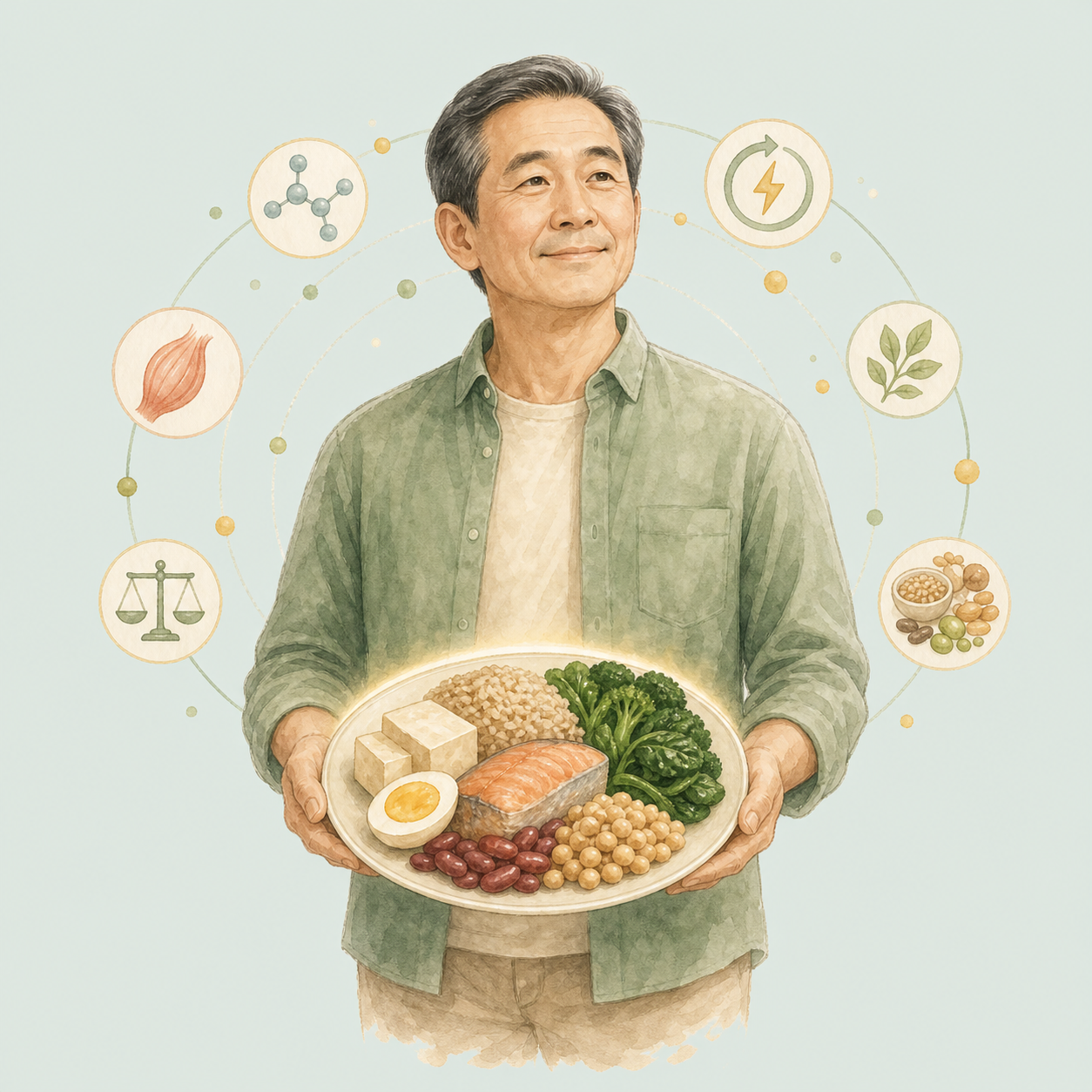
Illustration of a balanced meal and choosing a protein source.
01
Protein reference value
Population reference values are starting points, not one target for everyone. Needs vary with age, activity, illness, and kidney function.
02
The main protein source of the meal
Make a protein source part of each meal, such as eggs, fish, tofu, beans, milk, or lean meat.
03
Plant-based
A dietary pattern emphasizing plant foods. The term does not guarantee nutritional quality; some plant-based products contain substantial sodium or sugar.
04
one serving
The amount used to calculate label values, such as one scoop or several tablets. Check it before comparing with what you actually consume.
05
added sugar
Sugar added during manufacturing or preparation, rather than sugar naturally present in whole fruit or milk.

Practical steps for daily life.

5 things you can choose to do one at a time

Start with what fits your life best, then make it a routine you can comfortably maintain.

  1. 01

    Start with balanced meals containing vegetables, beans, whole grains, fruit, and a protein source.

  2. 02

    Replace some regularly eaten red or processed meat with beans, tofu, fish, eggs, or other lean protein, according to your health needs.

  3. 03

    Reduce sugary drinks, fried foods, foods high in saturated fat, and highly processed foods. Check added sugar, sodium, and serving sizes on labels.

  4. 04

    Spread protein across meals and increase fibre gradually rather than trying to fit all nutrients into one meal.

  5. 05

    Use supplements for assessed gaps. Seek advice with kidney or liver disease or regular medication use.

In-depth articles · 3 topics

Understand the reasons and choose practical steps.

Understand how the body works and turn that knowledge into practical care, with guidance relevant to different life stages.

articles 01 / 03

Protein: building blocks for muscles, enzymes, hormones, and immunity.

Protein contributes to tissues, enzymes, hormones, and immune components. Appropriate intake depends on weight, age, activity, health, and kidney function.

EFSA's population reference intake for protein is 0.83 grams per kilogram of body weight daily for adults, including older adults. This is a starting point for healthy people; needs may be adjusted with professional guidance for age, activity, recovery, and health status.

Fatigue, hair loss, or slow wound healing does not by itself establish protein deficiency. Assessment should consider diet, weight, muscle status, medical conditions, and test results.

Try starting like this.

Choose one practical step at a time.

  • Review three days of actual protein intake before buying a supplement.
  • Choose a variety of foods: fish, eggs, milk/soy, nuts, tofu, and lean meats.
  • Consult a doctor or dietitian if you have kidney or liver disease or are undergoing treatment.
Read more in the health article.See the article with more details.

articles 02 / 03

Spread protein across the day to support balanced meals.

Include protein sources regularly at breakfast, lunch, and dinner to support muscle maintenance and fullness.

Include an identifiable protein source at each meal, such as eggs, plain yogurt, milk, soy, tofu, beans, fish, or lean meat. This is a practical starting point without weighing every mouthful.

Appropriate plant protein foods can increase fiber and reduce saturated fat. For processed plant-based products, also check sodium and nutrients per serving within the overall diet.

Try starting like this.

Choose one practical step at a time.

  • Add one protein source to meals that are most often lacking.
  • Pair plant proteins with grains and vegetables for added variety.
  • Prepare easy-to-eat options for those days when you lose your appetite or don't have time to cook.
Read more in the health article.See the article with more details.

articles 03 / 03

Convenient protein when meals do not meet your needs.

Protein powders and drinks offer convenience when intake is inadequate, food preparation is difficult, or there is a specific nutritional goal. Choose according to individual diet and health needs.

Before choosing, ask: What nutritional gap am I addressing? Which allergies matter? How much sugar and sodium does it contain? Is it suitable for my conditions and medications? A high-protein formula may also contain energy, sugar, or minerals that do not suit someone with kidney disease or specific dietary limits.

Define a nutritional goal, such as stable weight, improved strength, or more complete intake, and periodically review the underlying diet.

Try starting like this.

Choose one practical step at a time.

  • Read protein per serving, added sugar, sodium, and number of servings per package.
  • Use it to address a protein shortfall alongside vegetables, fruit, whole grains, and healthy fats in balanced meals.
  • Review progress after four to eight weeks using weight, strength, and actual food intake.
Read more in the health article.See the article with more details.