PGP · Health Map

Heart & Circulation

A clear guide to blood pressure, blood lipids, and circulation.

See 5 ways to get started.

Understand blood pressure and lipid readings for everyday heart care.
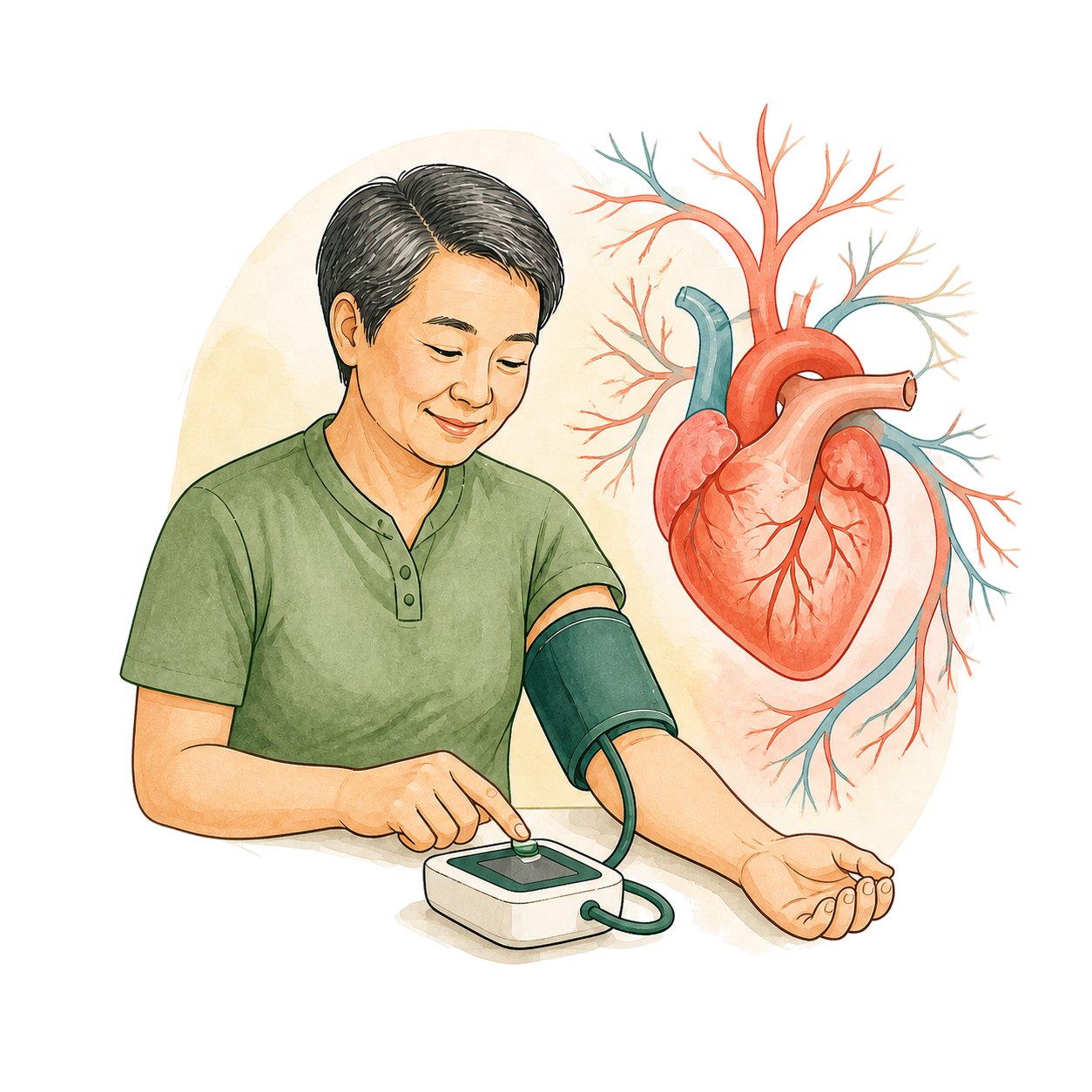
An illustration of blood pressure measurement and cardiovascular health.

Guide to reading blood lipid values · Unit mg/dL

A clear guide to blood lipid results.

These values provide an initial adult guide. Individual targets depend on diabetes, kidney disease, smoking, and cardiovascular history.

LDLRisk-based goals

Fat that accumulates in the walls of blood vessels

Low-to-moderate risk: LDL below 100 mg/dL.

For higher cardiovascular risk, an LDL target below 70 mg/dL may be used. Very high-risk people or those with established vascular disease may need a target below 55 mg/dL, determined by their doctor.

LDL of 160 mg/dL or higher warrants assessment of cardiovascular risk and family history. Do not wait for symptoms.

HDLSupporting information, not the main target.

Helps transport cholesterol back to the liver.

Low values: Men below 40 · Women below 50 mg/dL.

Low HDL can signal increased risk, but a high HDL result does not cancel out high LDL. Interpret the full panel.

TGNormal range: below 150 mg/dL

Triglycerides: fats that transport and store energy.

150–499 mg/dL: above normal range

Triglycerides can rise substantially with sugary drinks, refined flour, alcohol, poorly controlled diabetes, and excess calorie intake.

Triglycerides of 500 mg/dL or higher need medical assessment for pancreatitis risk; levels of 1,000 mg/dL or higher require urgent management.

TOTALA screening measure, not the primary treatment target.

Total cholesterol

Less than 200 mg/dL is the initial reference value.

Total cholesterol includes several components and cannot determine risk alone. Review LDL, HDL, and triglycerides together.

Non-HDL cholesterol is total cholesterol minus HDL. Targets may be below 130, 100, or 85 mg/dL, depending on risk.

These numbers are not universal safety limits. Do not use them to change or stop medication yourself.

01
LDL
Cholesterol-carrying particles whose excess is associated with arterial buildup. The appropriate target depends on cardiovascular risk.
02
non-HDL
Total cholesterol minus HDL cholesterol. It reflects cholesterol in several types of particles that can contribute to arterial plaque, beyond LDL alone.
03
Triglycerides
A blood fat influenced by genetics, sugar, alcohol, weight, diabetes, and some medicines.
04
Overall risk
Assess age, blood pressure, diabetes, lipids, smoking, and family history together rather than relying on one result.
05
Life’s Essential 8
The American Heart Association's Life's Essential 8 covers diet, activity, nicotine exposure, sleep, weight, blood lipids, blood glucose, and blood pressure.

Practical steps for daily life.

5 things you can choose to do one at a time

Start with what fits your life best, then make it a routine you can comfortably maintain.

  1. 01

    Build meals around vegetables, beans, whole grains, and fruit without added sugar, with appropriate amounts of unsaturated fats.

  2. 02

    Reduce fried foods, saturated fat, sugary drinks, sodium, highly processed foods, and frequent red or processed meat intake.

  3. 03

    Build up walking and moderate activity according to your ability, alongside regular resistance exercise.

  4. 04

    Avoid smoking and nicotine, get enough sleep, and manage weight without starvation or extreme diets.

  5. 05

    Know your blood pressure, glucose, and lipid results. Take medicines as prescribed and review progress with your doctor.

In-depth articles · 3 topics

Understand the reasons and choose practical steps.

Understand how the body works and turn that knowledge into practical care, with guidance relevant to different life stages.

articles 01 / 03

Measure blood pressure correctly to support heart, brain, kidney, and eye health.

Consistent blood pressure measurement reveals trends and helps assess the effects of diet, movement, sleep, and medication.

High blood pressure often has no symptoms. For a clearer trend, measure after resting, with your back supported, feet flat, and arm at heart level. Use the correct cuff size and record several readings over multiple days for clinical review.

Sleep, diet, sodium, movement, weight, nicotine, blood sugar, and blood lipids are interconnected. One sustained change can be more useful than trying everything for only a few days.

Try starting like this.

Choose one practical step at a time.

  • Measure at similar times in the morning and evening and record for 7 days when recommended by your doctor.
  • Review blood pressure, lipids, and glucose together as part of overall risk, rather than separately.
  • Take medication as prescribed. Do not stop simply because symptoms improve.
Read more in the health article.See the article with more details.

articles 02 / 03

Interpret blood lipids alongside risk to guide heart care.

Interpret LDL, non-HDL cholesterol, and triglycerides alongside diabetes, blood pressure, smoking, age, and family history to set individual cardiovascular goals.

Manage blood lipids through the overall diet: emphasize vegetables, whole grains, beans, lean protein, and unsaturated fats, while reducing processed foods, saturated fat, added sugar, and alcohol as appropriate.

Lifestyle changes may be sufficient for some people. Others with inherited risk, existing conditions, or higher overall risk may also need lipid-lowering medication as part of cardiovascular care.

Try starting like this.

Choose one practical step at a time.

  • Ask your doctor about overall cardiovascular risk and treatment targets, rather than total cholesterol alone.
  • Replace some fried/processed meat meals with fish, beans, tofu, or lean protein.
  • Review follow-up blood results before changing or stopping medication.
Read more in the health article.See the article with more details.

articles 03 / 03

Eight connected foundations for everyday heart health.

Heart care grows from repeatable habits: balanced meals, activity, avoiding nicotine, adequate sleep, and knowing key health measurements.

The American Heart Association's Life's Essential 8 covers diet, activity, nicotine exposure, sleep, weight, blood lipids, blood glucose, and blood pressure. It turns heart health into areas you can track over time.

Start with manageable steps: a brisk 10- to 15-minute walk after a meal, taking the stairs, a regular bedtime, or simple repeatable meals. Consistency is central to making heart care part of daily life.

Try starting like this.

Choose one practical step at a time.

  • Choose one of the eight areas where a manageable change would matter most to you this month.
  • Aim to build up at least 150 minutes of moderate activity a week, according to your ability.
  • Arrange screening according to age and family history, even without symptoms.
Read more in the health article.See the article with more details.