PGP · Health Map
Bones, Muscles & Mobility
Understand bones, muscles, joints, and balance as one system.
See 5 ways to get started.Maintain strength and stability and reduce long-term fall risk.
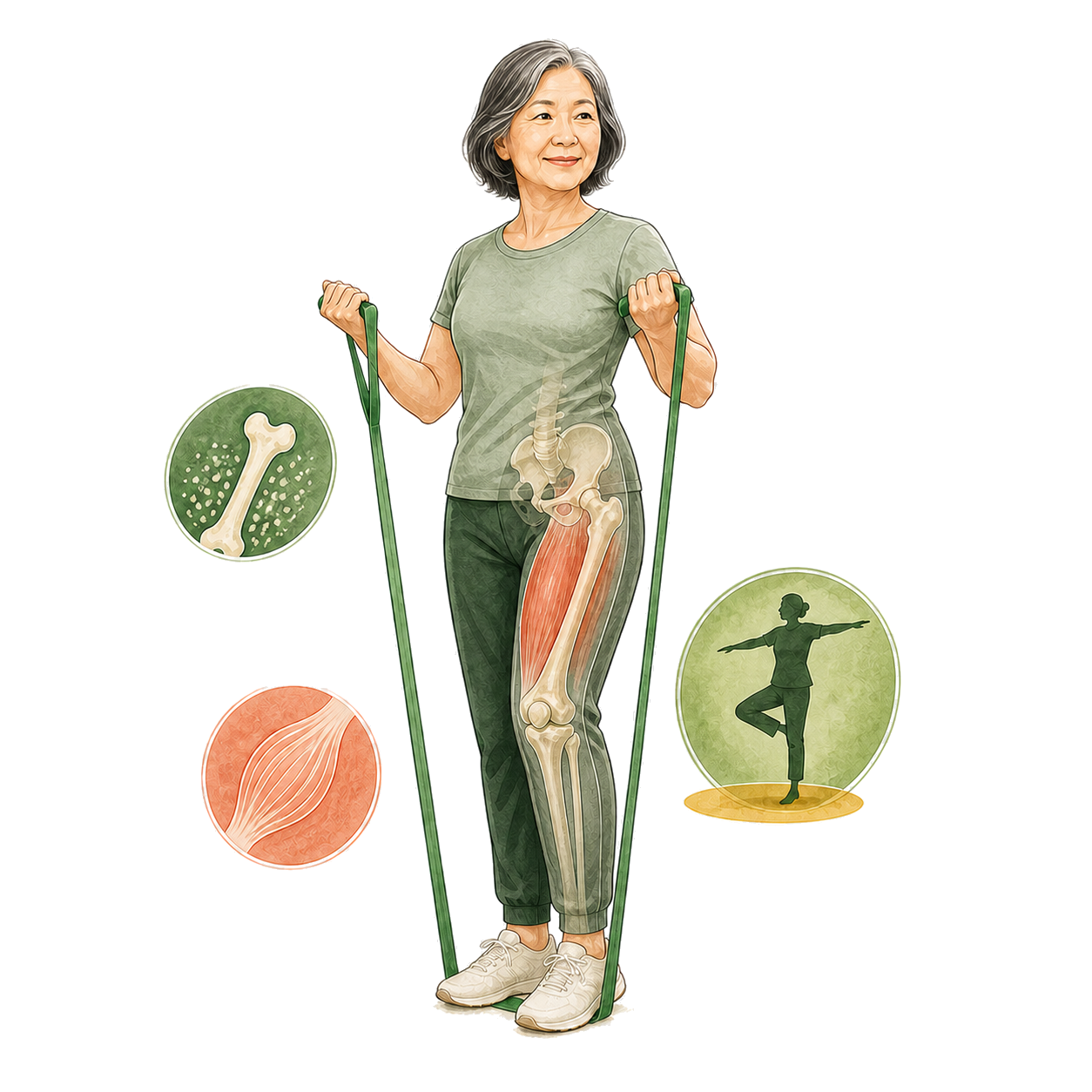
- resistance training
- Exercise against resistance from body weight, bands, dumbbells, or machines to maintain or increase strength.
- Weight-bearing activity
- Activities that load the bones, such as walking, stairs, or dancing. Choose according to joint health, bone health, and fall risk.
- bone density
- A measure of bone mineral content. Interpret it alongside age, fracture history, medication, and other risk factors.
- osteoporosis
- A condition in which bones become fragile and more likely to break. It often causes no symptoms until a fracture and cannot be judged by appearance.
- NSAIDs pain relievers
- Pain-relieving anti-inflammatory medicines can affect the stomach, kidneys, blood pressure, and heart, especially with prolonged or duplicate use.
Practical steps for daily life.
5 things you can choose to do one at a time
Start with what fits your life best, then make it a routine you can comfortably maintain.
- 01
Include appropriate amounts of protein from beans, tofu, fish, eggs, milk, or lean meat at each meal, alongside vegetables and whole grains.
- 02
Reduce sugary drinks, fried foods, processed meats, and highly processed foods that are high in energy but low in fiber and nutrients.
- 03
Include resistance, balance, and weight-bearing exercise suited to your ability, rather than relying on walking alone.
- 04
Review calcium, vitamin D, medical conditions, and medicines that increase osteoporosis or fall risk with a healthcare professional.
- 05
Review home hazards, footwear, vision, and hearing to reduce falls. Seek assessment for declining strength, pain, or rapid changes in walking.