PGP · Health Map

Eyes and screen use

Take care of dry eyes, eye strain from screens, and risks to vision.

See 5 ways to get started.

Rest your eyes properly, protect your eyes, and know when to get checked.
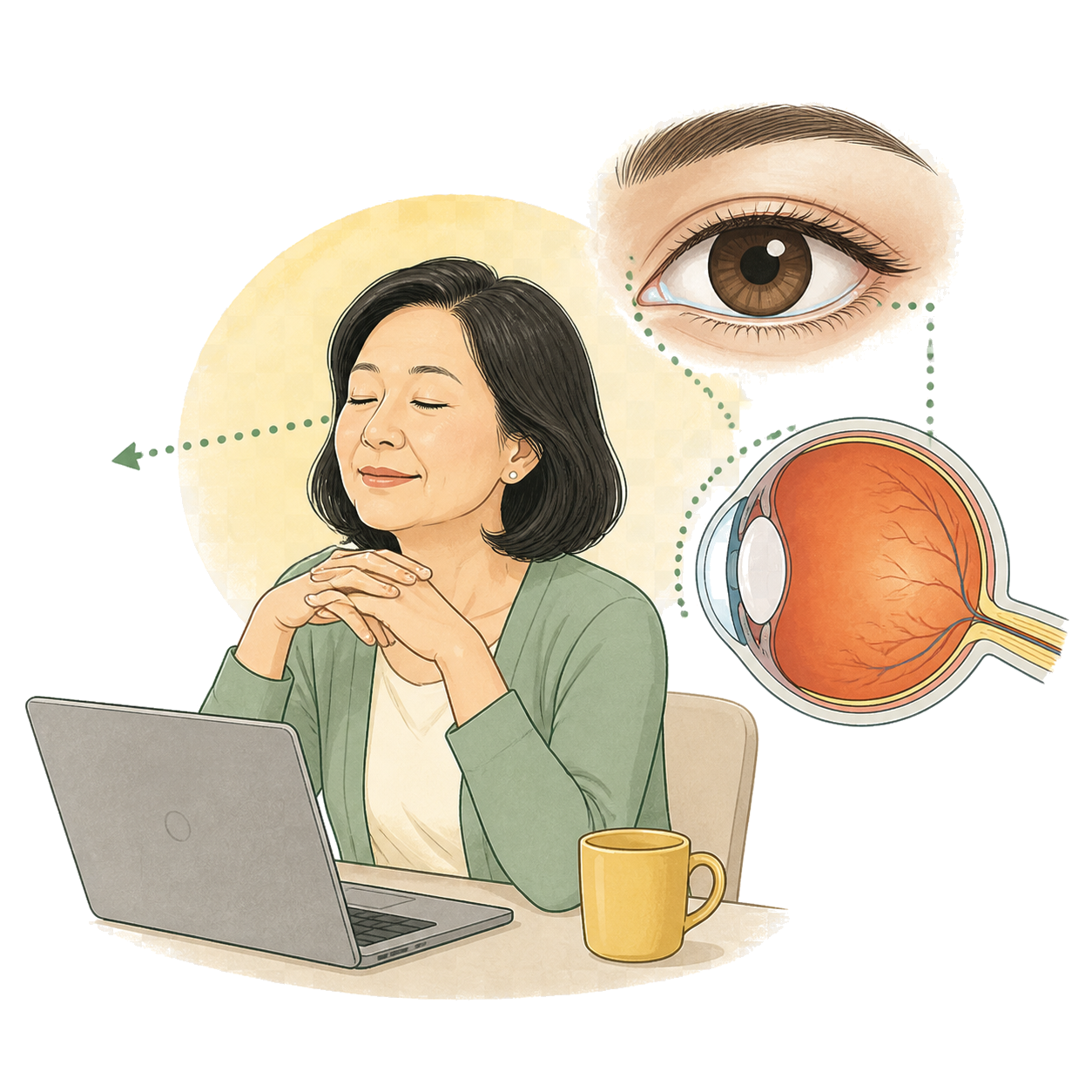
Illustration of taking breaks from screens and eye structure.
01
20-20-20 rule
Every 20 minutes, look about 20 feet (6 metres) away for 20 seconds to give your eyes a break from close screen work.
02
retina
The light-sensitive layer at the back of the eye converts light into signals for the brain. Diabetes can damage its vessels.
03
HbA1c
HbA1c reflects average blood glucose over approximately two to three months and is interpreted with other information.
04
Dilated eye examination.
The drops dilate the pupil so the examiner can see the retina and the back of the eye more clearly.
05
UVA and UVB
Two types of ultraviolet radiation in sunlight that affect the eyes and skin. Choose sunglasses labelled as blocking 99–100% of UVA and UVB.

Practical steps for daily life.

5 things you can choose to do one at a time

Start with what fits your life best, then make it a routine you can comfortably maintain.

  1. 01

    Eat a variety of colourful fruits and vegetables, beans, whole grains, and suitable protein sources. Reduce sugary drinks, fried foods, and highly processed foods.

  2. 02

    Manage diabetes, blood pressure, and lipids. The eye's small blood vessels can be damaged before symptoms appear.

  3. 03

    Take regular eye breaks, blink fully, and adjust screen distance, lighting, and humidity.

  4. 04

    Protect your eyes outdoors with UV-protective sunglasses and a hat.

  5. 05

    Have eye checks according to your risk, especially with diabetes, a family history of eye disease, or visual changes.

In-depth articles · 3 topics

Understand the reasons and choose practical steps.

Understand how the body works and turn that knowledge into practical care, with guidance relevant to different life stages.

articles 01 / 03

Support eye comfort with regular breaks and complete blinking.

Visual breaks, regular blinking, and suitable screen distance can reduce irritation, intermittent blur, and screen-related strain.

The National Eye Institute recommends the 20-20-20 rule: every 20 minutes, look about 20 feet away for 20 seconds. Reduce screen glare and position the screen slightly below eye level. Blinking fully and avoiding direct air-conditioning airflow may also help with dry eyes.

Artificial tears may relieve mild symptoms. Persistent dry eyes warrant assessment for factors such as age, hormones, medicines, contact lenses, or immune conditions, so treatment matches the cause.

Try starting like this.

Choose one practical step at a time.

  • Use the 20-20-20 rule and blink fully several times during breaks.
  • Adjust font size, glare, screen distance, and wind direction before purchasing additional equipment.
  • Have your vision checked for persistent focusing difficulty, headaches, or recurrent blurring.
Read more in the health article.See the article with more details.

articles 02 / 03

Have regular eye checks to protect vision in diabetes.

Regular retinal examinations can detect early vessel changes and complement management of blood glucose, blood pressure, and lipids.

Eye health is linked with blood glucose, blood pressure, and lipids. Follow your treatment plan and recommended dilated eye examinations to detect changes early.

Ask your diabetes care team when and how often you need eye examinations. Timing depends on diabetes type and duration, pregnancy, and previous findings. Supplements do not replace examinations or diabetes management.

Try starting like this.

Choose one practical step at a time.

  • Bring HbA1c, blood pressure, lipid results, and eye findings together in one care plan.
  • Make an appointment for regular eye exams even if you can still see clearly.
  • Tell your ophthalmologist promptly about increased dark spots, distorted vision, or reduced vision.
Read more in the health article.See the article with more details.

articles 03 / 03

Protect vision through both eye and vascular health.

Sunglasses, avoiding smoking, varied nutrition, and management of chronic conditions all contribute to long-term vision care.

Cataracts, retinal disease, and glaucoma have different risk factors. A comprehensive eye examination is more useful than guessing from symptoms, especially with increasing age, family history, diabetes, high blood pressure, or long-term use of certain medicines.

Choose sunglasses that block 99 to 100% of UVA and UVB radiation. Wear protective eyewear when cutting, drilling, or working with flying debris. These small precautions support reading, driving, work, and independence.

Try starting like this.

Choose one practical step at a time.

  • Carry sunglasses that clearly indicate protection against UVA and UVB rays.
  • Tell your eye doctor about your family history of eye disease.
  • Arrange eye examinations according to age, existing conditions, and your ophthalmologist's advice.
Read more in the health article.See the article with more details.