Easy-to-understand health information
Stroke
Sudden blockage or bleeding in the brain is time-critical. Many stroke risks can be reduced through blood pressure, heart, glucose, and lifestyle management.
Summary before reading further
What is this topic, and why does it matter?
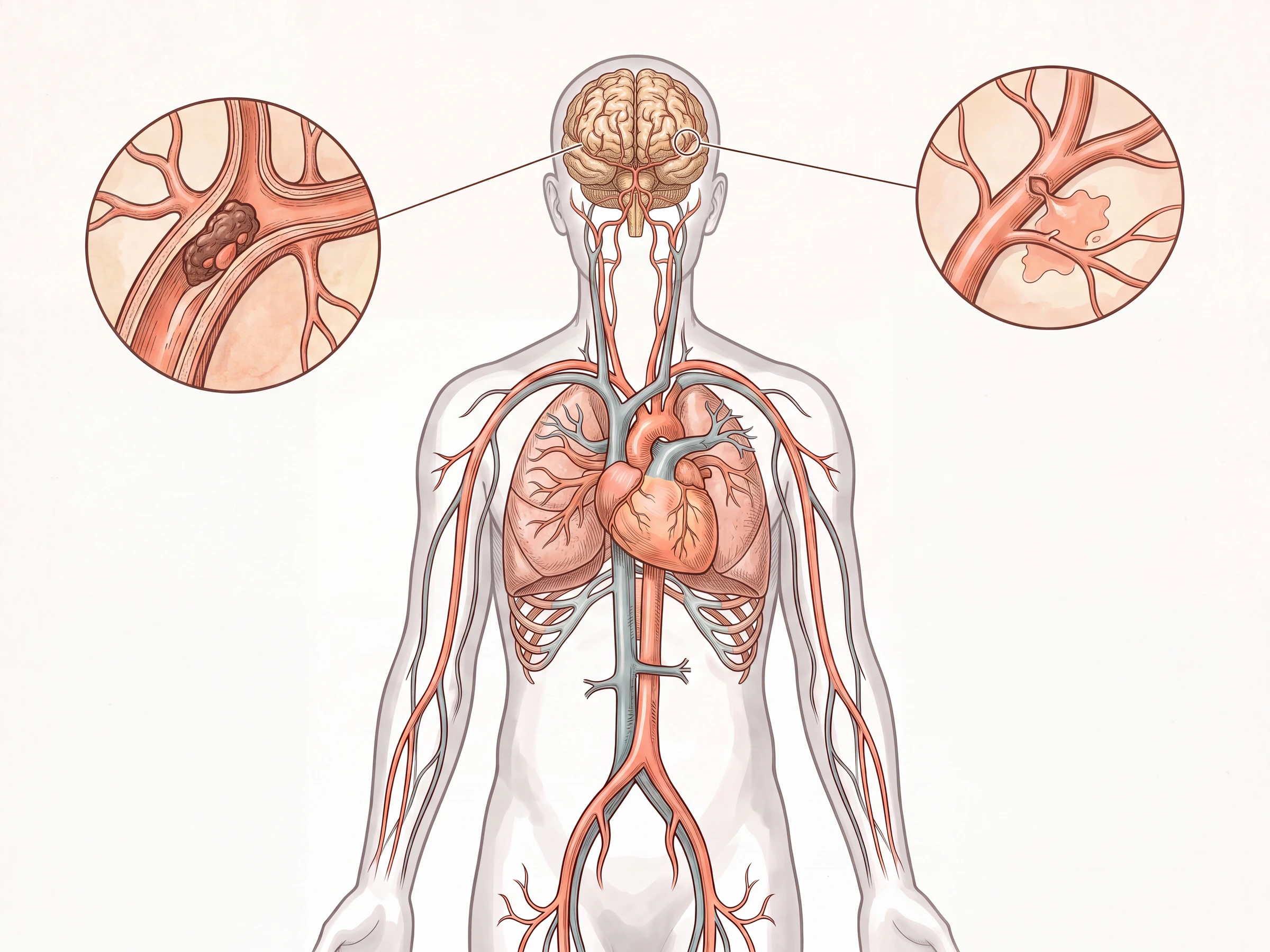
A stroke occurs when a blood vessel supplying the brain is blocked or ruptures, rapidly damaging brain cells. Symptoms usually begin suddenly and require emergency care. Do not wait to see whether they resolve.
High blood pressure is an important modifiable risk factor, alongside arrhythmia, diabetes, high cholesterol, smoking, obesity, inactivity, and heavy drinking. Risk reduction involves both clinical measurements and everyday habits.
Health glossary
- FAST
- Face drooping, arm weakness, and speech changes are key stroke signs. Seek emergency help immediately.
- TIA
- Temporary stroke-like symptoms still require urgent assessment, even if they resolve on their own.
- CT and MRI
- CT uses X-rays, while MRI uses magnetic fields and radio waves. The choice depends on the organ and clinical question.
What happens in the body?
Explain the mechanism step by step.
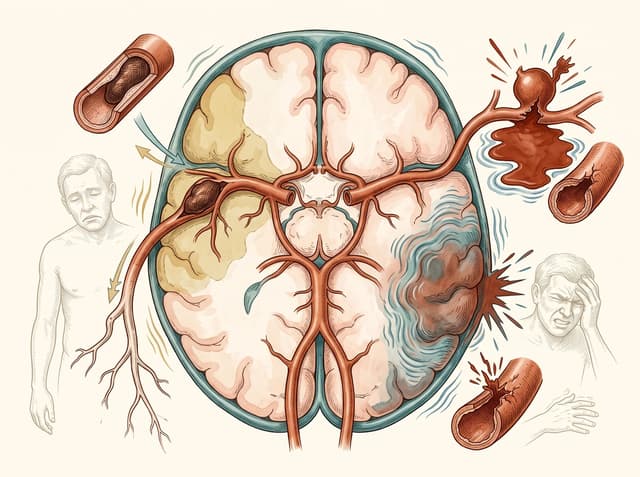
Ischemic stroke is more common and involves a clot forming in a brain artery or traveling from elsewhere, such as the heart. Hemorrhagic stroke involves a ruptured vessel, sometimes associated with high blood pressure or vessel abnormalities.
Blocked blood vessels
Blocked blood flow deprives brain tissue of oxygen and glucose. Tissue around the damaged core may still be saved with timely treatment.
A ruptured blood vessel
Blood presses on the brain tissue and increases intracranial pressure.
The network stopped working.
The location of the damage determines symptoms, such as language, limbs, vision, or balance.
Values or criteria that you should know
Stroke treatment is time-sensitive. Do not wait for a high symptom score.
Even one BE-FAST sign is enough to call an ambulance. Many stroke treatments are time-sensitive.
BE-FAST
Loss of balance, vision changes, face drooping, arm weakness, or speech changes.
- Reference range
- Do not wait for several symptoms or a headache before seeking stroke care.
- You should make an appointment for an evaluation.
- Even if symptoms resolve within a few minutes, it may be a TIA and require emergency evaluation.
- Should be evaluated urgently
- Note the last time the person was known to be well and call an ambulance immediately.
Time window for clot-dissolving treatment.
Time from symptom onset in eligible persons
- Reference range
- Eligible patients may receive intravenous clot-dissolving treatment within 4.5 hours of stroke onset.
- You should make an appointment for an evaluation.
- Some people with an unknown symptom start time or a later arrival may still qualify for treatment after advanced brain imaging.
- Should be evaluated urgently
- Do not wait for the 4.5-hour limit. Earlier hospital arrival improves the chance of receiving effective stroke treatment.
removal of blood clots
Mechanical clot removal for selected large-vessel blockages.
- Reference range
- Selected patients may benefit from treatment up to 24 hours after onset when brain imaging and clinical criteria are met.
- You should make an appointment for an evaluation.
- Eligibility is determined by the stroke team. It is not a reason to wait at home.
- Should be evaluated urgently
- Do not give food, water, or aspirin before assessment for suspected stroke. There may be brain bleeding or difficulty swallowing safely.
Causes · Symptoms · Examination · Care
See important information in one place.
Causes and related factors
- High blood pressure, diabetes, high cholesterol, and smoking.
- Atrial fibrillation and carotid artery disease.
- Age, family history, obesity, and inactivity
Common symptoms
- Sudden face drooping, arm weakness, or speech changes.
- Sudden vision loss, unsteadiness, or a severe headache.
- Symptoms that temporarily resolve on their own may be a TIA and are still an emergency.
How do doctors check?
- CT helps distinguish brain bleeding from an ischaemic stroke.
- Examine blood vessels and cerebral circulation
- Investigate underlying cardiac, blood pressure, lipid, and clotting factors.
Start taking care of it systematically.
- Call emergency services and note the time when symptoms began.
- Manage blood pressure, glucose, and lipids, and stop smoking.
- Continue rehabilitation for walking, hand function, communication, and swallowing.
Important things you should know
Keep these points in mind.
Stroke can involve a blocked artery or bleeding from a vessel.
Symptoms can look similar, but treatments differ. Hospital brain imaging is needed; do not self-medicate.
High blood pressure is a leading risk factor.
Correct blood pressure measurement and management protect the brain, heart, kidneys, and eyes together.
ReferencesCDCArrhythmias must be evaluated.
Atrial fibrillation can allow clots to form in the heart and travel to the brain. Reducing this risk requires individual assessment and appropriate medication.
Know the FAST stroke warning signs.
Facial drooping, arm weakness, or slurred speech means call emergency services immediately. Record when symptoms began to help guide treatment.
Daily food and care
Support vascular health through meals and regular health checks.
- Reduce salty, sugary, greasy, fried, and highly processed foods and processed meat. Add vegetables, fruit, beans, and whole grains.
- Move regularly, stop smoking, limit alcohol, and maintain a weight appropriate for your health.
- Monitor blood pressure, lipids, glucose, and heart conditions and follow prescribed treatment. Do not stop anticoagulants or blood pressure medicines yourself.
Read on to understand.
Read on for complete information on health and products.
Main references