Easy-to-understand health information
osteoporosis
Osteoporosis is often painless until a fracture occurs. Risk assessment, bone-density testing, and resistance exercise help preserve independence.
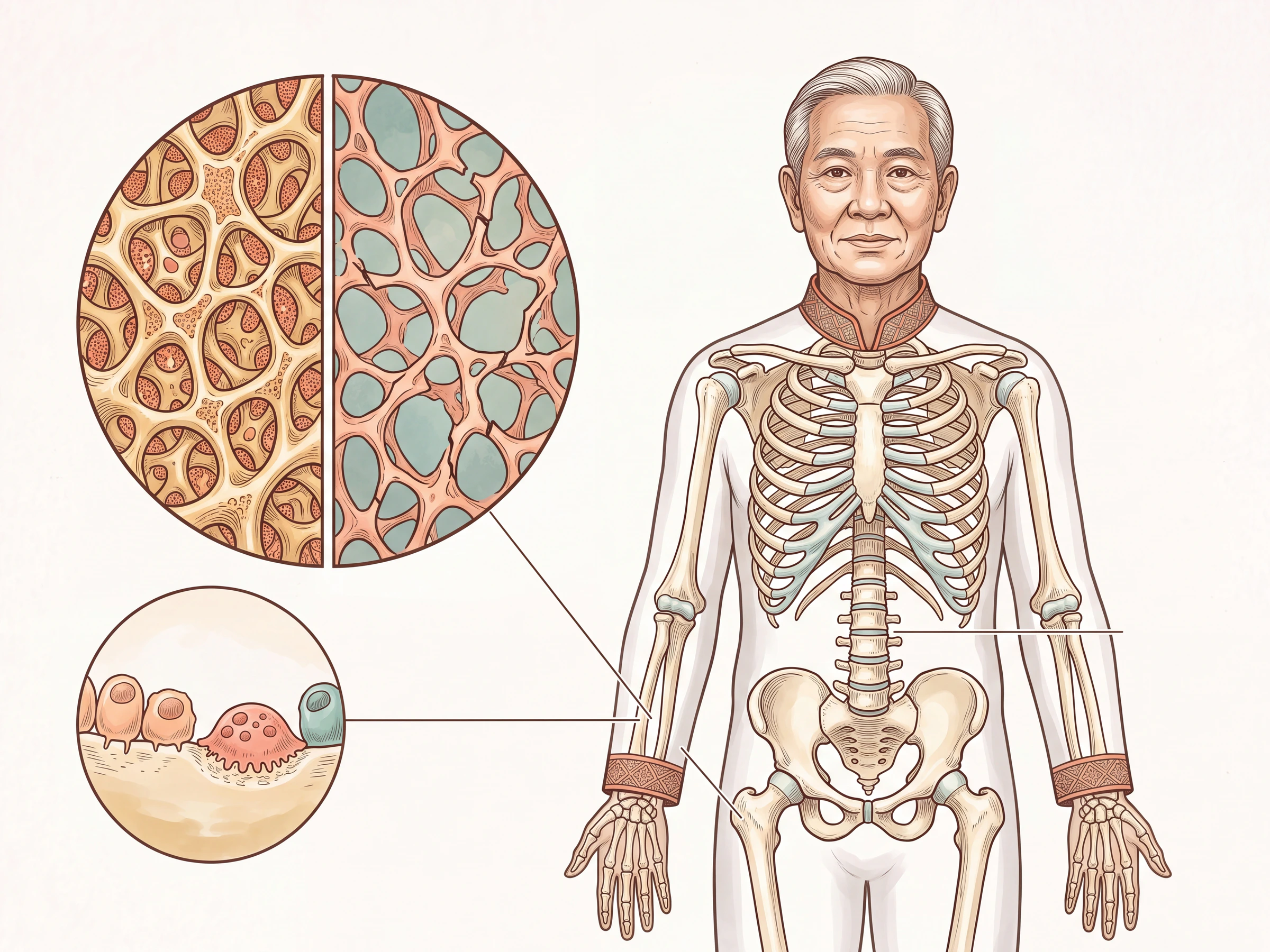
Summary before reading further
What is this topic, and why does it matter?
Menopause, older age, steroid use, low body weight, smoking, alcohol, falls, and certain medical conditions increase the risk.
DXA results and fracture history guide risk assessment. Treatment choice also considers kidney function, gastrointestinal issues, and overall risk.
Health glossary
- DXA or DEXA
- A low-dose X-ray test that measures bone density to assess osteoporosis and fracture risk.
- FRAX
- A tool estimating 10-year fracture risk using age, health history, and, when available, bone density information.
What happens in the body?
Explain the mechanism step by step.
Falling estrogen increases osteoporosis risk after menopause, but men can also be affected. Age, steroid use, low weight, inactivity, endocrine conditions, and poor absorption contribute.
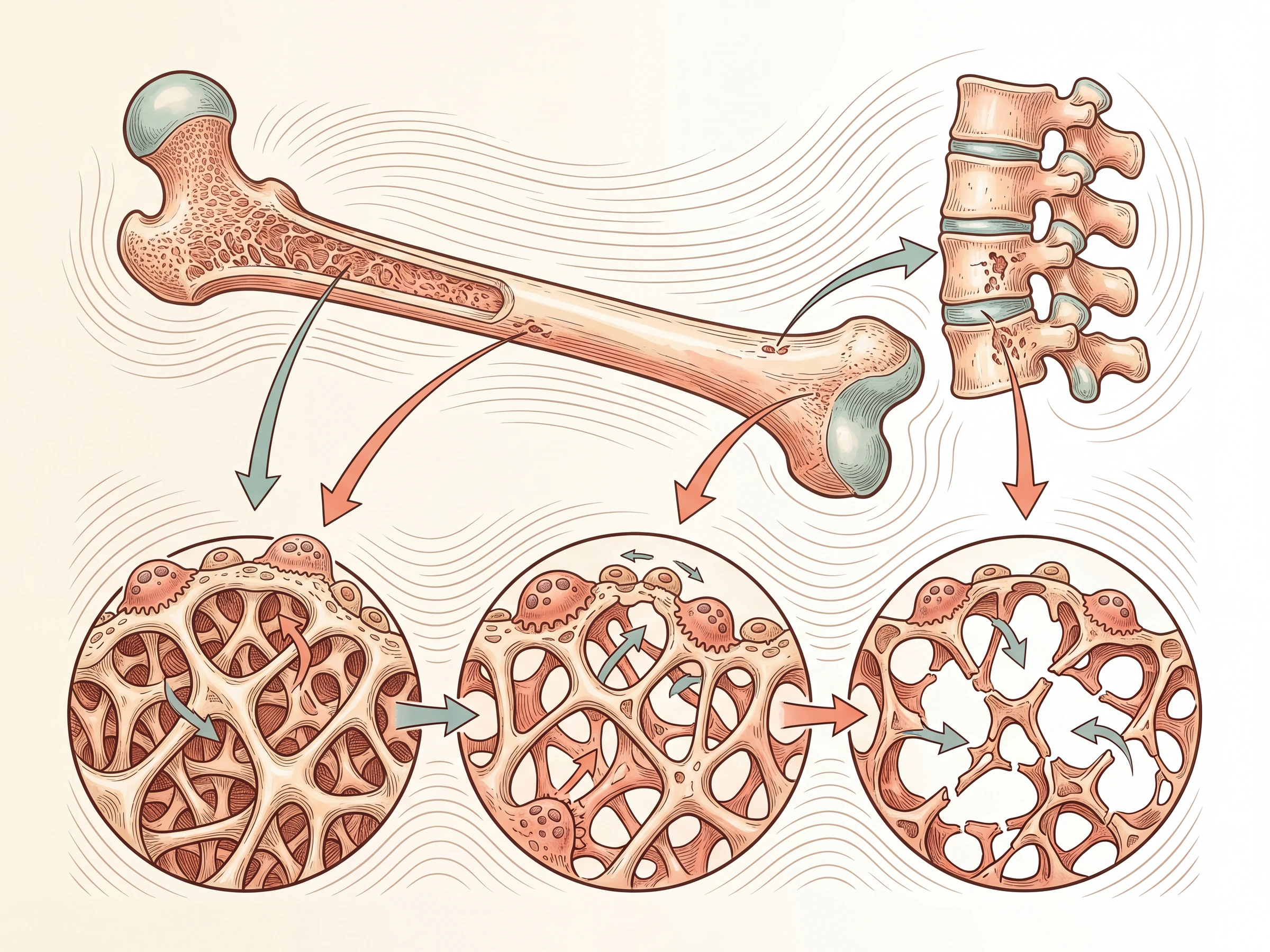
Bone breakdown exceeds formation.
Bone resorption by osteoclasts exceeds bone formation by osteoblasts over time.
The internal bone network thins
The internal bone struts lose connections, reducing the bone's load-bearing strength.
Broken bones change lives
Hip, spine, and wrist fractures can affect walking, height, and independence.
Values or criteria that you should know
Interpret the T-score alongside fracture history, not alone.
T-scores are mainly used after menopause and in men aged 50 and over. Z-scores are commonly used in younger people alongside assessment for secondary causes.
T-score
Bone density compared to young adults
- Reference range
- A T-score of −1.0 or higher is within the normal bone density range.
- You should make an appointment for an evaluation.
- A T-score below −1.0 but above −2.5 indicates low bone mass. A score of −2.5 or lower meets the bone density criterion for osteoporosis.
- Should be evaluated urgently
- A hip or vertebral fracture after minor trauma may indicate osteoporosis even if the T-score is above −2.5.
Z-score
Compare with people of similar age and sex.
- Reference range
- A Z-score above −2.0 is generally within the expected range for age.
- You should make an appointment for an evaluation.
- A Z-score of −2.0 or lower warrants assessment for secondary causes, especially in premenopausal women and younger men.
- Should be evaluated urgently
- The Z-score is not a substitute for the T-score in groups where guidelines require the use of a T-score.
height change
Reduced height and new back pain
- Reference range
- Stable height and no history of fractures reduce suspicion of spinal collapse.
- You should make an appointment for an evaluation.
- Marked height loss, a stooped posture, or new back pain warrants spinal assessment.
- Should be evaluated urgently
- Hip pain after a fall, inability to bear weight, or sudden severe back pain need assessment for a fracture.
Causes · Symptoms · Examination · Care
See important information in one place.
Causes and related factors
- Menopause, age and family history
- Steroid use, thyroid or parathyroid disease, and malabsorption.
- Low body weight, smoking, alcohol, and lack of weight-bearing activity.
Common symptoms
- Often there are no symptoms until the bone is broken.
- A stooped posture, height loss, or back pain from vertebral compression fractures.
- A fracture after a fall from standing height is an important warning sign.
How do doctors check?
- DXA of the hip and spine
- Assess FRAX and fracture history
- Assess secondary causes, vitamin D, kidney function, and hormones as appropriate.
Start taking care of it systematically.
- Include resistance, weight-bearing, and balance exercise.
- Get adequate protein, calcium, and vitamin D.
- Fracture-prevention medicines for people at high risk, with appropriate follow-up.
Important things you should know
Keep these points in mind.
A fracture after minor trauma is a warning sign.
A wrist, hip, or spinal fracture after a fall from standing height warrants an osteoporosis assessment.
Resistance and balance help in two ways.
Support bones and muscles and reduce fall risk.
Calcium alone is not enough.
Protein, vitamin D, physical activity, and medication for people at high risk all have a role.
Daily food and care
Start with manageable everyday steps.
- Get appropriate dietary calcium, protein, and vitamin D according to age and test results. Avoid unnecessary high doses.
- Avoid smoking, limit alcohol, and review home hazards, glasses, and footwear to reduce falls.
Read on to understand.
Read on for complete information on health and products.
Main references