


Easy-to-understand health information
Metabolic fatty liver disease.
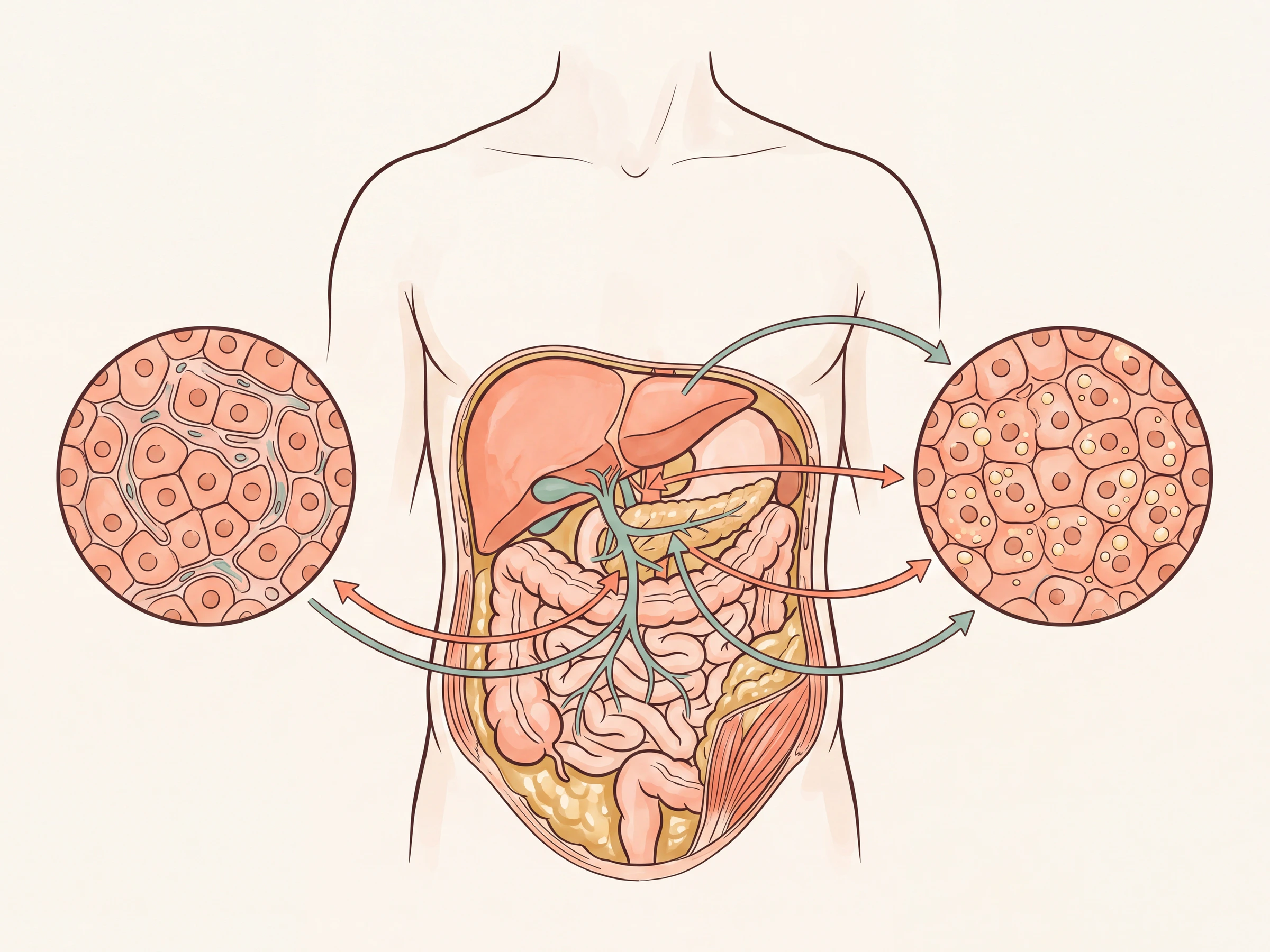
Fatty liver commonly accompanies a larger waist, diabetes, abnormal blood lipids, or hypertension. Fibrosis can accumulate without symptoms.
Summary before reading further
What is this topic, and why does it matter?
Metabolic dysfunction-associated steatotic liver disease, or MASLD, was formerly called NAFLD and is common in people with obesity or diabetes. Normal liver blood tests do not exclude liver scarring.
Assessment combines history, blood tests, and ultrasound. Some people need further evaluation for liver fibrosis and other causes such as viral hepatitis, alcohol, or medicines.
Health glossary
- Metabolism
- The process by which the body converts food into energy and controls sugar, fat, blood pressure, and energy storage.
- MASLD or formerly NAFLD
- Fatty liver associated with cardiometabolic risk, now termed MASLD and formerly called NAFLD.
- Fibrosis
- The gradual accumulation of scar tissue in an organ, which can impair its function.
- insulin resistance
- A condition in which cells do not respond well to insulin. The body therefore has to use more insulin to control blood sugar.
- FIB-4
- A score using age and selected blood tests to screen for possible liver fibrosis. It does not establish a diagnosis on its own.
- Elastography
- A test that measures liver stiffness using sound waves or imaging to help assess liver scarring.
What happens in the body?
Explain the mechanism step by step.
Key risks include insulin resistance, abdominal fat, diabetes, and high triglycerides. People without obesity can also be affected, particularly with a larger waist circumference or genetic susceptibility.
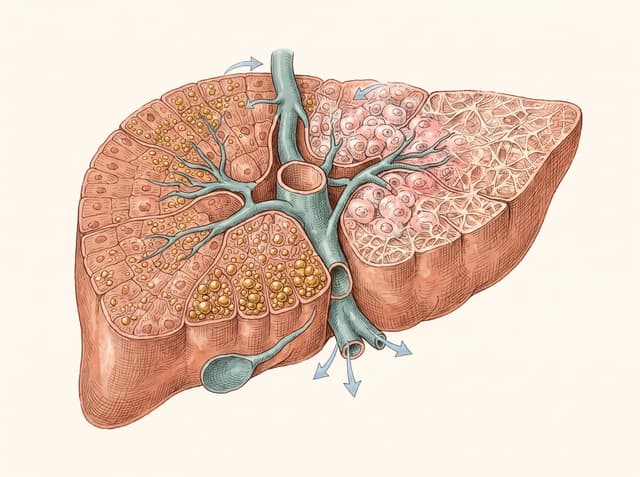
A lot of fat flows into the liver.
Fatty acids from body tissues and excess sugar can be used to make triglycerides.
Stressed liver cells
Some fats disrupt the mitochondria and stimulate inflammation.
Fibrosis buildup
Long-term scarring leads to cirrhosis and, in some cases, liver cancer.
Values or criteria that you should know
Normal liver enzymes do not exclude fibrosis. Consider a fibrosis risk assessment such as FIB-4.
The amount of liver fibrosis matters more than fat on ultrasound alone. FIB-4 is commonly used as an initial fibrosis-risk assessment in adults.
FIB-4 age 35–65 years
A score calculated from age, AST, ALT, and platelet count.
- Reference range
- FIB-4 below 1.3 generally indicates a low likelihood of advanced fibrosis.
- You should make an appointment for an evaluation.
- A FIB-4 of 1.3–2.67 warrants further assessment with elastography or another suitable test.
- Should be evaluated urgently
- FIB-4 above 2.67 suggests a higher likelihood of advanced fibrosis and warrants specialist assessment.
FIB-4 when over 65 years old
Age increases scores even without extensive fibrosis.
- Reference range
- A FIB-4 below 2.0 is a commonly used low-risk threshold for older adults.
- You should make an appointment for an evaluation.
- For older adults, FIB-4 of 2.0–2.67 warrants further testing; above 2.67 indicates higher risk.
- Should be evaluated urgently
- FIB-4 is less reliable during acute illness and in people under 35.
BMI for Asian adults
Weight (kg) ÷ Height² (meters)
- Reference range
- BMI below 18.5 indicates underweight. The range 18.5–22.9 is below the increased-risk threshold commonly used for Asian adults.
- You should make an appointment for an evaluation.
- For Asian populations, BMI 23 and 27.5 kg/m² are commonly used action points for increased and high risk, respectively.
- Should be evaluated urgently
- BMI alone does not indicate an emergency or measure abdominal fat. Consider waist circumference, blood pressure, glucose, and lipids as well.
Waist circumference
Measure midway between the lowest rib and the top of the hip bone.
- Reference range
- For Asian adults, waist measurements below 90 cm in men and 80 cm in women are below commonly used increased-risk thresholds.
- You should make an appointment for an evaluation.
- A waist circumference of at least 90 cm in men or 80 cm in women indicates increased metabolic risk.
- Should be evaluated urgently
- Waist circumference alone is not a diagnosis. An increased measurement warrants review of blood pressure, glucose, and lipids.
Causes · Symptoms · Examination · Care
See important information in one place.
Causes and related factors
- Obesity, insulin resistance, and diabetes.
- High triglycerides, sugary foods, and sweetened drinks.
- Genetics, certain medications, and sleep apnea
Common symptoms
- Often have no symptoms
- Non-specific fatigue or discomfort under the right ribs.
- Jaundice, ascites, or confusion are seen in advanced liver disease.
How do doctors check?
- Normal liver test results do not exclude all liver disease.
- Liver assessment may include ultrasound and the FIB-4 blood-based score to identify possible fibrosis risk.
- If your risk is high, your doctor may arrange liver stiffness testing, called elastography, or refer you to a specialist.
Start taking care of it systematically.
- Lose weight gradually when appropriate.
- Reduce sweets, sugary drinks, greasy foods, and processed foods.
- Stay active, manage diabetes, lipids, and blood pressure, and follow alcohol advice.
Important things you should know
Keep these points in mind.
Assess liver fibrosis, not just liver fat.
More advanced fibrosis is associated with higher cirrhosis and liver cancer risk.
Gradual weight loss can help.
For people who are overweight, modest weight loss combined with physical activity can reduce liver fat and improve blood sugar and lipid levels.
You also need to take care of your heart and blood vessels.
Manage blood pressure, glucose, and lipids and avoid smoking, alongside liver follow-up.
Daily food and care
Start with manageable everyday steps.
- Reduce sugary drinks, sweets, greasy foods, and highly processed choices. Add vegetables, beans, whole grains, fish, and simply prepared meals.
- Avoid alcohol if you have liver fibrosis or hepatitis. Do not use detox herbs without checking their liver safety.
Read on to understand.
Read on for complete information on health and products.
Main references
