Easy-to-understand health information
Abnormal blood lipids.
Read LDL, HDL, and triglycerides alongside diabetes, blood pressure, smoking, age, and family history, rather than one value alone.
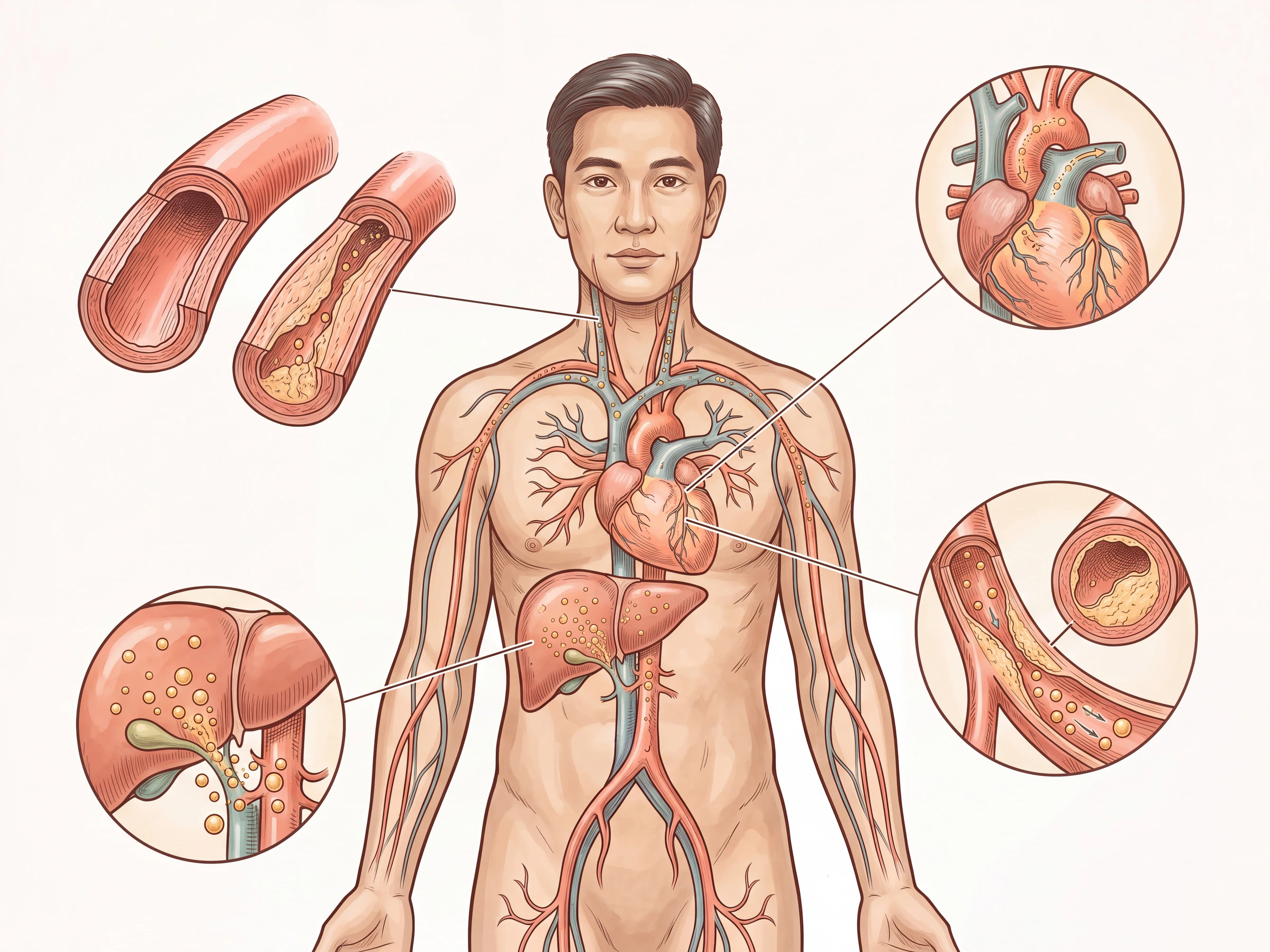
Summary before reading further
What is this topic, and why does it matter?
High LDL increases arterial plaque risk. High triglycerides together with low HDL or high LDL also matter. Interpret the full lipid panel alongside individual risk factors.
Diet matters alongside genetics, conditions, medicines, weight, and activity. Some people still need medication despite dietary improvement.
Health glossary
- LDL and HDL
- LDL carries cholesterol and can contribute to accumulation in artery walls when excessive. HDL carries some cholesterol back to the liver. Interpret both alongside other risk factors.
- VLDL
- Particles made by the liver that carry triglycerides around the body and can be converted into other types of lipoprotein.
- non-HDL, ApoB and Lp(a)
- Additional lipid measurements used in selected people to assess the number or type of particles associated with arterial buildup.
What happens in the body?
Explain the mechanism step by step.
Dyslipidemia includes high LDL, high triglycerides, low HDL, or increased atherogenic particles. Contributors include genetics, diabetes, hypothyroidism, kidney disease, medicines, and dietary patterns.
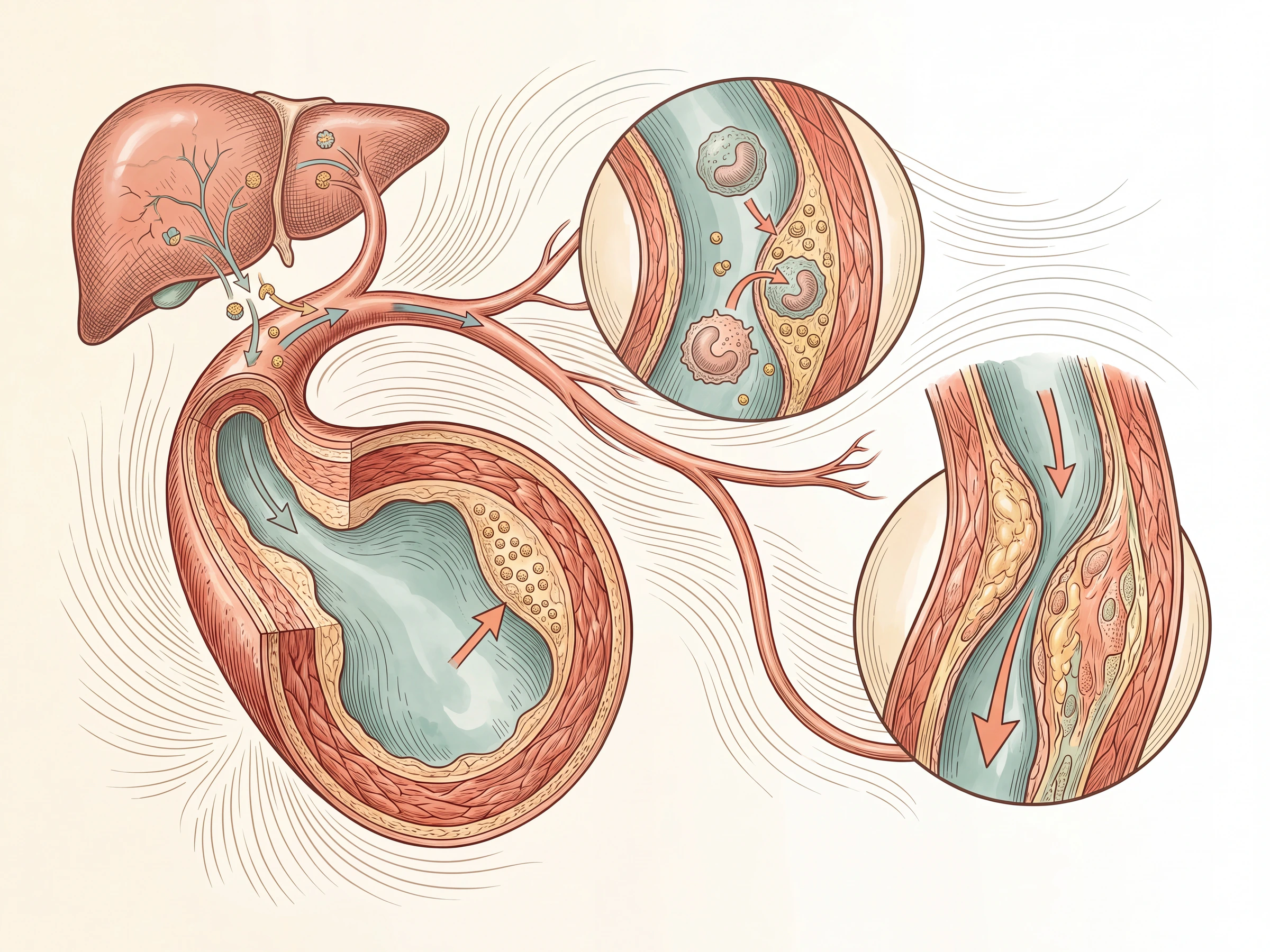
The liver transports fat particles.
The liver releases VLDL to transport triglycerides. As it is processed, it can become LDL.
LDL stays in the artery walls.
Particles become trapped and modified in the artery wall, attracting white blood cells.
Plaque grows or ruptures.
Plaque narrows arteries. If it ruptures, a clot can form suddenly.
Understand your blood lipid results in one minute.
Which numbers should be low, which numbers should be high, and which numbers need to be dealt with quickly?
Values are shown in mg/dL and provide an initial guide for adults. Individual targets also depend on age, diabetes, kidney disease, smoking, blood pressure, family history, and any previous heart attack or stroke.
Fat that accumulates in the walls of blood vessels
Low-to-moderate risk: LDL below 100 mg/dL.
For higher cardiovascular risk, an LDL target below 70 mg/dL may be used. Very high-risk people or those with established vascular disease may need a target below 55 mg/dL, determined by their doctor.
LDL of 160 mg/dL or higher warrants assessment of cardiovascular risk and family history. Do not wait for symptoms.
Helps transport cholesterol back to the liver.
Low values: Men below 40 · Women below 50 mg/dL.
Low HDL can signal increased risk, but a high HDL result does not cancel out high LDL. Interpret the full panel.
Do not take supplements solely to raise HDL. Focus on activity, weight, smoking, and overall risk.
Triglycerides: fats that transport and store energy.
150–499 mg/dL: above normal range
Triglycerides can rise substantially with sugary drinks, refined flour, alcohol, poorly controlled diabetes, and excess calorie intake.
Triglycerides of 500 mg/dL or higher need medical assessment for pancreatitis risk; levels of 1,000 mg/dL or higher require urgent management.
Total cholesterol
Less than 200 mg/dL is the initial reference value.
Total cholesterol includes several components and cannot determine risk alone. Review LDL, HDL, and triglycerides together.
Non-HDL cholesterol is total cholesterol minus HDL. Targets may be below 130, 100, or 85 mg/dL, depending on risk.
The higher LDL remains and the longer it stays high, the more opportunity plaque has to accumulate.
Assess common causes such as diabetes, alcohol, medicines, thyroid conditions, and inherited disorders.
Increased pancreatitis risk, especially with upper abdominal pain, nausea, or vomiting.
Target dietary changes to the elevated lipid measure.
“Cut sugar and fat” is too broad; consider how different foods affect each blood lipid measure.
Reduce saturated fat and avoid trans fat first.
Pork belly, chicken skin, sausages, Chinese sausage, butter, cheese, whole milk, rich coconut milk, coconut or palm oil, fried foods, and bakery products made with shortening.
Choose fish, tofu, beans, lean meat, and lower-fat milk, with moderate amounts of unsaturated oils such as rice bran, canola, or olive oil.
Reduce sugary drinks, refined flour, and alcohol.
Soft drinks, sweetened milk tea or coffee, juice, desserts, bakery products, and large portions of refined rice or noodles.
Choose water, unsweetened coffee or tea, whole fruit, vegetables, beans, and whole grains. Match rice or noodle portions to activity and energy needs.
Limit added sugar and excess fat while retaining suitable unsaturated fats.
Fried foods, sweets, processed meats, packaged foods, large meals, and regular alcohol consumption.
Fill half your plate with vegetables, include lean protein and fiber, choose unsaturated fats, and move regularly.
Causes · Symptoms · Examination · Care
See important information in one place.
Causes and related factors
- Genetics, especially high LDL at a young age
- Diabetes, obesity, hypothyroidism, and kidney disease
- Foods high in saturated fat, sweets, alcohol, and certain medications
Common symptoms
- Most often have no symptoms.
- Very high triglycerides can cause pancreatitis.
- Cholesterol deposits on tendons or around the eyes may suggest an inherited lipid disorder.
How do doctors check?
- Check blood lipids and whether fasting is needed for the test.
- Calculate total cardiovascular risk
- Consider non-HDL, ApoB, or Lp(a) in some at-risk people.
Start taking care of it systematically.
- Reduce saturated fat and processed foods, and add soluble fibre.
- Stay active, manage waist circumference, and control blood glucose.
- Use lipid-lowering treatment according to cardiovascular risk; do not wait for symptoms.
Important things you should know
Keep these points in mind.
LDL is an important target.
High LDL contributes to arterial plaque and increases heart attack and stroke risk.
Triglycerides respond to lifestyle.
Sugar, alcohol, excess weight, and poorly controlled diabetes can raise triglycerides.
Treatment targets differ between people.
People with previous heart disease or stroke may need stricter targets than the general population.
Daily food and care
Start with manageable everyday steps.
- If LDL is high, reduce saturated- and trans-fat sources such as pork belly, chicken skin, processed meat, butter, cheese, rich coconut milk, coconut or palm oil, fried foods, and certain bakery products.
- For high triglycerides, prioritize reducing sweet drinks, juice, desserts, excessive refined carbohydrates, and alcohol.
- Choose vegetables, beans, whole grains, fish, tofu, lean protein, and appropriate unsaturated fats. There is no need to avoid all fat.
- Review test results and medication needs with your doctor. Perceived supplement benefits do not replace blood testing.
Read on to understand.
Read on for complete information on health and products.
Select product from label information
Choose a formula from the information that can be verified.
A varied diet remains the foundation. Explore the products below to compare formulas, formats, and label information.
Review what you regularly eat before deciding what to supplement.
Compare ingredients, quantity, product form and warnings on the label
Consult a healthcare professional if you have an existing condition, take medication, or have surgery planned.
 formulas 01Oryzanol 48 P-Q10FormatcapsulePackingNet weight 44 grams (60 capsules)View formula, ingredients, and labels.
 formulas 02Rice bran and rice germ oil with tomato extract.Rice bran and germ oil · Tomato extractFormatcapsulePackingNet weight 43.2 grams (60 capsules)View formula, ingredients, and labels.
 formulas 03Rice bran and rice germ oilRice bran and rice germ oilFormatcapsulePackingNet weight 43.2 grams (60 capsules)View formula, ingredients, and labels.
Supplements complement diet and routines. Follow the label and any treatment plan for existing conditions.
Main references
Source of information used for verification
- CDCLDL and HDL Cholesterol and Triglycerides
- American Heart Association · American College of Cardiology2026 Guideline on the Management of Dyslipidemia
- American Heart Association2026 Dietary Guidance to Improve Cardiovascular Health
- NIH · NHLBIBlood Cholesterol Treatment
- American College of CardiologyACC Consensus on Hypertriglyceridemia