Easy-to-understand health information
Deep vein thrombosis
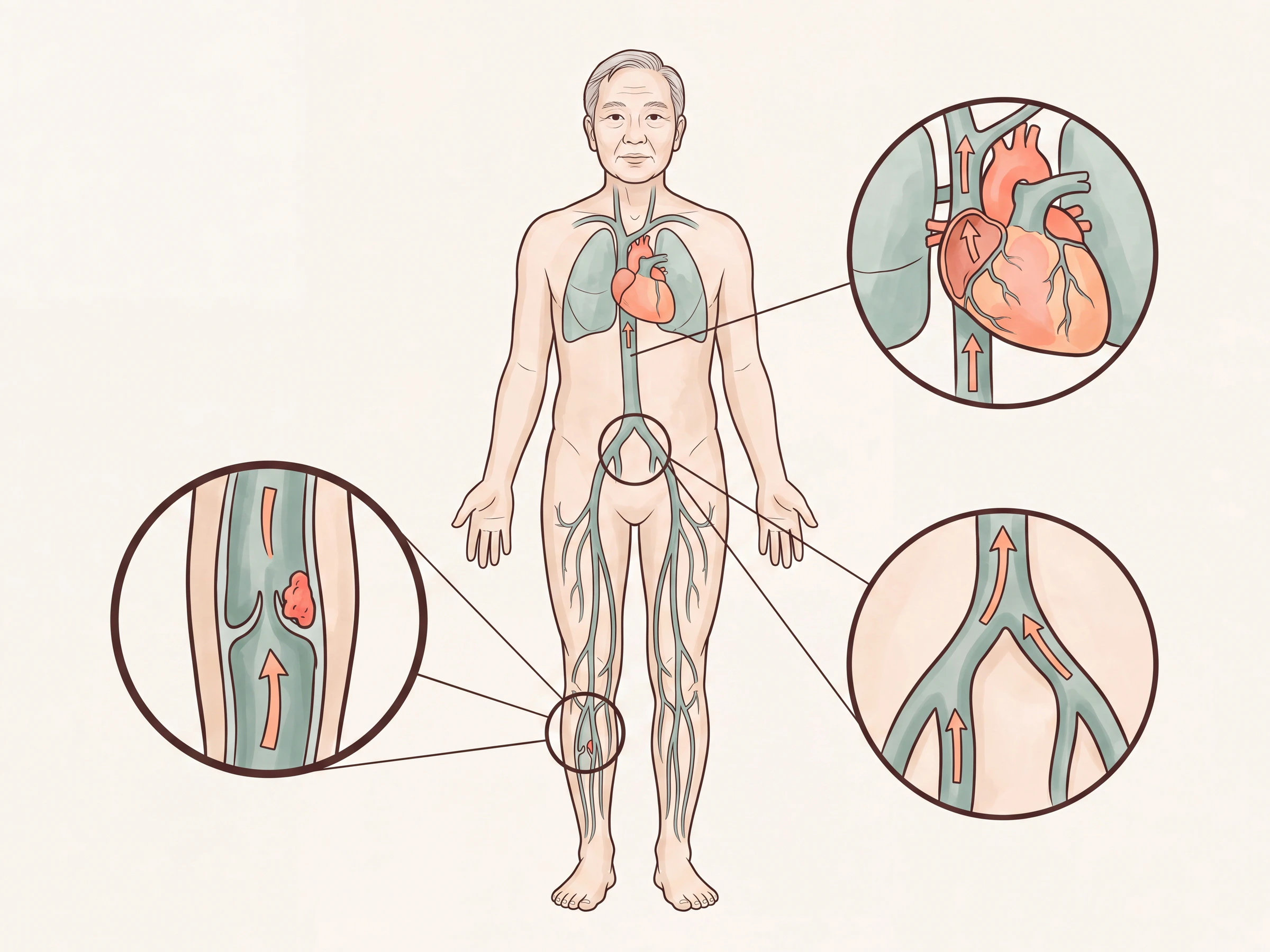
Clots in deep leg veins may cause no symptoms or one-sided swelling, pain, warmth, and color changes. Prompt assessment matters because a clot can travel to the lungs.
Summary before reading further
What is this topic, and why does it matter?
Deep vein thrombosis, or DVT, is a clot in a deep vein, often in the calf, thigh, or pelvis. Risk increases with immobility after surgery, prolonged bed rest, long journeys, cancer, pregnancy, hormone use, or previous blood clots.
Symptoms can resemble muscle injury or infection, so they cannot confirm the diagnosis alone. Blood tests and ultrasound may be selected according to risk.
Health glossary
- DVT
- A blood clot in a deep vein, usually in the leg. It can be dangerous if part of the clot breaks off and blocks a blood vessel in the lung.
What happens in the body?
Explain the mechanism step by step.
DVT may cause swelling, pain, or warmth in one leg, though symptoms can be subtle. A clot can travel to the lungs and become life-threatening. Do not massage the leg or wait for it to resolve if DVT is suspected.
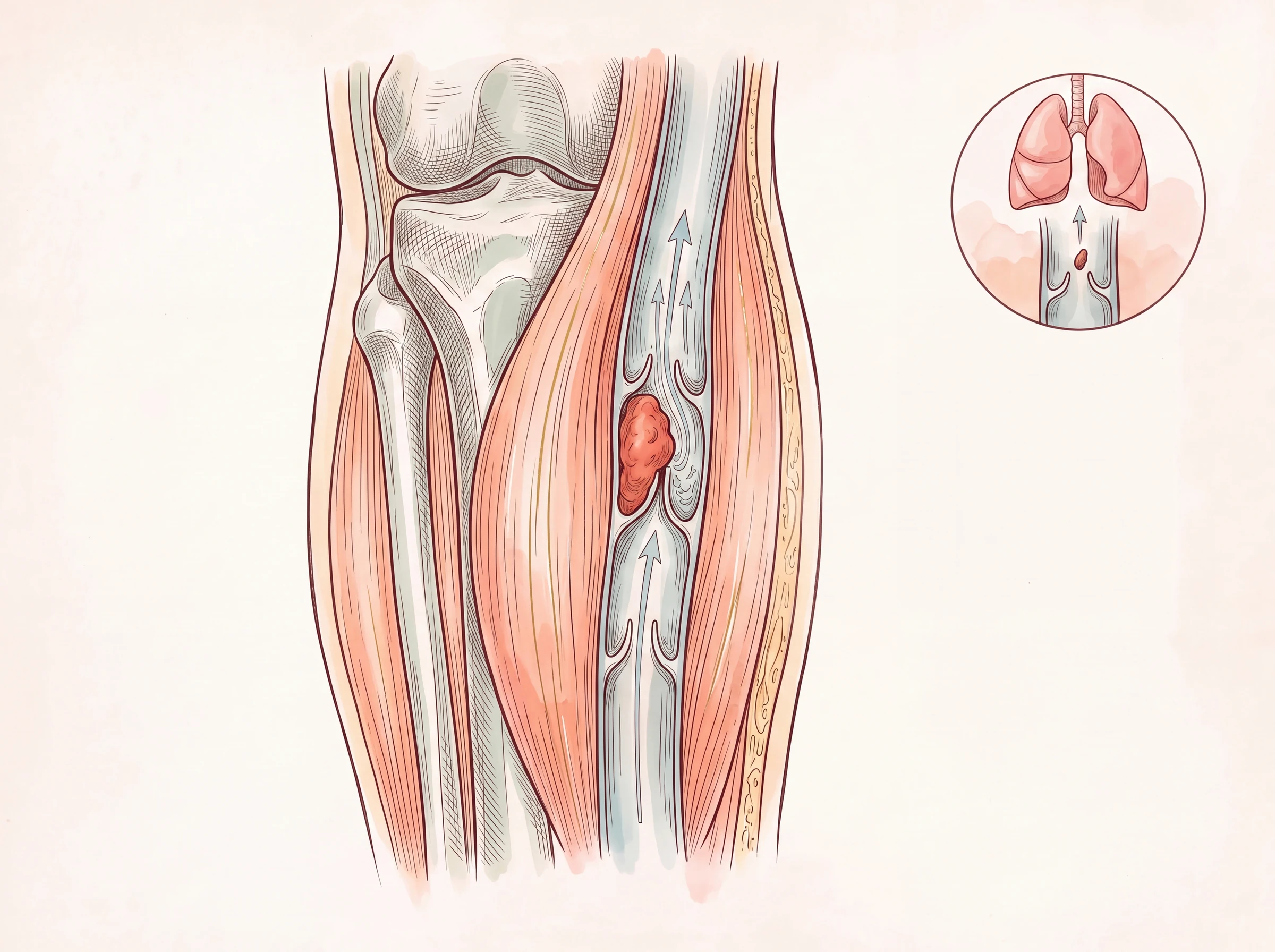
Blood flows more slowly
Prolonged immobility slows blood flow in the deep veins, including behind the venous valves.
Blood clots form
Platelets and clotting proteins join together to form clots that block the flow.
The clot may move to the lung.
The dislodged clot travels through the right heart into the pulmonary artery.
Values or criteria that you should know
Risk scores guide testing, but no home measurement rules out a blood clot.
DVT assessment combines medical history, examination, a clinical probability score, D-dimer testing, and ultrasound in the appropriate sequence.
Differences in calf circumference
Measure the same level on both sides.
- Reference range
- A small difference in calf size can occur naturally.
- You should make an appointment for an evaluation.
- A calf circumference difference greater than 3 cm is one part of the Wells score, not a diagnosis on its own.
- Should be evaluated urgently
- New swelling in one leg, especially with pain, redness, recent surgery, or prolonged bed rest, needs same-day assessment.
Signs of a blood clot in the lungs
breathing and circulation
- Reference range
- Some DVTs have no obvious symptoms.
- You should make an appointment for an evaluation.
- New shortness of breath, rapid pulse, or chest pain may indicate pulmonary embolism.
- Should be evaluated urgently
- Call emergency services for sudden breathlessness, chest pain, coughing up blood, fainting, or blue lips.
Causes · Symptoms · Examination · Care
See important information in one place.
Causes and related factors
- Surgery, hospital stay, long distance travel, or little movement
- cancer, pregnancy, estrogen and history of blood clots
- Injury, smoking, obesity, and certain clotting disorders
Common symptoms
- One leg is swollen, painful, tender, or warm.
- The skin may become red or discolored.
- Breathlessness, chest pain, coughing up blood, or fainting may indicate a pulmonary embolism.
How do doctors check?
- Risk assessment and physical examination
- Venous ultrasound is the main examination.
- D-dimer or CT pulmonary angiography is selected according to clinical probability.
Start taking care of it systematically.
- Stand and move your legs when safe, especially during travel.
- Use anticoagulants as prescribed by your doctor and do not stop on your own.
- Call emergency services for sudden breathlessness, chest pain, coughing up blood, or loss of consciousness.
Important things you should know
Keep these points in mind.
Some people have no symptoms.
The absence of leg swelling or pain does not rule out DVT, especially in those with clear risk factors.
One-sided symptoms matter
Any swelling, pain, tenderness, warmth, or discoloration in one leg or arm should be evaluated promptly.
A blood clot in the lungs is an emergency.
Sudden breathlessness, chest pain that worsens with breathing, coughing up blood, faintness, or fainting may indicate a pulmonary embolism.
Daily food and care
Start with manageable everyday steps.
- Get up and move your legs as advised after surgery, during illness, or when sitting for long periods. Ask a doctor for advice if you are at high risk.
- Follow your anticoagulant treatment plan and consult the care team before changing supplements or medicines, as interactions can increase bleeding risk.
Read on to understand.
Read on for complete information on health and products.
Main references