


Easy-to-understand health information
Coronary heart disease
Plaque can narrow coronary arteries. Explore causes, risks, and vascular care before an emergency develops.
Summary before reading further
What is this topic, and why does it matter?
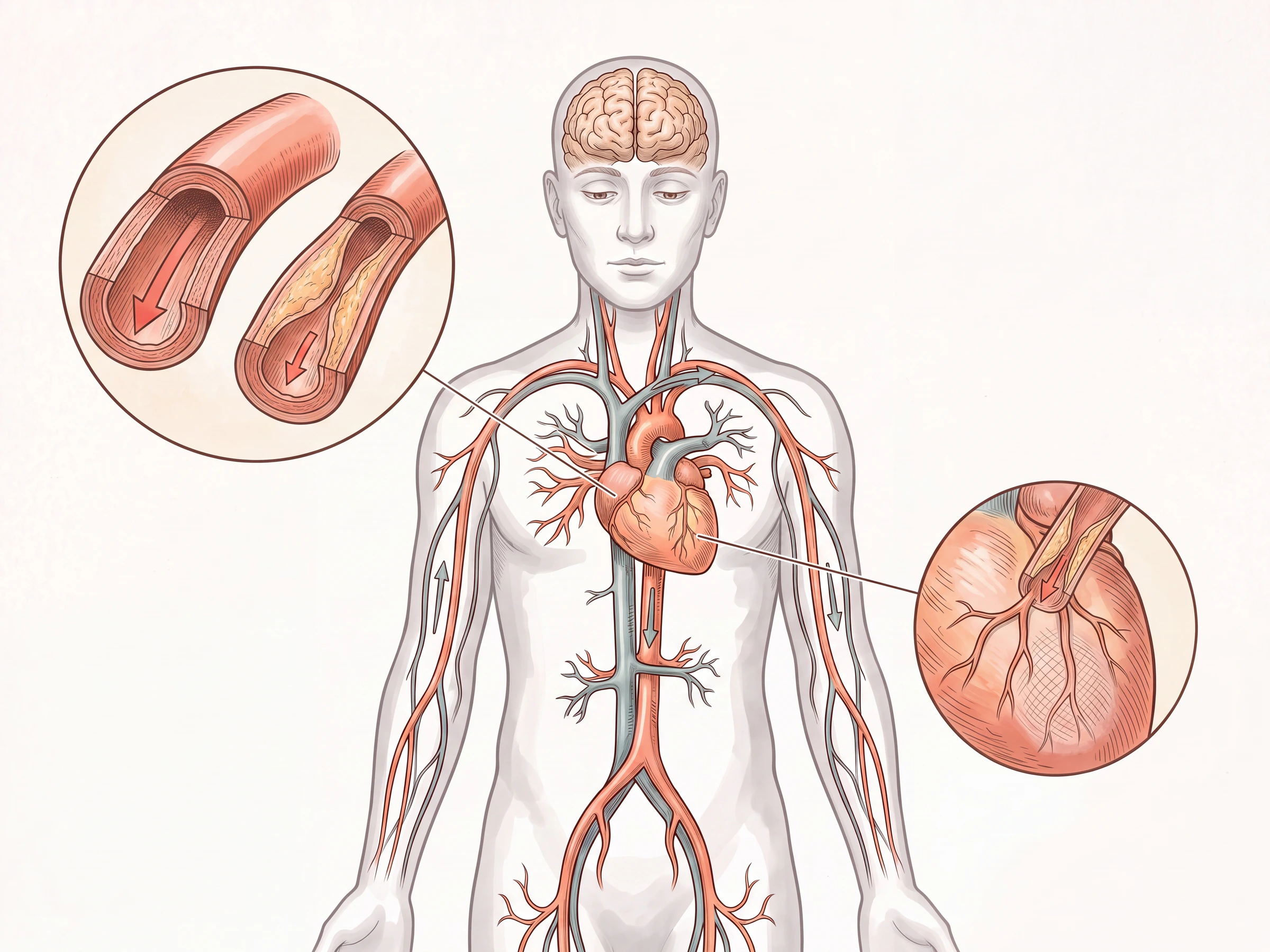
Coronary artery disease often involves plaque within artery walls, narrowing blood flow to heart muscle. If plaque ruptures and a clot forms, it can cause an acute heart attack.
This process can develop silently over years. Knowing your LDL, blood pressure, blood sugar, smoking exposure, family history, and activity level helps identify opportunities to reduce risk before a major event.
Health glossary
- LDL and HDL
- LDL carries cholesterol and can contribute to accumulation in artery walls when excessive. HDL carries some cholesterol back to the liver. Interpret both alongside other risk factors.
- ECG or electrocardiogram
- A recording of the heart's electrical activity using electrodes on the skin, helping identify rhythm problems and certain other abnormalities.
- Troponin
- A blood protein marker that can rise with heart muscle injury. Interpret it alongside symptoms and other cardiac test results.
- CT and MRI
- CT uses X-rays, while MRI uses magnetic fields and radio waves. The choice depends on the organ and clinical question.
What happens in the body?
Explain the mechanism step by step.
Cardiovascular risk reflects LDL, blood pressure, blood glucose, smoking, kidney disease, age, and family history. Assess the whole picture rather than one nutrient or result.
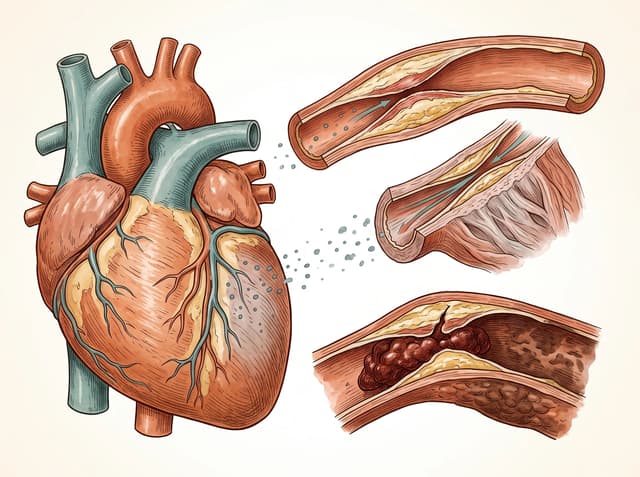
Plaque forms
LDL gets trapped in blood vessel walls and triggers inflammatory cells.
Insufficient blood supply.
When you exert effort, your heart needs more oxygen, causing tightness in your chest.
Plaque ruptures and a clot forms.
Acute blockage causes ischemia and damage to the heart muscle.
Values or criteria that you should know
Look at both emergency symptoms and numbers that reduce long-term risk.
Coronary heart disease risk depends on more than LDL alone. People with established disease often need stricter LDL targets than the general population.
chest pain
Central chest tightness, pressure, or heaviness.
- Reference range
- Symptoms that occur with exertion and ease with rest still need assessment. They should not be assumed harmless.
- You should make an appointment for an evaluation.
- New or more frequent chest symptoms, symptoms at rest, or symptoms with less exertion need urgent assessment.
- Should be evaluated urgently
- Call an ambulance for chest tightness lasting more than a few minutes or recurring, especially with breathlessness, sweating, nausea, or pain spreading to the arm or jaw.
LDL targets with established atherosclerotic disease.
LDL cholesterol levels
- Reference range
- For people with established vascular disease who are not at very high risk, an LDL target below 70 mg/dL is generally used.
- You should make an appointment for an evaluation.
- The 2026 guidelines generally use an LDL target below 55 mg/dL for people at very high risk.
- Should be evaluated urgently
- Diet alone may not be enough. Do not stop lipid-lowering medicine after reaching your target without medical advice.
Coexisting high blood pressure
Average blood pressure
- Reference range
- The general goal is below 130/80 mmHg.
- You should make an appointment for an evaluation.
- Persistently high blood pressure increases the heart's workload and the risk of plaque rupture.
- Should be evaluated urgently
- Higher than 180/120 accompanied by chest pain or shortness of breath is an emergency.
Causes · Symptoms · Examination · Care
See important information in one place.
Causes and related factors
- High LDL, high blood pressure, diabetes, and kidney disease.
- Smoking, obesity, inactivity, and sleep problems.
- Age, sex, and family history of early disease.
Common symptoms
- Central chest tightness, pressure, or heaviness on exertion.
- Pain spreading to the arm, jaw, or back, with sweating, nausea, or breathlessness.
- Women, older adults, and people with diabetes may have less pronounced symptoms.
How do doctors check?
- ECG and troponin values in emergencies
- Functional cardiac testing or coronary CT according to risk.
- Assess LDL, blood pressure, glucose, kidney function, and lifestyle.
Start taking care of it systematically.
- Chest pain that is new or while resting should be treated as an emergency.
- Reduce saturated fat, sugary, processed foods and quit smoking.
- Exercise and use risk-reducing medications according to your doctor's plan.
Important things you should know
Keep these points in mind.
Narrowed arteries from accumulated plaque
Atherosclerosis is the main cause. Plaque narrows arteries, reduces blood flow, and may rupture, leading to a blood clot.
ReferencesNIH · NHLBIAssess overall risk.
LDL, blood pressure, diabetes, smoking, age, kidney disease, and family history combine to determine risk, so treatment targets differ.
Lifestyle can help slow down the disease.
A heart-supportive diet, activity, avoiding smoking, and weight management can help prevent or delay coronary heart disease.
ReferencesNIH · NHLBIMedicines reduce risk when indicated.
People at high risk or with established disease may need lipid-lowering, blood pressure, or other medicines alongside lifestyle changes. Do not stop treatment because you feel better.
Daily food and care
Plan balanced meals for vascular health.
- Reduce sweets, sugary drinks, greasy or fried foods, processed meats, saturated fat, and highly processed foods.
- Include suitable amounts of vegetables, fruit, beans, whole grains, fish, and unsaturated fats, while reducing sodium.
- Stay active within your ability, stop smoking, sleep adequately, and regularly monitor LDL, blood pressure, blood glucose, and weight.
Read on to understand.
Read on for complete information on health and products.
Main references
