Easy-to-understand health information
chronic kidney disease
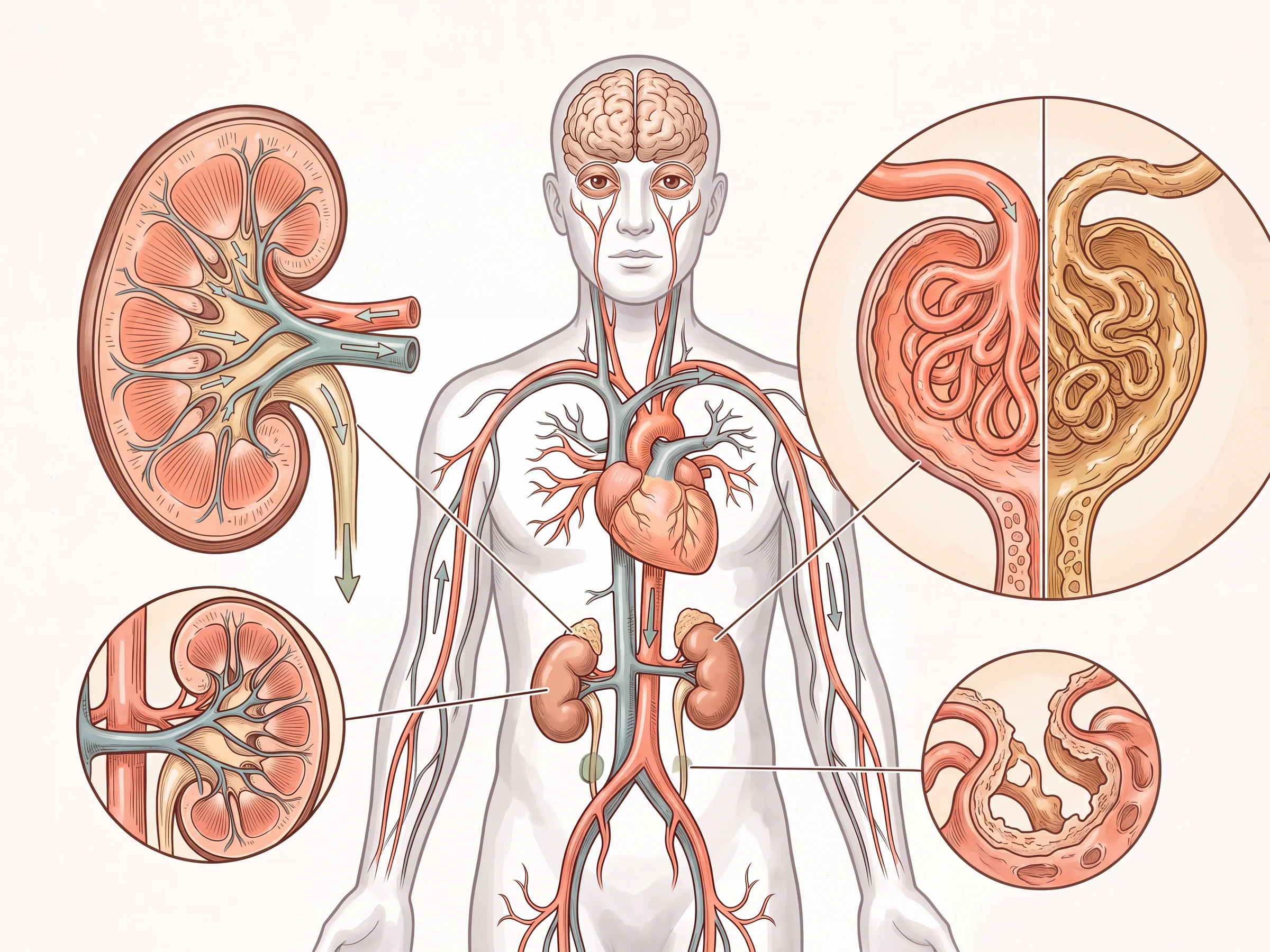
Early kidney impairment can be silent. High blood pressure, diabetes, and certain painkillers are relevant factors. Blood and urine tests can detect changes before symptoms develop.
Summary before reading further
What is this topic, and why does it matter?
Check both blood eGFR and urine albumin. Protein leakage may occur before filtration declines, or filtration may decline without substantial leakage.
Care aims to slow kidney decline, reduce cardiovascular risk, and prevent complications through individualized blood pressure, glucose, medication, and dietary management.
Health glossary
- eGFR
- An estimate of how well the kidneys filter waste, calculated from a blood test. Assess the trend alongside urine test results.
- UACR or urine protein test
- The ratio of albumin to creatinine in urine, used to detect kidney damage that may be present before symptoms appear.
- NSAIDs pain relievers
- Medicines used for pain and inflammation that can affect the stomach, kidneys, blood pressure, and heart, particularly with prolonged use or duplicate products.
What happens in the body?
Explain the mechanism step by step.
Diabetes and high blood pressure are leading causes, but kidney inflammation, urinary stones or obstruction, genetics, medicines, and some herbs can also contribute. Early disease may be silent, making eGFR and urine albumin testing important.
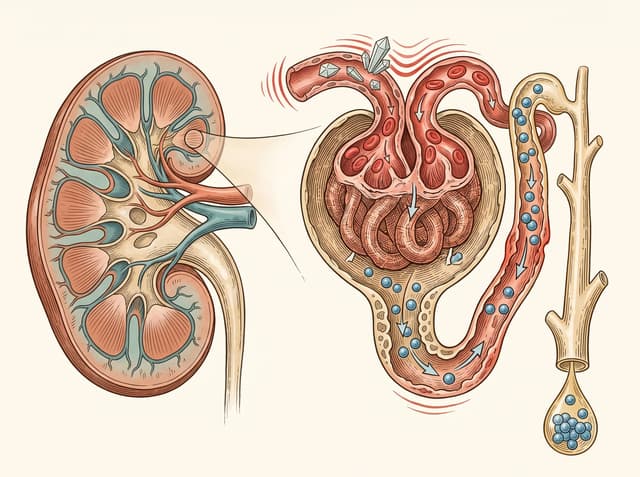
Nephron damage
The kidney's filtering capillaries become leaky or scarred.
Remaining nephrons filter more than usual.
Compensation helps initially but increases pressure within the remaining kidney filters and can accelerate damage.
The balance of the whole body changes
As kidney disease progresses, fluid, salt, acid, potassium, blood cells, and bone health can be affected.
Values or criteria that you should know
Interpret eGFR alongside urine albumin and how long abnormalities have been present.
CKD requires kidney structural or functional abnormalities lasting at least three months. One eGFR reading is insufficient.
eGFR
Estimated glomerular filtration rate, measured in mL/min/1.73 m².
- Reference range
- An eGFR of 60 or higher can be within a healthy range, but CKD may still be present with urine albumin or other kidney abnormalities.
- You should make an appointment for an evaluation.
- An eGFR below 60 for at least three months meets a criterion for CKD. A level below 30 requires closer care planning.
- Should be evaluated urgently
- An eGFR below 15 indicates kidney failure. Treatment decisions also depend on symptoms, potassium, fluid balance, and changes over time.
Urine albumin-to-creatinine ratio.
UACR unit mg/g
- Reference range
- Urine ACR below 30 mg/g is category A1.
- You should make an appointment for an evaluation.
- Urine ACR of 30–300 mg/g is category A2; above 300 mg/g is A3. Higher levels are associated with greater kidney and cardiovascular risk.
- Should be evaluated urgently
- Abnormal results must be confirmed because fever, exercise, menstruation, or infection can cause temporary elevations.
potassium
Electrolytes regulated by the kidneys.
- Reference range
- The reference range depends on the laboratory and is usually around 3.5–5.0 mmol/L.
- You should make an appointment for an evaluation.
- High or low potassium requires review of medicines, diet, and blood sample quality.
- Should be evaluated urgently
- Arrhythmia, marked weakness, or very high potassium require urgent care.
Causes · Symptoms · Examination · Care
See important information in one place.
Causes and related factors
- Diabetes, high blood pressure and heart disease
- Kidney inflammation, genetics, stones or urinary tract obstruction.
- NSAIDs, certain other medicines, herbs, or substances that can harm kidneys.
Common symptoms
- In the first stage there are usually no symptoms.
- Swelling, tiredness, itching, nausea, or changes in urination as the disease worsens.
- Foamy urine may indicate a protein leak.
How do doctors check?
- Repeat eGFR and urine albumin-to-creatinine ratio testing.
- Check blood pressure, glucose, electrolytes, and blood count.
- Ultrasound or biopsy for specific causes
Start taking care of it systematically.
- Control blood pressure and blood sugar with kidney-protective medicine when appropriate.
- Reduce sodium and individualise protein and potassium intake.
- Avoid kidney-damaging drugs and review all medications with your treatment team.
Important things you should know
Keep these points in mind.
Diabetes and blood pressure are the main causes.
Controlling these two things helps protect the kidneys, heart, and brain.
Use NSAIDs with appropriate precautions.
Prolonged use or use during dehydration can harm the kidneys, especially in older adults and people with kidney disease.
Potassium and protein advice must be individualised.
Dietary restrictions depend on disease stage, blood results, and dialysis. Do not impose restrictions yourself.
Daily food and care
Start with manageable everyday steps.
- Reduce salt, processed foods, sugar, and excess fat, and manage weight to support blood pressure and diabetes care.
- Consult a renal dietitian before salt substitutes, high-protein products, herbs, or supplements, which may contain unsuitable potassium or mineral amounts.
Read on to understand.
Read on for complete information on health and products.
Main references