Easy-to-understand health information
Cardiac arrhythmia.
Abnormal electrical signaling can make the heart beat too fast, too slowly, or irregularly. Some rhythms are harmless; others increase the risk of fainting, heart failure, or stroke.
Summary before reading further
What is this topic, and why does it matter?
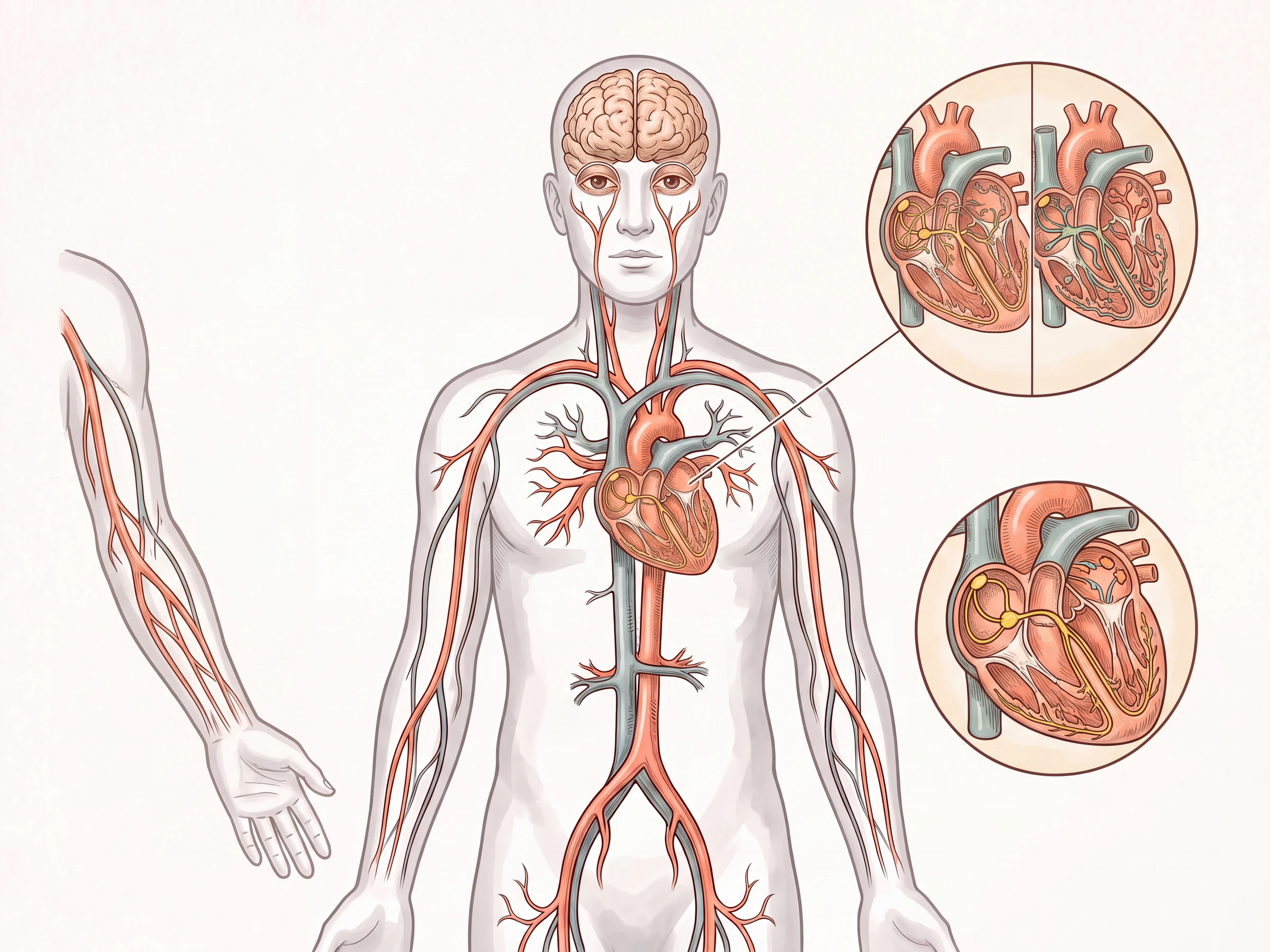
The heart's electrical system controls its rate and rhythm. A problem with signal generation or transmission can make it beat too fast, too slowly, or irregularly. Arrhythmia therefore describes several conditions with different levels of severity and treatment needs.
Symptoms may include a racing or skipped heartbeat, dizziness, fatigue, breathlessness, or fainting, though some people have none. ECGs and heart rhythm monitoring can connect symptoms with the rhythm occurring at the time.
Health glossary
- ECG or electrocardiogram
- A recording of the heart's electrical activity using electrodes on the skin, helping identify rhythm problems and certain other abnormalities.
What happens in the body?
Explain the mechanism step by step.
Arrhythmias vary: some are harmless, while others impair pumping or increase clot risk. ECG findings must be considered alongside symptoms; palpitations alone do not identify the condition.
The origin of the signal
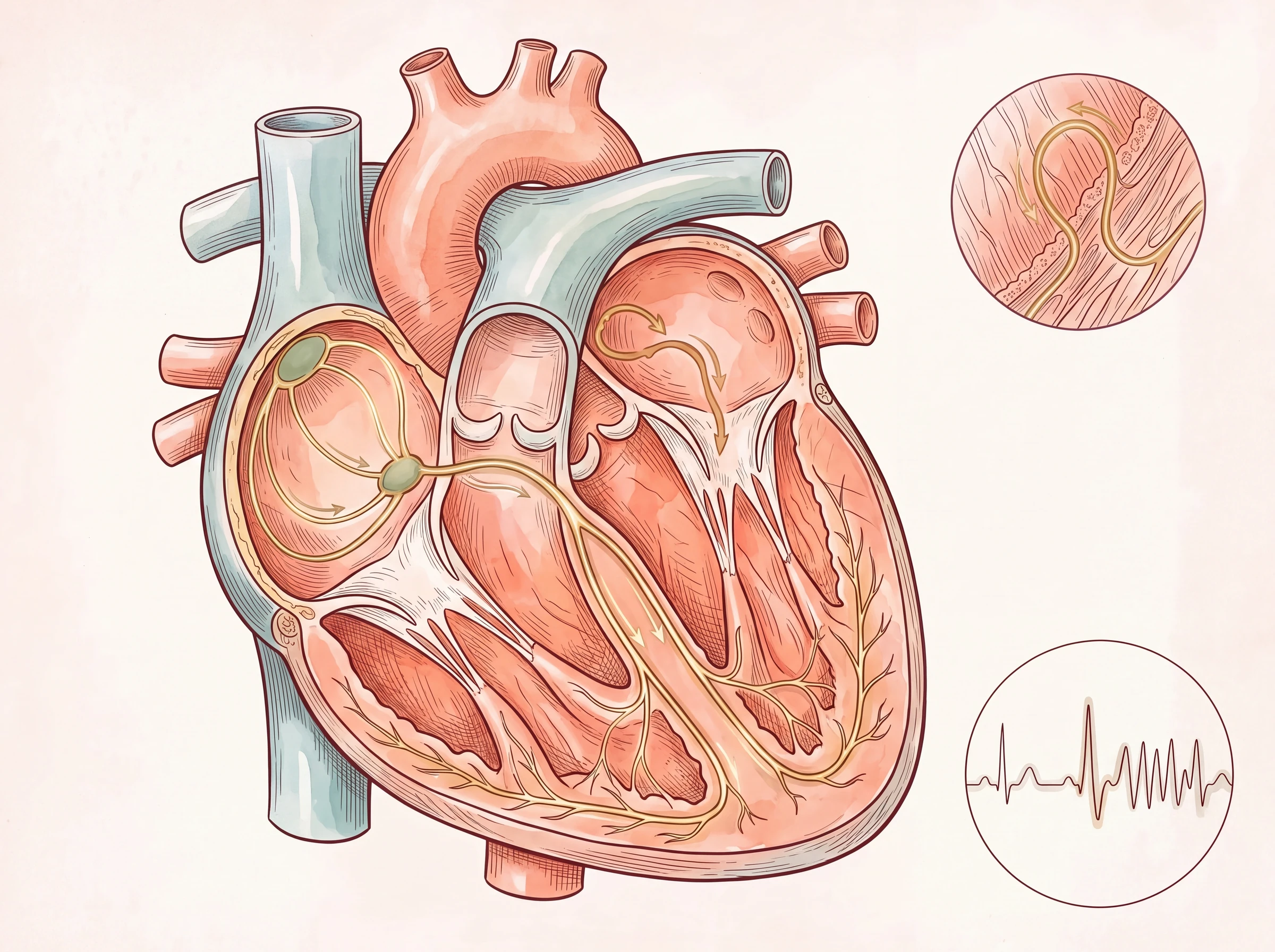
The sinus node in the right atrium sets the heart's usual rhythm.
Signals pass through the heart
The signal travels through the AV node and conduction system so the upper and lower heart chambers contract in sequence.
Abnormal signalling pathways
Electrical signals that start in the wrong place, circulate abnormally, or travel incorrectly can make the heart beat too fast, too slowly, or irregularly.
Values or criteria that you should know
Your pulse provides a clue, but an ECG is needed to identify the type of arrhythmia.
The same pulse rate can have different meanings based on activity, medications, fever, dehydration, and underlying heart disease.
Resting pulse
Count the full 60 seconds when resting.
- Reference range
- A resting heart rate of about 60–100 beats per minute is common in adults. Athletes and people taking certain medicines may have lower rates.
- You should make an appointment for an evaluation.
- A pulse below 60 or above 100 with faintness, breathlessness, or palpitations warrants an ECG assessment.
- Should be evaluated urgently
- Fainting, chest pain, severe breathlessness, or confusion with an irregular pulse require emergency care.
consistency
Is the rhythm regular and how long do the symptoms last?
- Reference range
- A smartwatch can help record episodes but cannot confirm the diagnosis.
- You should make an appointment for an evaluation.
- A repeatedly irregular pulse warrants a 12-lead ECG or longer recording as advised by your doctor.
- Should be evaluated urgently
- Suspected atrial fibrillation requires a stroke risk assessment. Do not start blood thinners without medical advice.
Causes · Symptoms · Examination · Care
See important information in one place.
Causes and related factors
- Age, heart disease, high blood pressure, and thyroid disorders
- Certain medications, alcohol, lots of caffeine, and stimulants
- Mineral abnormalities, infections, and sleep apnea
Common symptoms
- Palpitations or an irregular pulse.
- Tired easily, dizzy, or faint
- Some people have no symptoms and are found through testing.
How do doctors check?
- ECG and pulse check
- An ambulatory heart monitor for intermittent symptoms.
- Blood tests, echocardiography, or other investigations according to the suspected condition.
Start taking care of it systematically.
- Record time, symptoms, pulse, and triggers.
- Review medicines, stimulant drinks, and other conditions with your doctor.
- Chest pain, difficulty breathing, fainting, or sudden weakness, seek emergency help.
Important things you should know
Keep these points in mind.
Heart palpitations do not always mean cardiac arrhythmia.
Palpitations can relate to stress, fever, medicines, thyroid conditions, or other causes. Recording the rhythm during symptoms helps identify the cause; the sensation alone is not a diagnosis.
ReferencesNIH · NHLBIThere can be several causes and triggers.
Possible contributors include heart disease, high blood pressure, diabetes, thyroid disorders, sleep apnea, genetics, certain medicines, dehydration, and electrolyte disturbances. Identify the cause before choosing treatment.
ReferencesNIH · NHLBINot everyone needs to avoid caffeine.
Usual caffeine intake has not been shown to increase atrial fibrillation risk in most people, although some notice a faster heartbeat after drinking it. Track your response and be cautious with energy drinks or high caffeine doses.
ReferencesAmerican Heart AssociationDaily food and care
Support heart health as a whole rather than relying on avoiding one drink.
- Reduce sugary, fatty, and processed foods and include vegetables, beans, whole grains, whole fruit, and suitable protein sources. These choices support a wider plan for weight, blood pressure, blood sugar, and vascular health.
- Avoid smoking, limit alcohol, sleep adequately, treat sleep apnea, and follow your plan for existing conditions. Track whether caffeine triggers your symptoms.
- Do not start potassium, magnesium, or electrolyte supplements without advice, especially with kidney disease, heart disease, or regular medicines. Levels that are too high or too low can disturb heart rhythm.
Read on to understand.
Read on for complete information on health and products.
Main references