Easy-to-understand health information
Cystitis and urinary tract infections
Bacteria in the bladder can cause burning, frequent urination, or urgency. Spread to the kidneys may cause fever and flank pain.
Summary before reading further
What is this topic, and why does it matter?
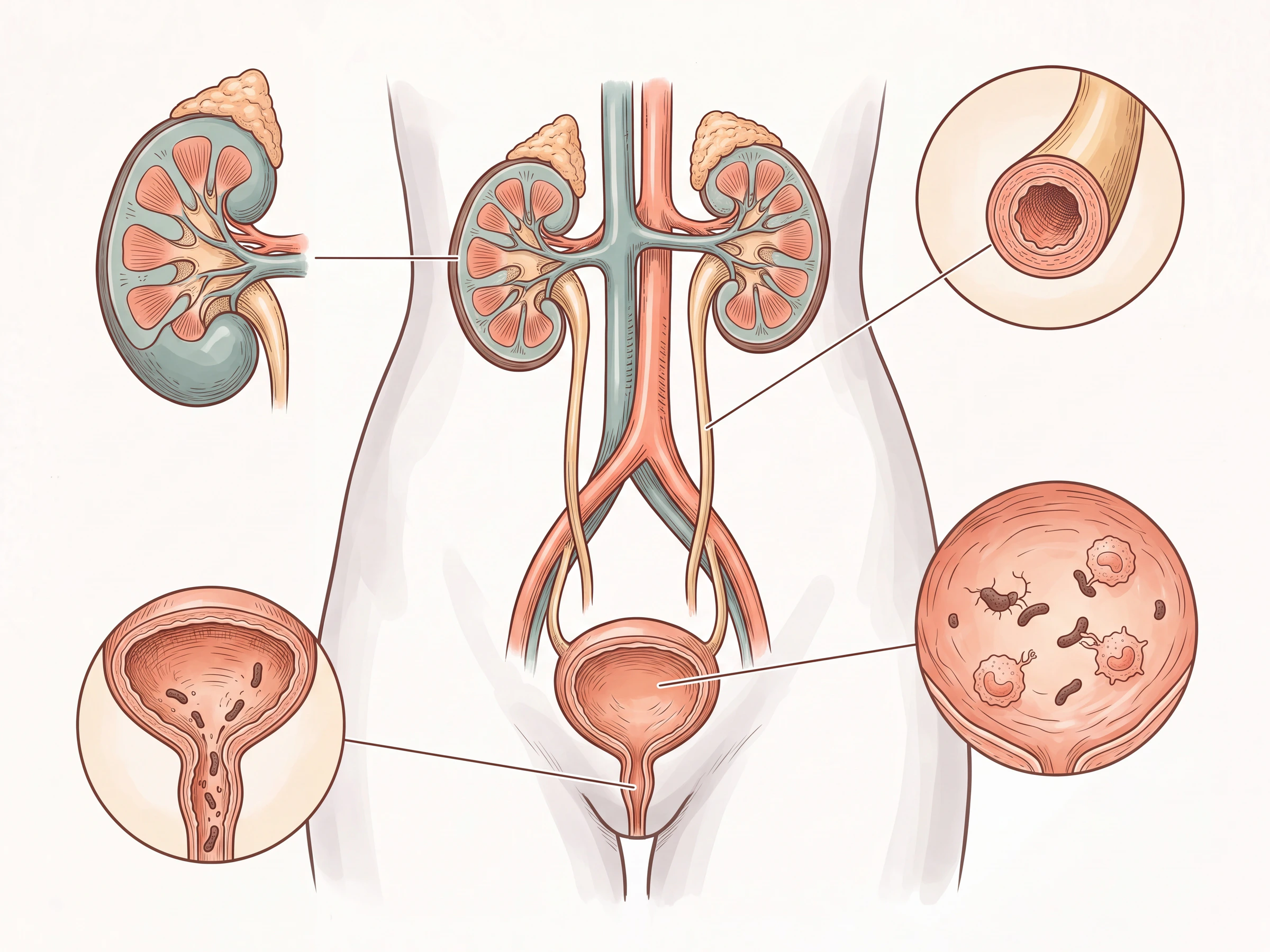
Lower urinary tract infections can cause burning, frequent or urgent urination, lower abdominal discomfort, and cloudy or strong-smelling urine. Similar symptoms can occur with vaginitis, urinary stones, or sexually transmitted infections, so assessment should consider the context.
Women have a higher risk because of their urethral anatomy. Men, children, pregnant people, older adults, and people with diabetes, urinary stones, catheters, or reduced immunity may need a more detailed assessment. Urinalysis and urine culture can guide antibiotic selection when needed.
What happens in the body?
Explain the mechanism step by step.
Burning or frequent urination does not always mean a UTI, and cloudy or strong-smelling urine alone is insufficient for diagnosis. In older adults especially, assess urinary symptoms alongside test results to avoid unnecessary antibiotics.
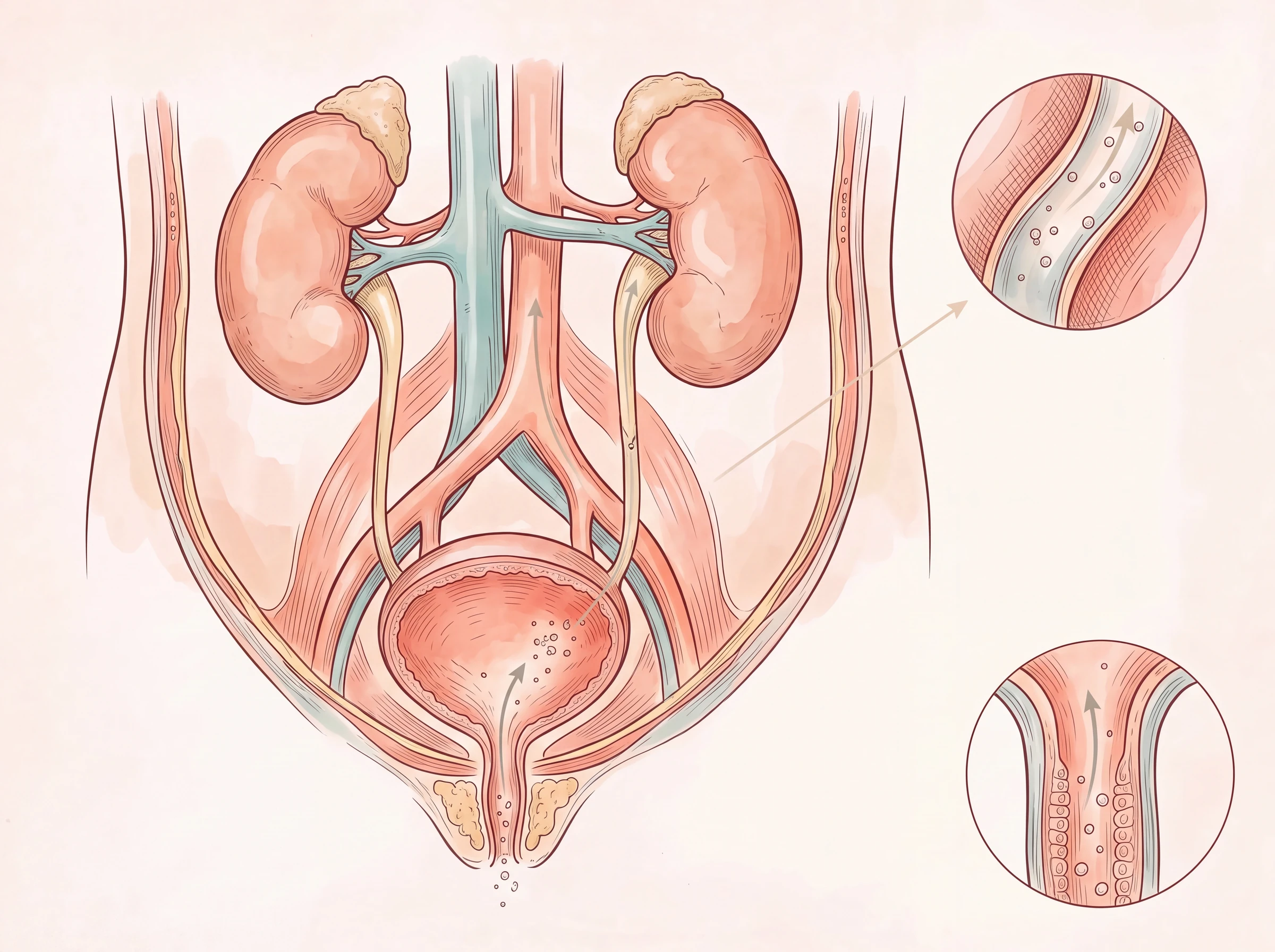
Infection enters the urethra
Gut bacteria are a common cause and can ascend the urinary tract.
Cystitis
Bladder lining irritation causes burning, urgency, and frequent passage of small amounts of urine.
The infection may reach the kidneys.
Infection ascending through a ureter to the kidney can cause fever, flank pain, and a risk of sepsis.
Values or criteria that you should know
Interpret urine bacterial counts alongside symptoms and the collection method. One number cannot determine antibiotic treatment for everyone.
Burning, frequency, and lower abdominal pain can suggest cystitis. Fever with flank pain raises concern for kidney infection.
lower urinary tract symptoms
Burning, frequent or urgent urination, and pain above the pubic bone.
- Reference range
- Several new urinary symptoms make infection more likely, but vaginal discharge, sexually transmitted infections, and other causes still need consideration.
- You should make an appointment for an evaluation.
- Urinary symptoms in men, pregnant women, frail older adults, or people with catheters require assessment tailored to their circumstances.
- Should be evaluated urgently
- Fever, back or flank pain, vomiting, reduced alertness, or low blood pressure may indicate kidney infection or sepsis.
Culture results
Organism type and count from a correctly collected sample.
- Reference range
- Bacteria in the urine without symptoms usually do not require antibiotics. Exceptions include pregnancy and certain urinary procedures.
- You should make an appointment for an evaluation.
- Persistent or recurrent symptoms require review of antibiotic susceptibility and possible complications.
- Should be evaluated urgently
- Do not use leftover antibiotics. The appropriate type and treatment duration vary.
Causes · Symptoms · Examination · Care
See important information in one place.
Causes and related factors
- Female sex, sexual activity, and postmenopausal changes.
- Urinary retention, prostate enlargement, urinary stones, and catheters.
- Diabetes, pregnancy and urinary tract disorders
Common symptoms
- Burning, frequent or urgent urination
- Lower abdominal pain, blood in the urine
- Fever, chills, flank pain, and nausea may indicate kidney infection.
How do doctors check?
- Review symptoms and test the urine.
- Urine culture is useful in complicated or recurrent infection, pregnancy, or suspected kidney infection.
- Arrange imaging if stones, obstruction, or structural abnormalities are suspected.
Start taking care of it systematically.
- Drink appropriate fluids and avoid holding urine.
- Take the antibiotic and complete the duration prescribed. Do not use leftover medicine.
- Go to hospital for fever, chills, flank pain, vomiting, reduced alertness, or low blood pressure.
Important things you should know
Keep these points in mind.
Fever and flank pain may indicate kidney infection.
Chills, vomiting, or flank pain with urinary symptoms needs prompt assessment to reduce complications.
Bacteria in urine without symptoms do not always require antibiotics.
Treatment depends on symptoms, pregnancy, and planned urinary procedures. Unnecessary antibiotics increase resistance.
When symptoms recur, review their pattern and contributing factors.
Review sexual activity, menopause, urinary retention, kidney stones, incomplete bladder emptying, and previous urine culture results.
Daily food and care
Drink appropriate fluids, avoid holding urine, and take medication as prescribed.
- Drink an amount suited to your health and urinate when you feel the urge. Sugary drinks and supplements do not replace antibiotics when prescribed.
- A balanced diet supports health, but no single food cures the infection. Recurrence warrants assessment of contributing factors rather than repeatedly buying the same medicine.
Read on to understand.
Read on for complete information on health and products.
Main references