Easy-to-understand health information
type 2 diabetes
Understand insulin resistance, glucose testing, diet, movement, sleep, medication, and monitoring for complications.
Summary before reading further
What is this topic, and why does it matter?
Type 2 diabetes involves reduced insulin effectiveness or insufficient insulin production, leaving glucose elevated in the blood. Symptoms can develop unnoticed, so diagnosis requires testing.
The goal includes protecting the heart, kidneys, eyes, nerves, and feet, not only lowering glucose. Several risk factors need coordinated care.
Health glossary
- insulin resistance
- A condition in which cells do not respond well to insulin. The body therefore has to use more insulin to control blood sugar.
- beta cells
- Cells in the pancreas that make insulin to help control blood sugar levels.
- HbA1c
- HbA1c reflects average blood glucose over roughly two to three months and supports diagnosis or monitoring alongside other information.
What happens in the body?
Explain the mechanism step by step.
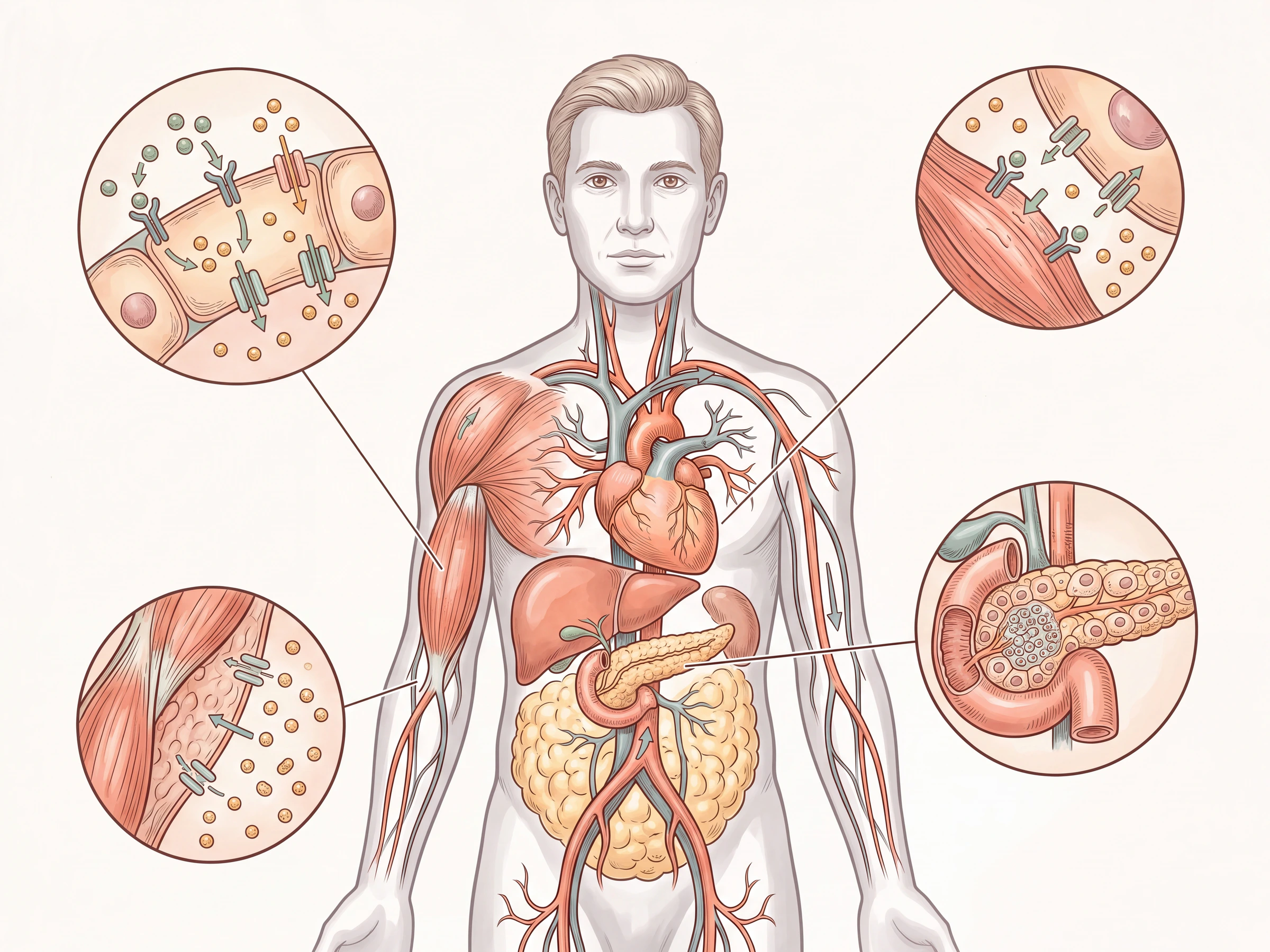
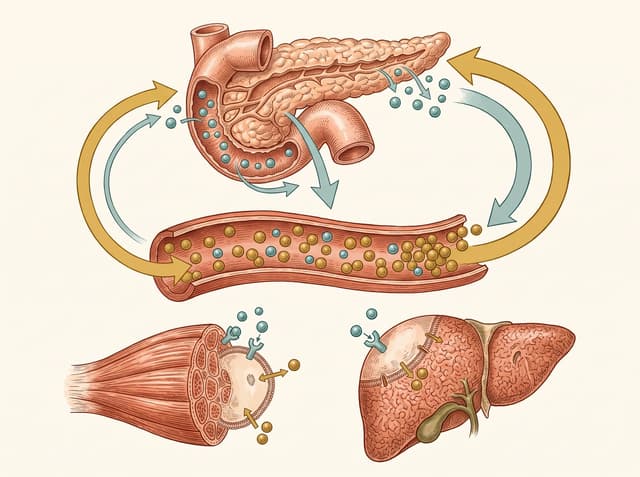
Type 2 diabetes develops over years through insulin resistance and declining beta-cell function. Genetics contribute, while sleep, weight, liver fat, diet, and activity influence its progression.
Insulin-resistant cells.
Muscles take up less glucose while the liver continues releasing it even when it is not needed.
The pancreas compensates
Beta cells secrete more insulin to control blood sugar levels.
Insufficient compensation
Persistently high blood glucose, both fasting and after meals, damages small and large blood vessels over time.
Values or criteria that you should know
Understand both current blood glucose and HbA1c, which reflects longer-term levels.
Without clear symptoms, a diagnosis often needs confirmatory testing. Treatment targets may vary with age, medication, and other conditions.
HbA1c
Average blood glucose over roughly two to three months.
- Reference range
- Below 5.7% is within the normal range.
- You should make an appointment for an evaluation.
- HbA1c of 5.7–6.4% indicates prediabetes; 6.5% or higher meets a diabetes criterion when confirmed appropriately.
- Should be evaluated urgently
- An HbA1c target of 7% or lower is common for adults with diabetes, but targets need individual adjustment to avoid low blood sugar.
Fasting blood glucose
No calorie intake for at least eight hours.
- Reference range
- Below 100 mg/dL is within the normal range.
- You should make an appointment for an evaluation.
- Fasting glucose of 100–125 mg/dL indicates prediabetes; 126 mg/dL or higher meets a diabetes criterion when confirmed.
- Should be evaluated urgently
- Blood glucose below 70 mg/dL is low. Shaking, sweating, confusion, or unconsciousness require immediate action.
BMI for Asian adults
Weight (kg) ÷ Height² (meters)
- Reference range
- BMI below 18.5 indicates underweight. The range 18.5–22.9 is below the increased-risk threshold commonly used for Asian adults.
- You should make an appointment for an evaluation.
- For Asian populations, BMI 23 and 27.5 kg/m² are commonly used action points for increased and high risk, respectively.
- Should be evaluated urgently
- BMI alone does not indicate an emergency or measure abdominal fat. Consider waist circumference, blood pressure, glucose, and lipids as well.
Waist circumference
Measure midway between the lowest rib and the top of the hip bone.
- Reference range
- For Asian adults, waist measurements below 90 cm in men and 80 cm in women are below commonly used increased-risk thresholds.
- You should make an appointment for an evaluation.
- A waist circumference of at least 90 cm in men or 80 cm in women indicates increased metabolic risk.
- Should be evaluated urgently
- Waist circumference alone is not a diagnosis. An increased measurement warrants review of blood pressure, glucose, and lipids.
Causes · Symptoms · Examination · Care
See important information in one place.
Causes and related factors
- Family history, age, and gestational diabetes
- Abdominal fat, fatty liver, and inactivity
- Insufficient sleep, sleep apnoea, and sugary or highly processed foods.
Common symptoms
- Thirst, frequent urination, weight loss, or slow wound healing.
- Blurred vision, numb hands or feet, or frequent infections.
- In the first stage there may be no symptoms.
How do doctors check?
- HbA1c, fasting glucose, or another indicated glucose test.
- Confirm again if there are no obvious symptoms.
- Monitor kidneys, eyes, feet, blood pressure, and lipids.
Start taking care of it systematically.
- Reduce sugary drinks and moderate carbohydrate intake.
- Walk after meals, do resistance training, and lose weight when appropriate.
- Use medication and monitoring according to individual goals.
Important things you should know
Keep these points in mind.
Diagnosed with a blood test
Feeling sleepy after a meal or having a preference for sweets is not enough to diagnose diabetes.
Nutrition involves more than avoiding foods.
Meal balance, portions, and consistency matter more than eliminating a single food.
Monitor affected organs.
Coordinate eye, kidney, foot, blood pressure, and lipid care within the diabetes plan.
Daily food and care
Start with manageable everyday steps.
- Reduce sugary drinks, sweets, greasy foods, and highly processed choices. Include vegetables, beans, whole grains, and suitable protein within joint care.
- Spread carbohydrate intake across meals and monitor your blood glucose response, rather than assuming one food always raises or lowers it.
- Medicines and insulin should not be reduced or stopped based on online advice or dietary supplements.
Read on to understand.
Read on for complete information on health and products.
Select product from label information
Choose a formula from the information that can be verified.
A varied diet remains the foundation. Explore the products below to compare formulas, formats, and label information.
Review what you regularly eat before deciding what to supplement.
Compare ingredients, quantity, product form and warnings on the label
Consult a healthcare professional if you have an existing condition, take medication, or have surgery planned.
Supplements complement diet and routines. Follow the label and any treatment plan for existing conditions.
Main references