


Easy-to-understand health information
Thalassemia
Inherited hemoglobin disorders range from carrier states to severe disease. Knowing carrier status before pregnancy is particularly relevant in Thailand.
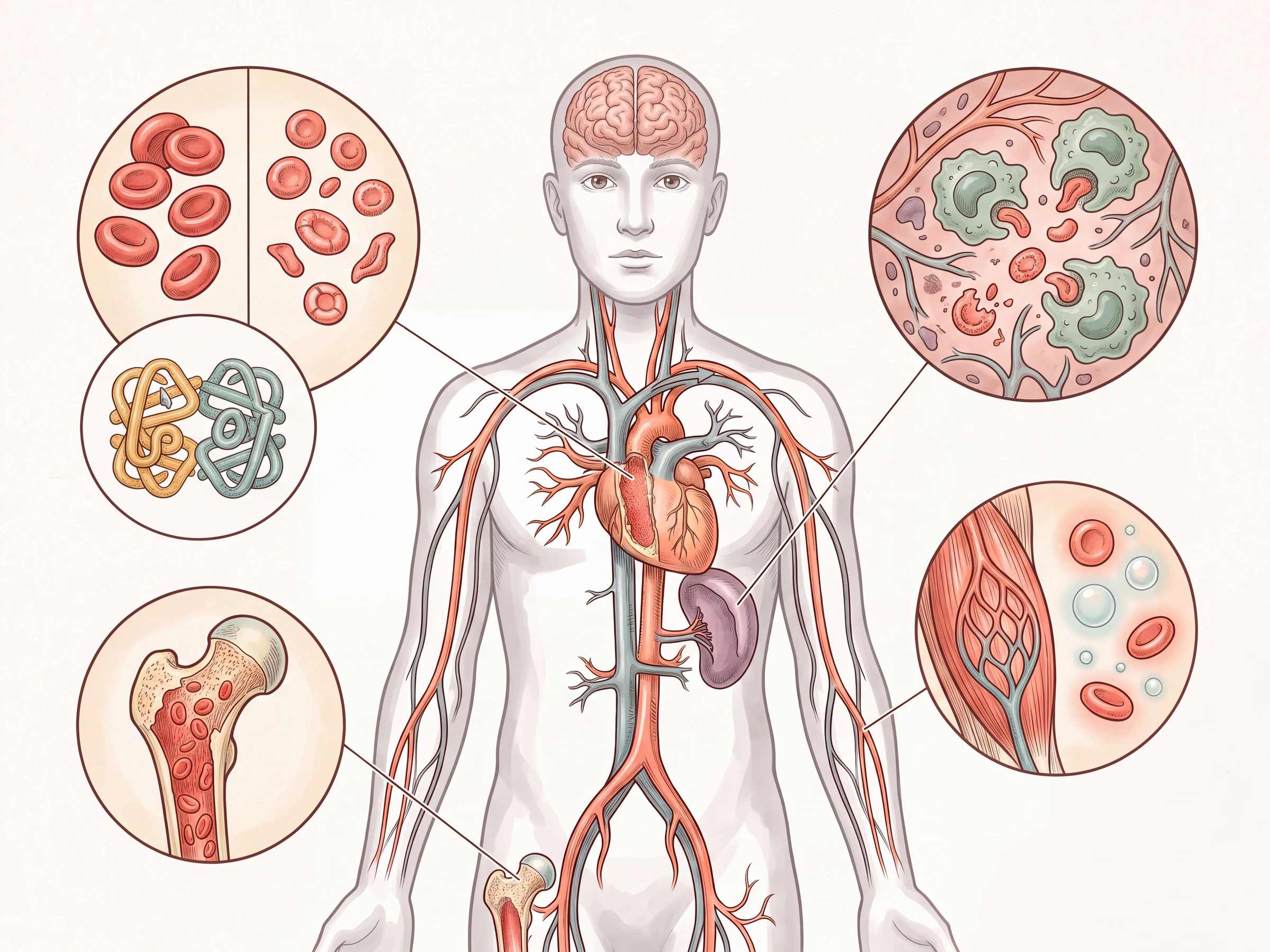
Summary before reading further
What is this topic, and why does it matter?
Small red blood cells do not always indicate iron deficiency. A CBC and hemoglobin analysis help distinguish thalassemia carrier status from iron deficiency.
When both partners carry certain variants, the chance of a child with severe disease increases. Carrier testing and genetic counseling support informed family planning.
Health glossary
- CBC and MCV
- A CBC is a complete blood count. MCV measures average red blood cell size and helps investigate anemia alongside other results.
What happens in the body?
Explain the mechanism step by step.
Severity ranges from carriers with few symptoms to people needing regular transfusions. Iron can accumulate through increased absorption and transfusions. Do not take iron simply because red blood cells are small without confirming the cause.
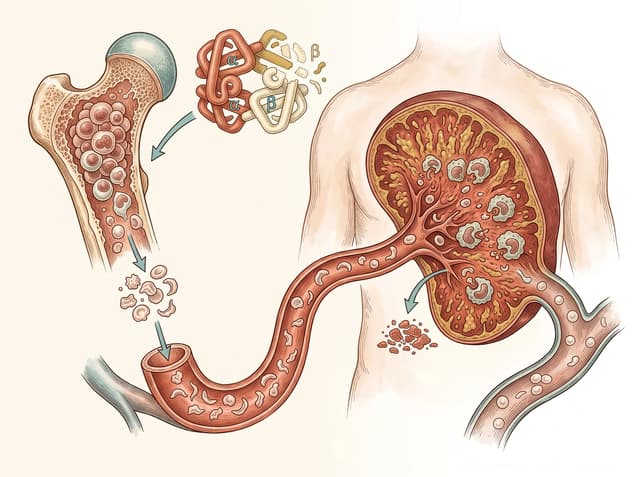
abnormal globin gene
Decreased alpha or beta chain formation
Red blood cell production becomes ineffective.
Unpaired globin chains clump together and damage developing red blood cells in the bone marrow.
Anaemia and iron overload.
Bone marrow expansion, an overactive spleen, and iron overload can affect the heart, liver, and endocrine glands.
Values or criteria that you should know
Small red blood cells do not necessarily mean iron deficiency. Do not start iron before assessment.
Thalassaemia assessment uses a full blood count, blood cell appearance, haemoglobin analysis, and, in some cases, genetic testing.
MCV value
Average size of red blood cells
- Reference range
- In adults, an MCV below 80 fL generally indicates small red blood cells, although laboratory reference ranges vary.
- You should make an appointment for an evaluation.
- Low MCV requires assessment to distinguish thalassaemia from iron deficiency, using ferritin and other blood tests.
- Should be evaluated urgently
- MCV does not indicate the severity of the anemia and does not determine blood transfusion.
hemoglobin type
hemoglobin electrophoresis or HPLC
- Reference range
- Some normal results still do not rule out alpha thalassemia carriers.
- You should make an appointment for an evaluation.
- Abnormal results or suspected carriers should be interpreted by a doctor or genetics expert.
- Should be evaluated urgently
- Couples who both carry thalassaemia should seek counselling before pregnancy to assess the risk to their child.
Causes · Symptoms · Examination · Care
See important information in one place.
Causes and related factors
- Inherit abnormal genes from father and mother
- People with one affected gene often have few symptoms, but two carrier parents may have a child with severe disease.
- Thalassaemia is not contagious and is not caused by low dietary iron.
Common symptoms
- Paleness, fatigue, jaundice, or an enlarged spleen.
- Severe forms can cause slow growth and facial bone changes in children.
- Carriers often have small red blood cells on routine blood testing.
How do doctors check?
- Full blood count.
- hemoglobin analysis and genetic testing when necessary
- Check iron status and arrange partner screening before pregnancy.
Start taking care of it systematically.
- Blood transfusion and iron chelation according to disease type.
- Do not take iron unless deficiency is confirmed.
- Discuss family planning and monitor heart, liver, bone, and hormonal health.
Important things you should know
Keep these points in mind.
Being a carrier is different from having severe disease.
Many carriers live normal lives. But there may be small red blood cells.
Do not take iron solely because MCV is low.
Confirm iron deficiency before supplementation, as iron overload is a concern in some patients.
Severe disease requires care of many systems.
Coordinate transfusions, iron chelation, and monitoring of the heart, liver, bones, and hormones in one care plan.
Daily food and care
Start with manageable everyday steps.
- Eat a balanced diet and take folic acid or other nutrients as advised by your care team. Do not take iron unless deficiency is confirmed.
- People receiving regular blood transfusions should follow their iron chelation plan and avoid high-dose vitamins or herbs without checking their suitability.
Read on to understand.
Read on for complete information on health and products.
Main references
