Easy-to-understand health information
Systemic lupus erythematosus (SLE)
An autoimmune condition that may affect skin, joints, blood, kidneys, heart, lungs, or brain, with symptoms varying and fluctuating over time.
Summary before reading further
What is this topic, and why does it matter?
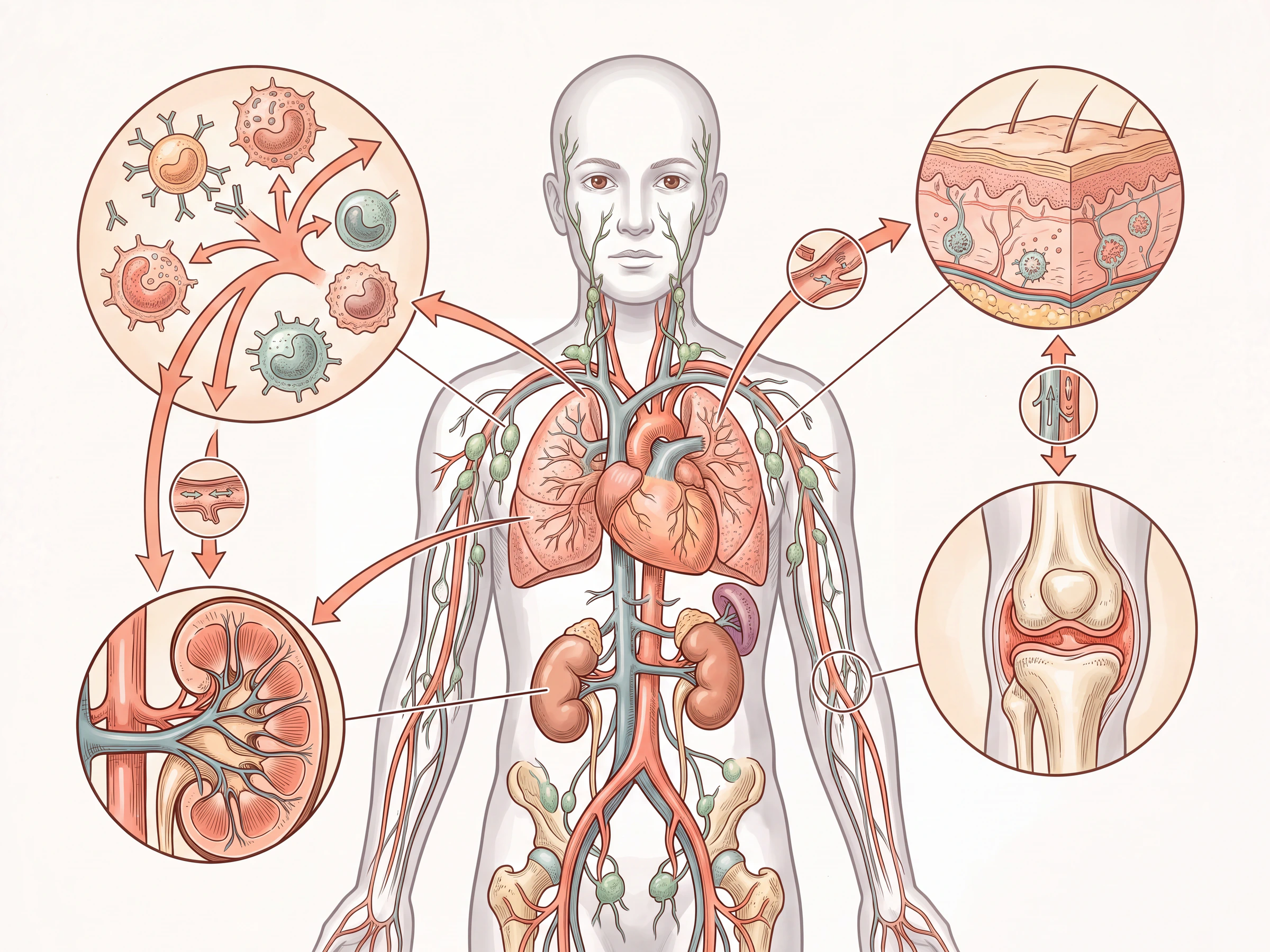
SLE involves the immune system attacking the body's tissues, rather than simply being weak. Common symptoms include fatigue, joint pain, sun-sensitive rashes, mouth ulcers, fever, and hair loss.
No single test confirms every case. Diagnosis combines symptoms, blood and urine results, kidney function, and relevant antibodies.
Health glossary
- SLE
- An abbreviation for systemic lupus erythematosus. The immune system attacks the body's own tissues and can affect the skin, joints, blood, kidneys, or other organs.
- ANA and anti-dsDNA
- Blood tests that support autoimmune assessment when interpreted alongside symptoms, examination, and organ findings.
What happens in the body?
Explain the mechanism step by step.
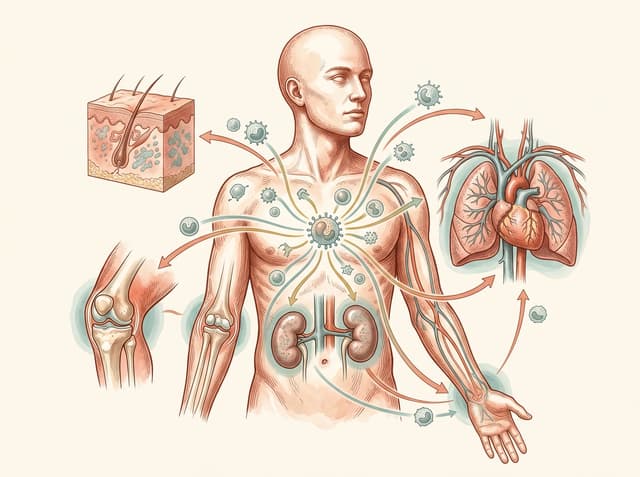
There is no single cause. Genetics, hormones, and problems clearing cellular debris can increase immune sensitivity. UV exposure, infection, smoking, certain medicines, or physical stress may trigger flares.
Immune tolerance to the body's own tissues is disrupted.
B cells and T cells respond to components in the cell nucleus.
Antibody and immune complex formation.
These substances travel in the blood and accumulate in tissues.
Inflammation in many organs
The skin, joints, kidneys, blood cells, lungs, heart, and nervous system are affected differently in each person.
Values or criteria that you should know
Lupus does not have a single blood test that says the disease is under control.
Interpret anti-dsDNA, complement, blood counts, kidney results, and symptoms as trends. Some people have abnormal results without a flare, while others flare with little change in laboratory values.
Urine and kidneys
Protein, blood, and kidney function
- Reference range
- Normal urine and stable eGFR indicate that kidney damage is not yet evident.
- You should make an appointment for an evaluation.
- New protein in the urine, swelling, high blood pressure, or altered kidney function requires evaluation for lupus nephritis.
- Should be evaluated urgently
- Reduced urine, breathlessness, rapidly increasing swelling, or very high blood pressure need prompt assessment.
Immune trends
anti-dsDNA and complement C3/C4
- Reference range
- There is no universal threshold because testing methods differ. Compare results with your baseline and the laboratory's reference range.
- You should make an appointment for an evaluation.
- Report changes accompanied by rash, joint inflammation, fever, or abnormal urine results to your care team.
- Should be evaluated urgently
- Chest pain, breathlessness, seizures, confusion, or new weakness require urgent assessment.
Causes · Symptoms · Examination · Care
See important information in one place.
Causes and related factors
- Several genetic factors, together with hormones and sex.
- UV light, infections, smoking, and certain medications
- Disease is not caused by one type of food and is not contagious.
Common symptoms
- Tiredness, fever, joint pain or swelling
- A sun-sensitive rash, mouth ulcers, or hair loss.
- Swelling, foamy urine, chest pain, seizures, or confusion may occur when vital organs are affected.
How do doctors check?
- There is no single test result to make a diagnosis; symptoms, physical examination, and time must be combined.
- ANA supports screening, alongside anti-dsDNA, complement, and other blood tests.
- Test your urine and kidney function to look for glomerulonephritis that may be silent.
Start taking care of it systematically.
- Use sun protection, manage fatigue, sleep adequately, and stay appropriately active.
- Use treatment tailored to organ involvement and monitor infections and side effects.
- Plan vaccinations, pregnancy, and heart risks with your treatment team.
Important things you should know
Keep these points in mind.
Periods of remission alternate with flare-ups.
Sun exposure, infection, stress, and medication withdrawal may be associated with relapses in some people.
The kidneys may be abnormal with few symptoms.
It's important to check your urine, blood pressure, and kidney function regularly even if you feel normal.
Tailor treatment to severity.
Treatment for skin and joint symptoms differs from treatment when the kidneys, brain, lungs, or blood are affected.
Daily food and care
Eat well to help reduce the burden of inflammation.
- Choose vegetables, fruit, beans, whole grains, and protein suited to kidney function. Reduce sugary, greasy, salty, and highly processed foods.
- Look after bone and heart health, especially during steroid treatment. Check supplements and herbs for medication interactions.
Read on to understand.
Read on for complete information on health and products.
Main references