Easy-to-understand health information
Psoriasis
A chronic immune-mediated skin condition that is not contagious and can also involve nails, joints, and metabolic health.
Summary before reading further
What is this topic, and why does it matter?
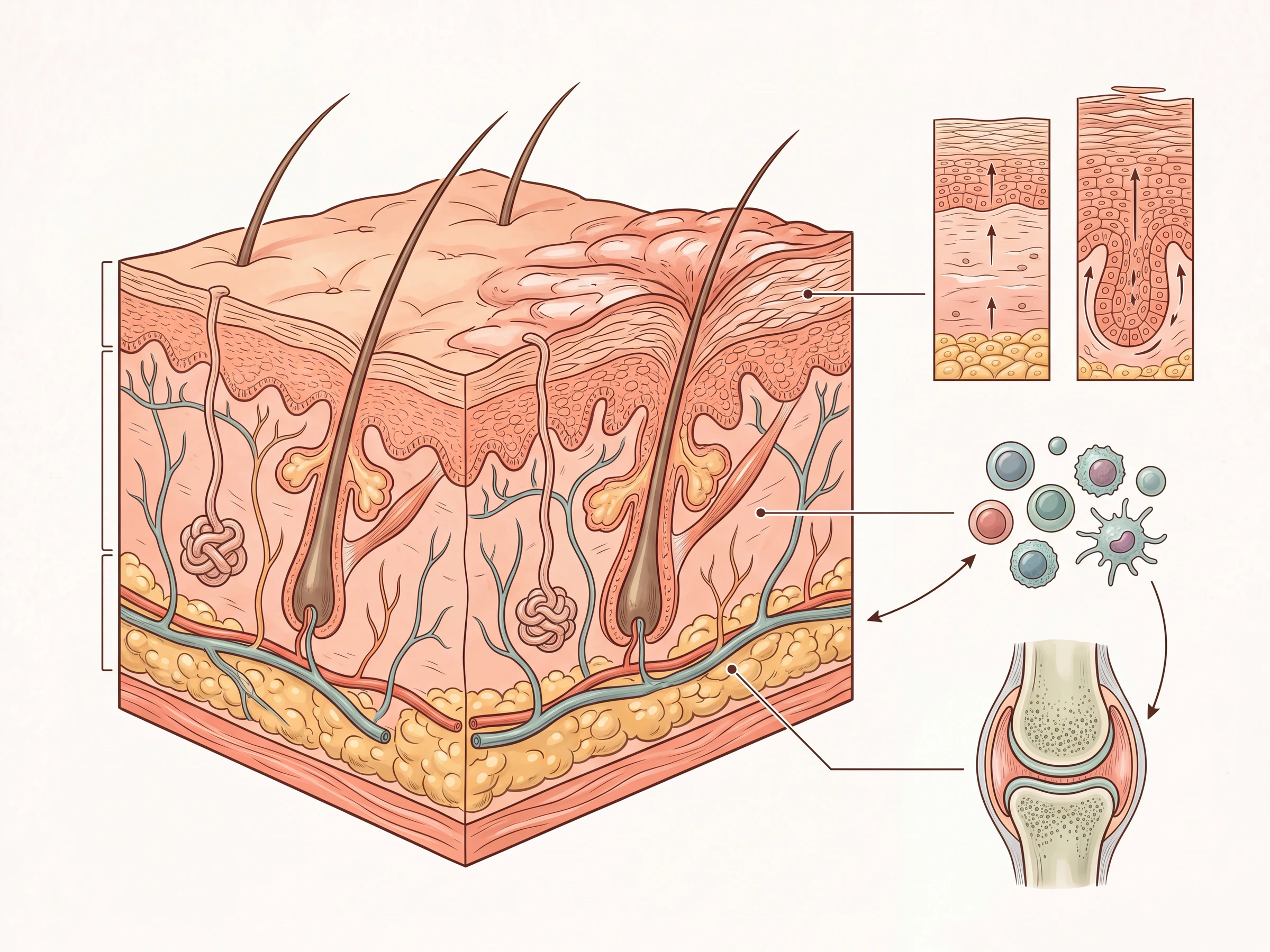
Psoriasis involves immune activity that speeds skin cell turnover, producing thick, red, itchy patches or silvery scales. Common sites include the scalp, elbows, knees, and lower back, but patterns vary widely.
Genetics interact with triggers such as infections, stress, skin injury, smoking, alcohol, and certain medicines. Nail pitting or swollen, stiff joints can occur and may indicate psoriatic arthritis.
Health glossary
- Metabolism
- The process by which the body converts food into energy and controls sugar, fat, blood pressure, and energy storage.
What happens in the body?
Explain the mechanism step by step.
Psoriasis can involve more than skin, including arthritis and increased metabolic risk. Treatment depends on extent, thickness, location, effects on daily life, and other conditions. Avoid picking scales or using products with unknown ingredients.
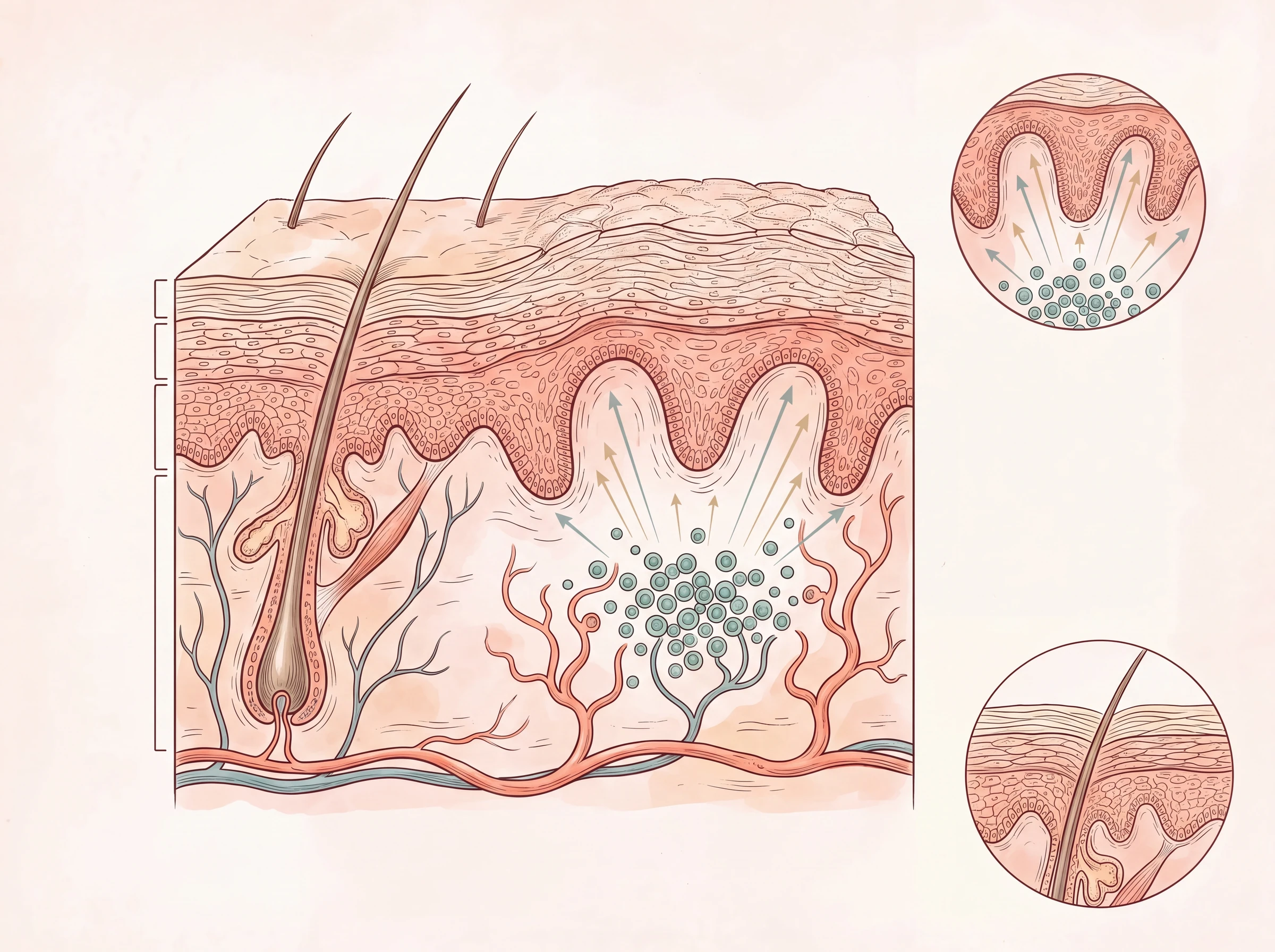
The immune system sends too many signals.
Immune cells trigger an inflammatory cycle in the skin.
Skin cell turnover accelerates.
Skin cells reach the surface too quickly, before fully maturing.
Thick, scaly patches develop.
Rapid cell buildup, changes in superficial blood vessels, and inflammation cause redness, itching, and cracking.
Values or criteria that you should know
Both affected area and location matter. Even small patches on the palms, soles, face, or genitals can substantially affect daily life.
Psoriasis severity involves more than the number of patches. It also includes itching, pain, nail and joint changes, and effects on sleep and daily activities.
BSA body surface area
The palm and fingers together represent roughly 1% of body surface area.
- Reference range
- Less than 3% of body surface area is generally considered limited involvement.
- You should make an appointment for an evaluation.
- Involvement of 3–10% of body surface area is generally moderate and more than 10% severe. Certain affected sites can increase the severity classification.
- Should be evaluated urgently
- Widespread skin redness, spreading pustules, fever, chills, or severe fatigue require emergency care.
arthritis symptoms
Swollen joints or whole digits, Achilles tendon pain, or back stiffness.
- Reference range
- Ask about joint symptoms regularly, even if none are currently present.
- You should make an appointment for an evaluation.
- Persistent joint swelling or stiffness needs prompt assessment for psoriatic arthritis to reduce permanent damage.
- Should be evaluated urgently
- A hot, red joint with fever requires assessment to exclude infection.
Causes · Symptoms · Examination · Care
See important information in one place.
Causes and related factors
- Genetics and immune function
- Infections, stress, skin injuries, and certain medications
- Cigarettes, alcohol, and being overweight can make symptoms difficult to control.
Common symptoms
- Thick, red, scaly patches, usually on the elbows, knees, and scalp.
- Itching, burning, nail pitting, or thickened nails.
- Joint swelling, pain, or morning stiffness may be psoriatic arthritis.
How do doctors check?
- Examine skin, nails, and joints by appearance and position.
- Take a biopsy only if it is unclear.
- Assess comorbidities and their effect on quality of life
Start taking care of it systematically.
- Increase moisture and use topical medication as prescribed.
- Avoid scratching, unlabelled mixed medicines, and abrupt withdrawal of potent steroids without advice.
- Tell your doctor about swollen joints, a rapidly spreading rash, fever, or widespread burning skin pain.
Important things you should know
Keep these points in mind.
Not contagious by touch
These flaky patches are not an infection passed between people. Close contact or living together does not transmit psoriasis.
The disease may be more than just the skin.
Review joint pain, swelling, morning stiffness, and nail changes, with assessment of blood pressure, weight, glucose, lipids, and mental health as appropriate.
Treatment is chosen according to severity.
Topical treatments, phototherapy, oral medicines, and biologics have different roles. Choice depends on extent, location, impact, and other conditions.
Daily food and care
Manage systemic inflammation alongside direct skin treatment.
- Base meals on vegetables, fruit, beans, whole grains, fish, and unsaturated fats. Reduce sugary, fatty, and processed foods, and avoid smoking and excessive alcohol.
- Gradual weight loss, when appropriate, may support overall health and treatment response, but no single food cures psoriasis.
Read on to understand.
Read on for complete information on health and products.
Main references