Easy-to-understand health information
Benign prostatic hyperplasia
Understand enlarged-prostate symptoms and human studies reporting encouraging findings on lycopene, urinary symptoms, and prostate changes.
Summary before reading further
What is this topic, and why does it matter?
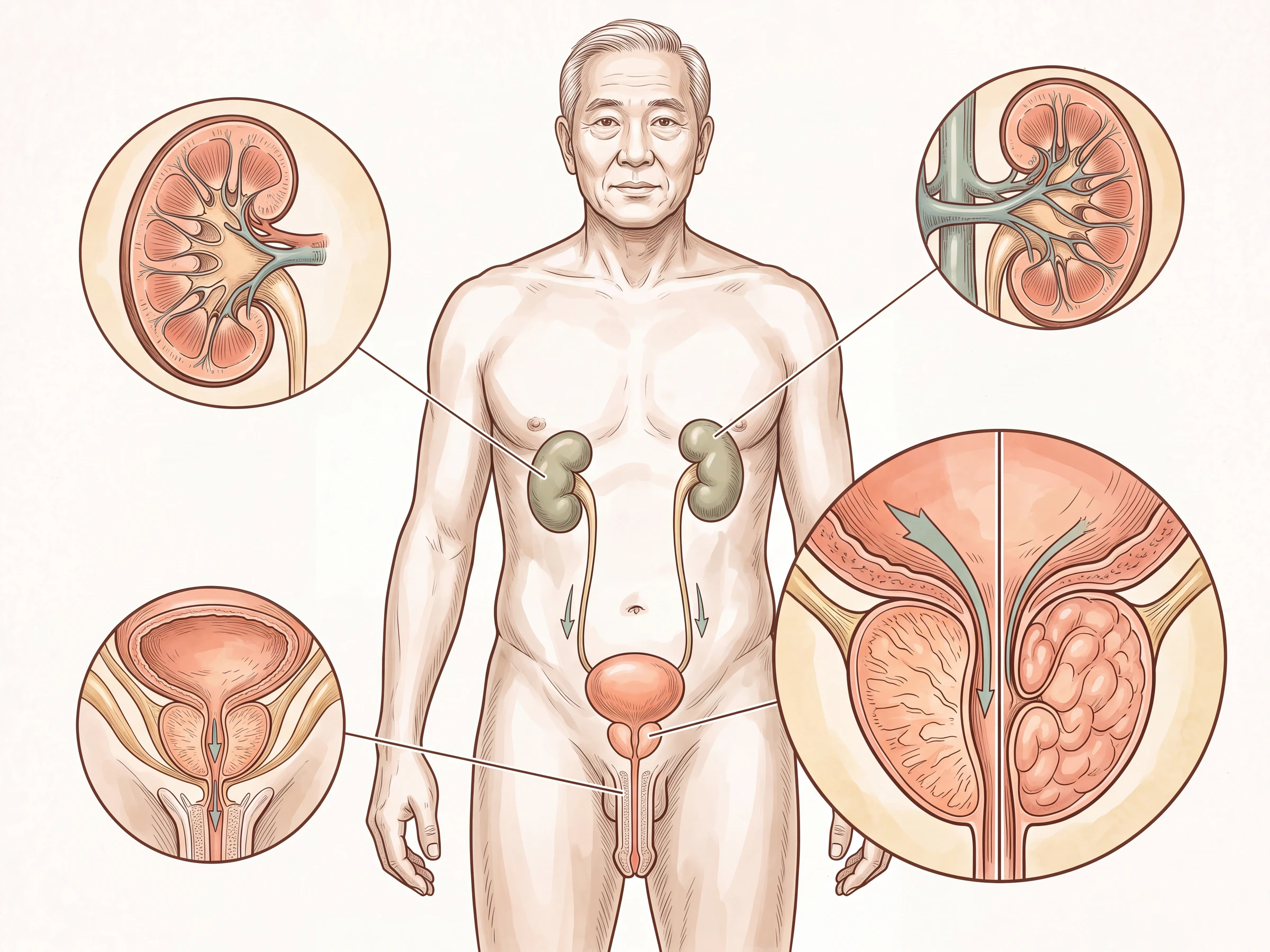
Benign prostatic hyperplasia, or BPH, becomes more common with age. Enlargement around the urethra can cause difficulty starting urination, a weak or interrupted stream, incomplete emptying, or waking at night to urinate.
Prostate symptom severity is not determined by gland size alone. Assessment may include symptoms, quality of life, urine testing, urinary flow, residual urine volume, and other findings to guide individual care.
Health glossary
- BPH
- Non-cancerous prostate enlargement that can compress the urethra, causing difficulty starting, a weak stream, or incomplete bladder emptying.
- PSA
- A substance made by the prostate and measurable in blood. A high PSA does not always mean cancer; interpret it with age, symptoms, and other findings.
- Metabolism
- The process by which the body converts food into energy and controls sugar, fat, blood pressure, and energy storage.
- DHT
- A hormone formed from testosterone that contributes to prostate growth.
What happens in the body?
Explain the mechanism step by step.
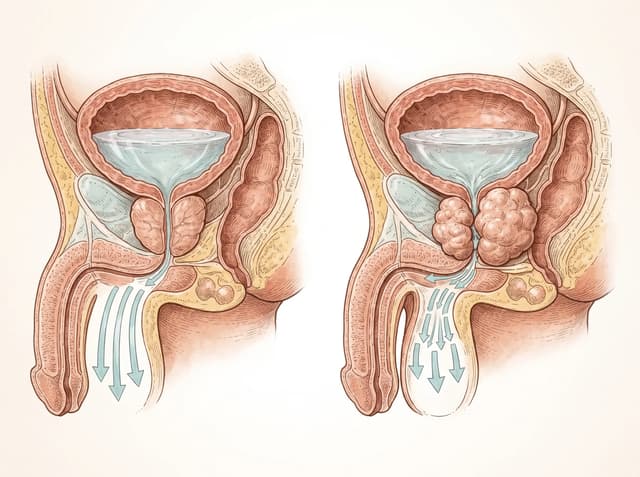
BPH is a noncancerous increase in prostate cells around the urethra. Symptoms reflect both pressure from the gland and the bladder's increased effort, not prostate size alone.
tissue grows
Age-related hormonal changes, especially the response to DHT, contribute to prostate cell growth.
The exit narrows.
Pressure on the urethra can delay the start of urination, weaken or interrupt the stream, or leave the bladder feeling incompletely emptied.
The bladder adapts.
The bladder muscle becomes thicker and more sensitive, causing frequency, urgency, or night-time urination.
Values or criteria that you should know
Assess symptom severity, not prostate size or PSA alone.
A modestly enlarged prostate can still cause severe symptoms. Decisions consider symptom scores, urine retention, and quality of life together.
IPSS symptom score
A seven-question urinary symptom score, ranging from 0 to 35.
- Reference range
- 0–7 points are considered mild symptoms.
- You should make an appointment for an evaluation.
- 8–19 points are moderate and 20–35 points are severe. Treatment options should be discussed.
- Should be evaluated urgently
- A symptom score does not override an emergency sign. Inability to urinate needs immediate hospital assessment.
PSA value
PSA blood test.
- Reference range
- No single PSA value establishes safety. Age, prostate size, inflammation, and medication affect the result.
- You should make an appointment for an evaluation.
- A persistently rising value or a result outside the laboratory range needs clinical interpretation.
- Should be evaluated urgently
- A high PSA does not equal cancer, and a low PSA does not completely rule out cancer.
Residual urine
Urine left in the bladder after voiding, measured by ultrasound.
- Reference range
- There is no universal threshold. Interpret the result alongside symptoms and kidney function.
- You should make an appointment for an evaluation.
- Repeatedly high residual urine, recurrent infection, or stones warrant urinary tract assessment.
- Should be evaluated urgently
- Inability to urinate, severe lower abdominal pain, fever, or worsening kidney function need prompt care.
Causes · Symptoms · Examination · Care
See important information in one place.
Causes and related factors
- Age and family history
- Obesity, diabetes, and inactivity
- Chronic inflammation and hormonal changes with age
Common symptoms
- Difficulty starting urination, a weak stream, or an interrupted stream.
- Frequent, urgent urination, or waking up at night
- Incomplete bladder emptying or dribbling after urination.
How do doctors check?
- Symptom scores and quality of life were assessed.
- Urine testing, prostate examination, and PSA when appropriate.
- Measure urine flow and residual urine when needed.
Start taking care of it systematically.
- Spread fluids through the day and reduce drinks near bedtime.
- Stay active, manage waist circumference, and support regular bowel movements.
- Review medications and choose treatment based on severity with your doctor.
Important things you should know
Keep these points in mind.
There is direct testing of Lycopene in people with BPH.
A randomized pilot study assigned 40 men with confirmed BPH to 15 mg of lycopene daily or placebo for six months and measured PSA, prostate size, and urinary symptom scores.
The study reported several favourable findings.
After six months, PSA decreased in the lycopene group, prostate size remained stable, and symptom scores improved more than with placebo. Prostate size increased in the placebo group during follow-up.
Clinical follow-up reported improvements in symptoms and urinary flow.
A report involving 120 people with benign prostatic enlargement and urinary symptoms found improved symptom scores, quality of life, peak urinary flow, and residual urine volume after 16 weeks of lycopene. The study had no comparison group, so its findings should be considered alongside randomized trials.
ReferencesZhonghua Nan Ke Xue · PubMedOmega-3 in the capsules helps make Lycopene more readily absorbed.
Lycopene is a fat-soluble carotenoid, so it is better absorbed when consumed with fat. Human trials have found greater absorption when lycopene is taken with oil than without it. This formula combines lycopene with an omega-3-containing oil as its fat carrier, providing both nutrients conveniently in one capsule.
Daily food and care
Lycopene in the context of prostate health.
- Ripe tomatoes provide lycopene. Include varied colorful fruit and vegetables for fiber and other plant compounds.
- Lycopene supplements offer a consistent labeled amount for people considering an addition to their usual diet.
- Reduce sugary, fatty, and highly processed foods, and add vegetables, beans, whole grains, and movement to support weight and metabolic health in the context of BPH.
- Choose a formula with clear ingredients, amounts per serving, and directions so you can compare it with your needs.
Read on to understand.
Read on for complete information on health and products.
Select product from label information
Choose a formula from the information that can be verified.
A varied diet remains the foundation. Explore the products below to compare formulas, formats, and label information.
Review what you regularly eat before deciding what to supplement.
Compare ingredients, quantity, product form and warnings on the label
Consult a healthcare professional if you have an existing condition, take medication, or have surgery planned.
 formulas 01Rice bran and rice germ oil with tomato extract.Rice bran and germ oil · Tomato extractFormatcapsulePackingNet weight 43.2 grams (60 capsules)View formula, ingredients, and labels.
 formulas 02Per-lycopeneFormatcapsulePacking30 capsulesView formula, ingredients, and labels.
Supplements complement diet and routines. Follow the label and any treatment plan for existing conditions.
Main references
Source of information used for verification
- NIH · NIDDKEnlarged Prostate (Benign Prostatic Hyperplasia)
- Journal of Nutrition · PubMedLycopene inhibits disease progression in patients with benign prostate hyperplasia
- Zhonghua Nan Ke Xue · PubMedEfficacy and safety of lycopene in BPH with lower urinary tract symptoms
- Food Chemistry · PubMedInfluence of olive oil on carotenoid absorption from tomato juice