Easy-to-understand health information
Osteoarthritis
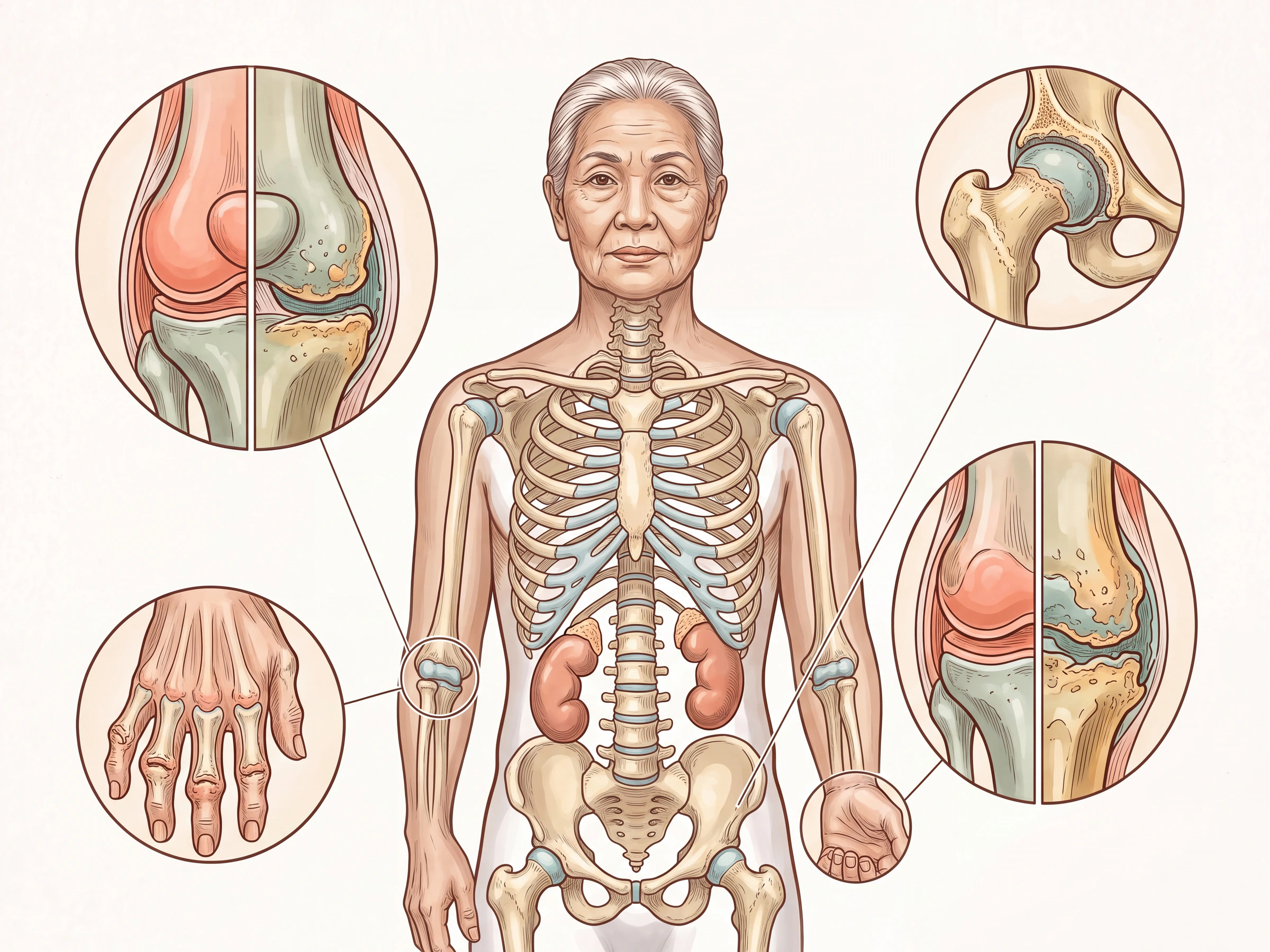
Osteoarthritis involves cartilage, bone, joint lining, muscles, and mechanical loading, not simply worn bone. Appropriate movement is part of treatment.
Summary before reading further
What is this topic, and why does it matter?
Common features include activity-related pain, stiffness after rest, and reduced movement, often in knees, hips, hands, or the spine.
X-ray findings may not match pain severity. Care also considers function, muscle use, weight, sleep, and personal goals.
Health glossary
- Metabolism
- The process by which the body converts food into energy and controls sugar, fat, blood pressure, and energy storage.
What happens in the body?
Explain the mechanism step by step.
Age contributes to risk but does not determine the outcome. Previous injury, repeated loading, joint shape, muscle weakness, weight, and metabolism also matter. Pain does not always mean ongoing joint damage.
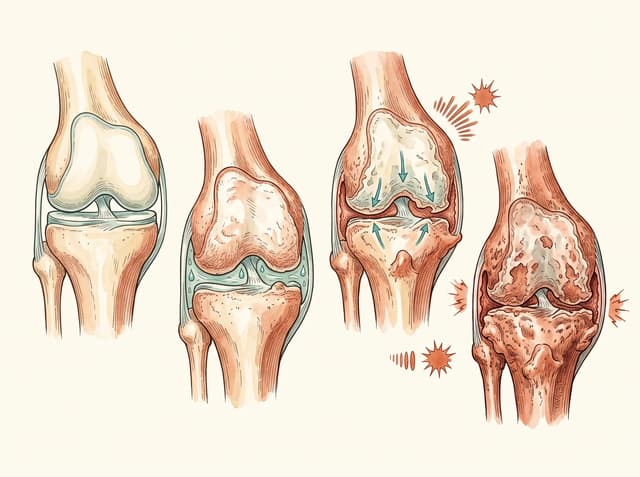
Cartilage cannot be repaired in time
The joint surface loses its structure and ability to distribute load.
Bone and joint lining undergo changes.
Bone thickens and forms spurs while the joint lining becomes inflamed, causing swelling and stiffness.
The pain system is more sensitive.
Chronic pain can cause the nervous system to amplify signals beyond the actual damage.
Values or criteria that you should know
X-ray findings do not measure pain, and no single finding establishes safety for everyone.
Osteoarthritis care focuses on symptoms, function, stability, and personal goals, not just joint-space width on an image.
Morning stiffness
The time from waking up until the joints become more flexible
- Reference range
- Morning stiffness in osteoarthritis usually lasts no more than about 30 minutes.
- You should make an appointment for an evaluation.
- Morning stiffness lasting more than 30–60 minutes, multiple swollen joints, or symmetrical symptoms warrant assessment for other forms of arthritis.
- Should be evaluated urgently
- A very hot, red joint with fever, or inability to bear weight after injury, needs urgent assessment.
Effects on daily functioning
Walking, rising from a chair, climbing stairs, and lying down.
- Reference range
- The goal is better daily functioning, which does not always require a pain score of zero.
- You should make an appointment for an evaluation.
- Pain lasting more than six weeks or disrupting sleep warrants review of the diagnosis and care plan.
- Should be evaluated urgently
- Numbness, weakness, or changes in bladder or bowel control are not typical osteoarthritis symptoms.
BMI for Asian adults
Weight (kg) ÷ Height² (meters)
- Reference range
- BMI below 18.5 indicates underweight. The range 18.5–22.9 is below the increased-risk threshold commonly used for Asian adults.
- You should make an appointment for an evaluation.
- For Asian populations, BMI 23 and 27.5 kg/m² are commonly used action points for increased and high risk, respectively.
- Should be evaluated urgently
- BMI alone does not indicate an emergency or measure abdominal fat. Consider waist circumference, blood pressure, glucose, and lipids as well.
Causes · Symptoms · Examination · Care
See important information in one place.
Causes and related factors
- Age, genetics, and
- Injuries from sports, repetitive work, or muscles around the joint
- Overweight and metabolic factors
Common symptoms
- Joint pain with use and brief stiffness after rest.
- Joint noises, swelling, or reduced movement.
- Knees, hips, hands, and spine are common.
How do doctors check?
- History and physical examination guide assessment.
- X-ray when the results affect decision making
- Distinguish joint inflammation or infection from tendon and muscle causes.
Start taking care of it systematically.
- Combine suitable resistance and aerobic exercise.
- Weight loss may reduce joint loading when appropriate.
- Use medications, physical therapy, equipment, or surgery according to their impact on life.
Important things you should know
Keep these points in mind.
Appropriate exercise supports joints rather than wearing them out.
Adapted resistance, aerobic, and balance exercises can reduce pain and improve function.
Strong muscles help reduce load on the joints.
Thigh, hip, and core strengthening are central to knee and hip care.
Medicines and procedures are chosen according to risk.
Painkiller choice depends on age, kidney, stomach, and heart health, and current medicines.
Daily food and care
Start with manageable everyday steps.
- Get adequate protein to maintain muscle, and reduce sugary, greasy, and highly processed foods to support weight and metabolic health.
- No single supplement repairs cartilage. Assess results by pain and actual joint function.
Read on to understand.
Read on for complete information on health and products.
Main references