Easy-to-understand health information
Menopause
Menopause is the natural transition when periods stop permanently. Hot flashes, night sweats, insomnia, vaginal dryness, and mood changes can be managed in several ways.
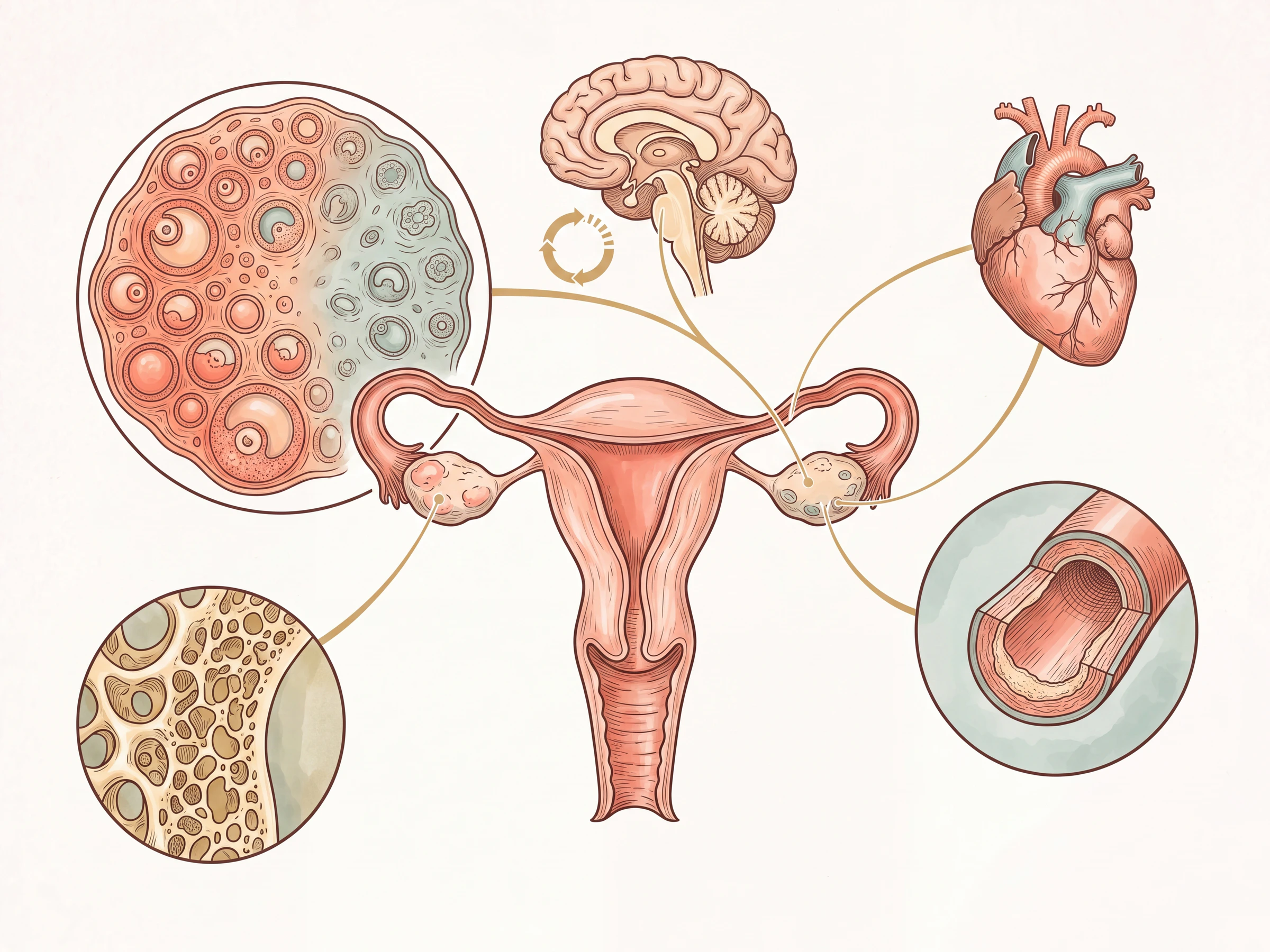
Summary before reading further
What is this topic, and why does it matter?
Menopause is a life stage, identified after 12 months without periods or spotting. The preceding transition, perimenopause, can involve changing cycles and symptoms over several years.
Symptoms and severity vary. Lifestyle changes, nonhormonal medicines, and hormone therapy have different benefits and risks. Choose with your doctor according to your health history and preferences.
What happens in the body?
Explain the mechanism step by step.
Menopause is a life stage, not a disease. Symptoms and risks vary, so options range from lifestyle changes to symptom-specific medicines and hormone therapy, with benefits and personal risks considered together.
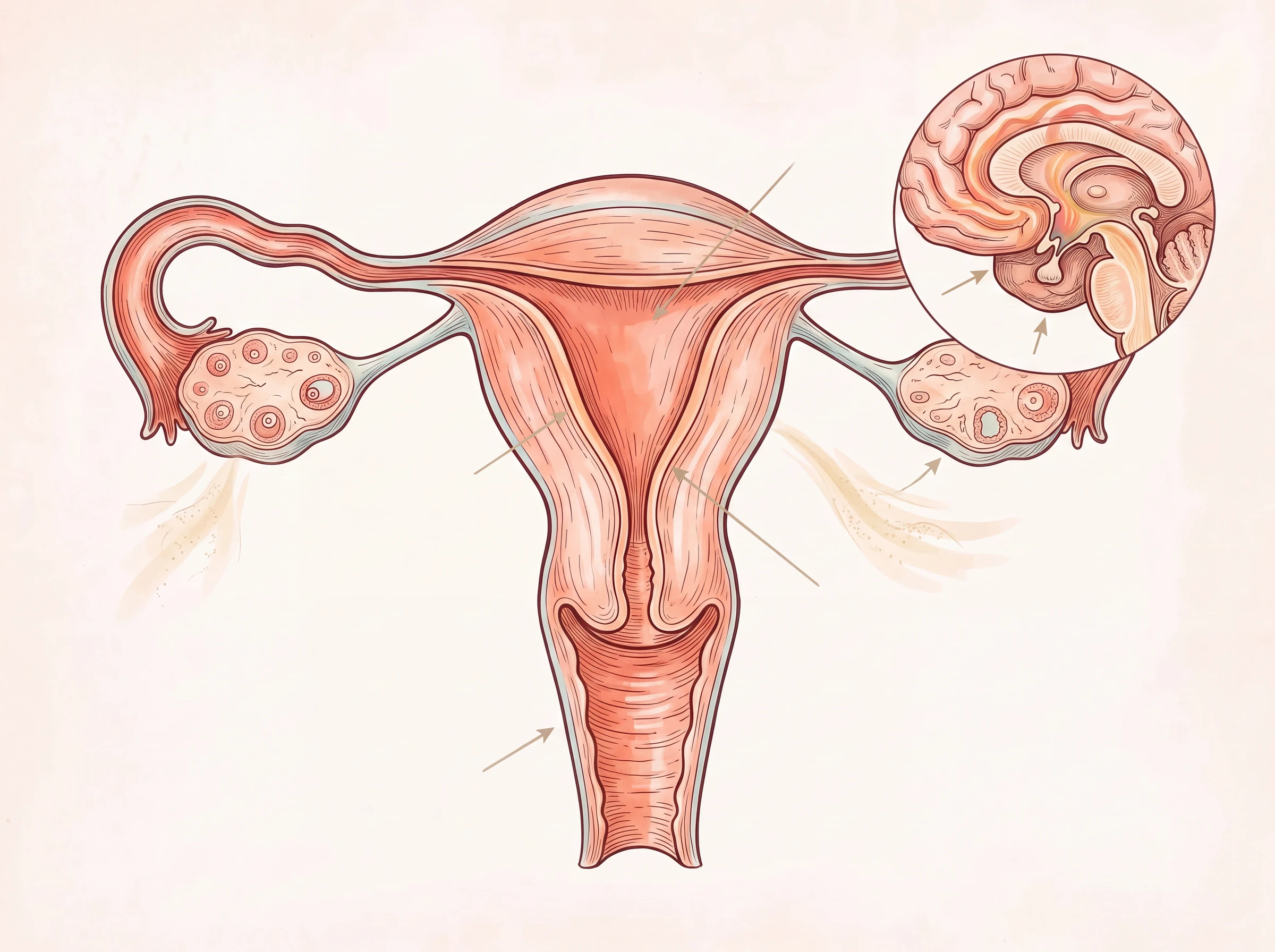
The number of follicles decreases.
The ovaries become less responsive to hormones from the brain and ovulation is irregular.
Estrogen fluctuates and decreases.
Changing periods, sometimes accompanied by hot flushes and vaginal dryness.
The body adjusts to long-term balance.
Review bone density, blood lipids, muscle strength, and sleep according to age.
Values or criteria that you should know
Menopause is usually identified from menstrual history and symptoms. Hormone testing is not needed for everyone.
Hormone levels fluctuate during perimenopause, so one result may mislead, especially during hormone use or with other conditions.
After 12 months
Continuous absence of menstruation for no other reason
- Reference range
- Natural menopause is identified retrospectively after 12 months without periods.
- You should make an appointment for an evaluation.
- If you are under 45 or symptoms are atypical, seek assessment of the cause and implications for bone and heart health.
- Should be evaluated urgently
- Any bleeding after 12 months without periods needs assessment, even once. It should not be assumed to be a normal period returning.
FSH test
Follicle-stimulating hormone.
- Reference range
- People over 45 with typical menopausal symptoms usually do not need a blood test to confirm menopause.
- You should make an appointment for an evaluation.
- Testing may help in younger people, after hysterectomy, or with unclear symptoms, at the doctor's discretion.
- Should be evaluated urgently
- Do not adjust treatment from one result or buy hormones yourself. Contraindications and individual risks need assessment.
Causes · Symptoms · Examination · Care
See important information in one place.
Causes and related factors
- Natural menopause.
- Ovarian surgery, chemotherapy or radiotherapy
- Primary ovarian insufficiency in some people.
Common symptoms
- Periods become irregular before stopping.
- Hot flashes, night sweats, and poor sleep
- Vaginal dryness, frequent urination, changes in mood or concentration.
How do doctors check?
- Diagnosed mainly by age and menstrual pattern.
- Consider pregnancy, thyroid, or hormone testing when the symptom pattern is atypical.
- Assess bone, heart, and sexual health according to risk
Start taking care of it systematically.
- Do resistance exercises, get regular sleep, and avoid noticeable hot flash triggers.
- Use vaginal moisturizer or other treatment according to symptoms.
- Bleeding after menopause needs assessment. Do not assume it is a normal hormonal change.
Important things you should know
Keep these points in mind.
Investigate the cause of abnormal bleeding.
Heavy or frequent bleeding, bleeding after sex, or bleeding after a full year without periods needs assessment.
Bones and heart become more important
After menopause, review bone health, blood pressure, lipids, smoking, and physical activity.
Individual treatment
Hormone therapy is not suitable for everyone. Do not start it without an individual risk assessment.
Daily food and care
Start with manageable everyday steps.
- Get adequate protein and calcium, include weight-bearing and resistance exercise, and follow advice on vitamin D.
- Limit caffeine or alcohol if they trigger hot flushes, and keep the bedroom cool and comfortable.
Read on to understand.
Read on for complete information on health and products.
Main references