


Easy-to-understand health information
irritable bowel syndrome
Recurrent abdominal pain with altered bowel habits, including constipation, diarrhea, or both, without the visible tissue damage of inflammatory disease.
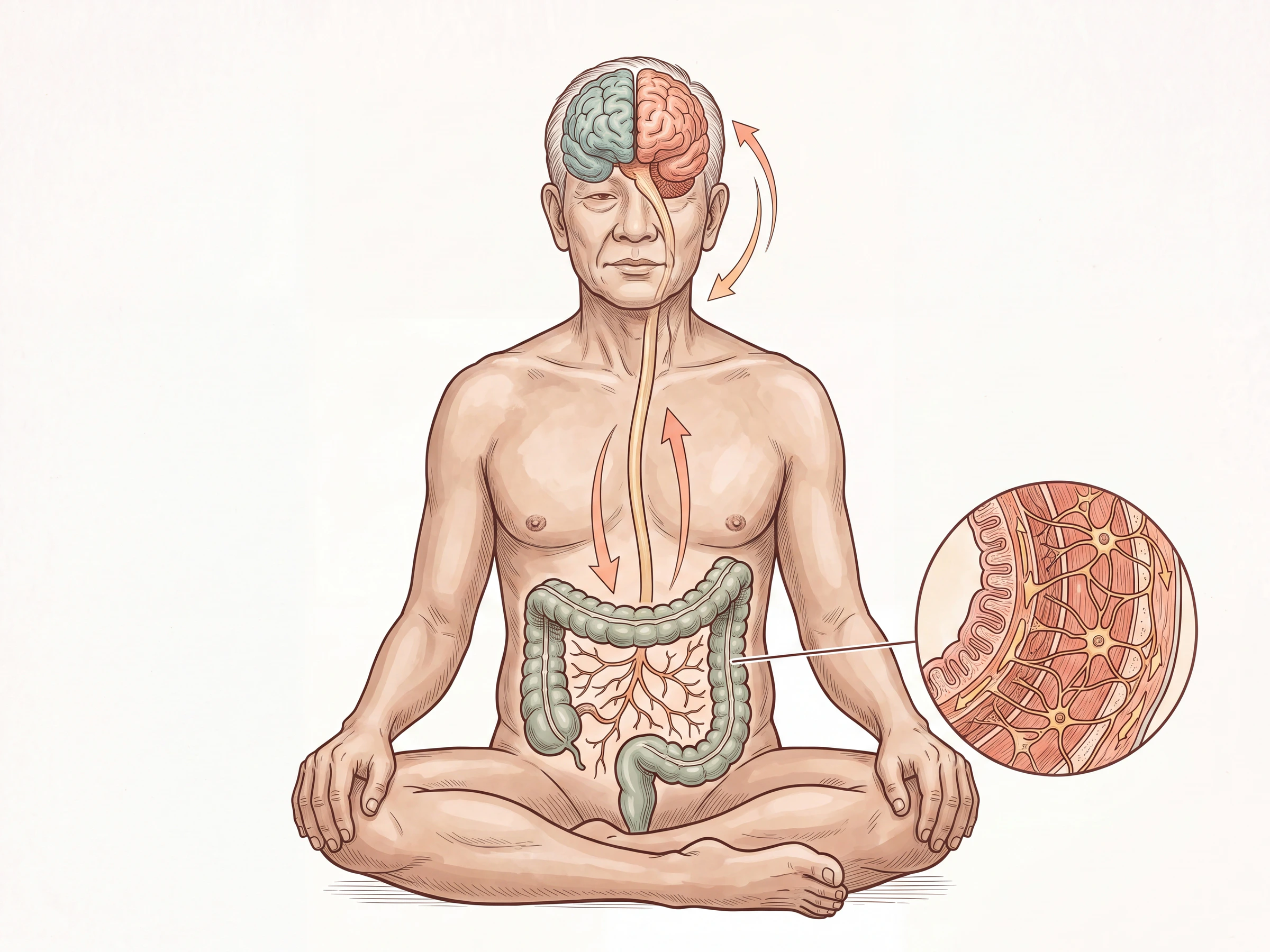
Summary before reading further
What is this topic, and why does it matter?
IBS is a disorder of gut-brain interaction, not an ulcer or cancer. It can still substantially affect everyday life.
Diagnosis uses the symptom pattern and excludes other causes when needed. Care may involve diet, sleep, movement, medicines, or therapy selected for the individual's main symptoms.
Health glossary
- IBS
- Irritable bowel syndrome causes abdominal pain with changes in bowel habits, without intestinal ulcers or cancer being the cause.
- FODMAP
- Poorly absorbed carbohydrates can cause gas or gut symptoms in some people. Restriction should be time-limited and followed by gradual reintroduction.
What happens in the body?
Explain the mechanism step by step.
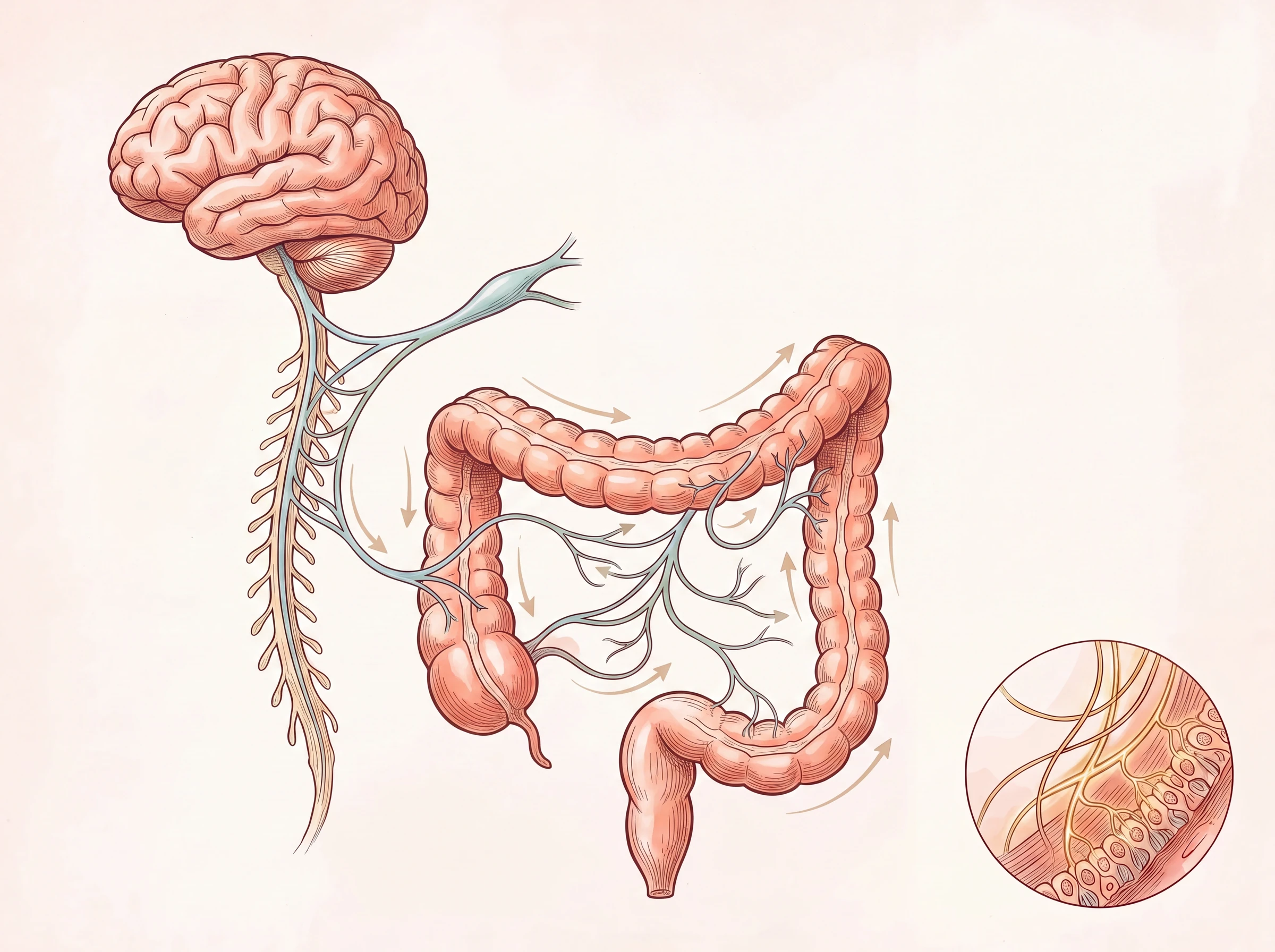
Symptoms can be real and disruptive without bowel damage. Diagnosis considers abdominal pain related to bowel movements and checks for warning signs and conditions with similar symptoms.
The intestines feel more sensitive.
Stretching from gas or stool may be interpreted by the brain as more pain than normal.
The contraction rhythm changes
Changes in gut movement can cause loose stools, constipation, or alternating symptoms.
The brain-gut circuit amplifies symptoms.
Stress, sleep, and past experiences affect pain signals. This does not mean the symptoms are imagined.
Values or criteria that you should know
IBS criteria consider symptom frequency and duration. Warning signs of other conditions still require assessment.
IBS is a disorder of gut-brain interaction, not imagined symptoms. Bloating alone is insufficient for diagnosis.
Rome IV
Abdominal pain related to defaecation or changes in stool frequency or form.
- Reference range
- Abdominal pain averaging at least one day a week over the past three months.
- You should make an appointment for an evaluation.
- Symptoms must have started at least six months before diagnosis. Assessment should also identify whether constipation or diarrhoea predominates.
- Should be evaluated urgently
- Blood in the stool, fever, weight loss, anaemia, symptoms that wake you at night, or new symptoms in later life need assessment for other causes.
Bristol stool form
Types 1–7 are used to record stool characteristics.
- Reference range
- Types 3–4 are usually easy to pass, but this criterion is not diagnostic.
- You should make an appointment for an evaluation.
- Bristol stool types 1–2 commonly occur with constipation and types 6–7 with diarrhoea. Record stool form and frequency together.
- Should be evaluated urgently
- Black, tarry stools or a large amount of red blood require urgent assessment.
Causes · Symptoms · Examination · Care
See important information in one place.
Causes and related factors
- Genetics, previous gut infection, and the intestinal microbiota.
- Stress, lack of sleep, and hormones
- Some foods trigger different symptoms in different people.
Common symptoms
- Abdominal pain associated with bowel movements
- Constipation, loose stools, or alternating bowel patterns.
- Bloating and feeling like you can't pass a bowel movement.
How do doctors check?
- Diagnosed by symptom pattern and duration
- Blood or stool tests may help assess other conditions according to risk.
- Endoscopy is performed when there is bleeding, weight loss, paleness, or other indications.
Start taking care of it systematically.
- Record food, bowel movements, and symptoms to find the actual trigger.
- Adjust fibre and food according to your care plan. Avoid prolonged restriction of several food groups without guidance.
- Coordinate exercise, sleep, and symptom treatment with your doctor.
Important things you should know
Keep these points in mind.
Symptoms related to bowel movements.
Abdominal pain is often accompanied by a change in stool frequency or shape.
Food triggers differ between people.
Record foods and symptoms before removing food groups to avoid unnecessary nutritional restriction.
Warning signs suggest a condition other than IBS.
Bleeding, weight loss, fever, paleness, or new symptoms in later life need assessment for other causes.
Daily food and care
Start with manageable everyday steps.
- Eat regularly, drink enough water, and increase fibre gradually according to symptoms. Increasing it too quickly can cause bloating.
- If trying a low-FODMAP diet, follow its stages with professional guidance, including food reintroduction. It is not intended as permanent broad restriction.
Read on to understand.
Read on for complete information on health and products.
Main references
