


Easy-to-understand health information
high blood pressure
Often symptom-free, this condition requires correct measurements over several days and assessment of heart, brain, kidney, and eye risk.
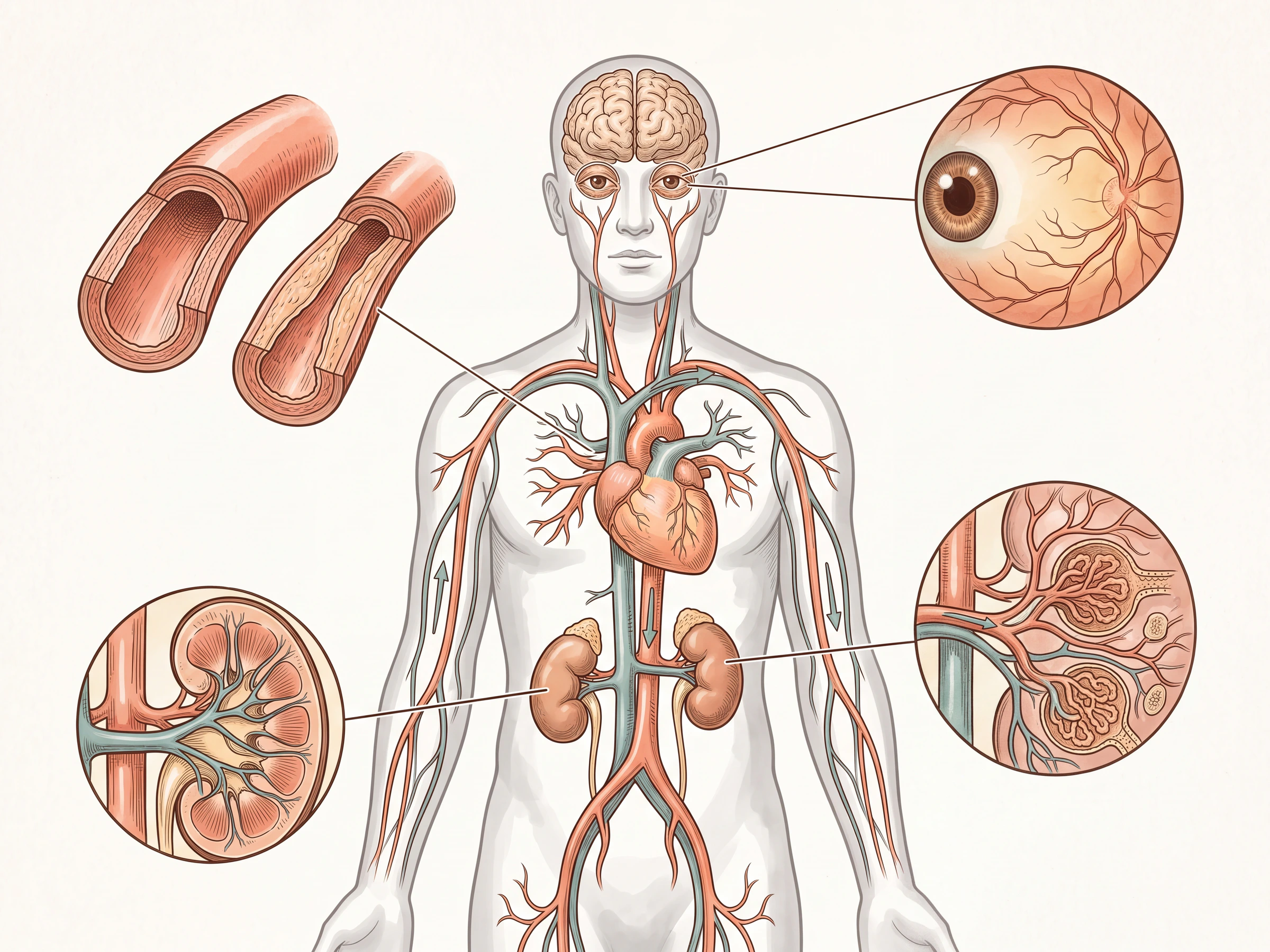
Summary before reading further
What is this topic, and why does it matter?
Blood pressure varies with time, activity, stress, and measurement technique. A single reading is not the whole picture. Rest before measuring, use the right cuff size, and record readings over several days for clinical review.
Sleep, sodium, weight, movement, nicotine, glucose, and lipids are connected. Lifestyle changes help, but some people also need prescribed treatment.
What happens in the body?
Explain the mechanism step by step.
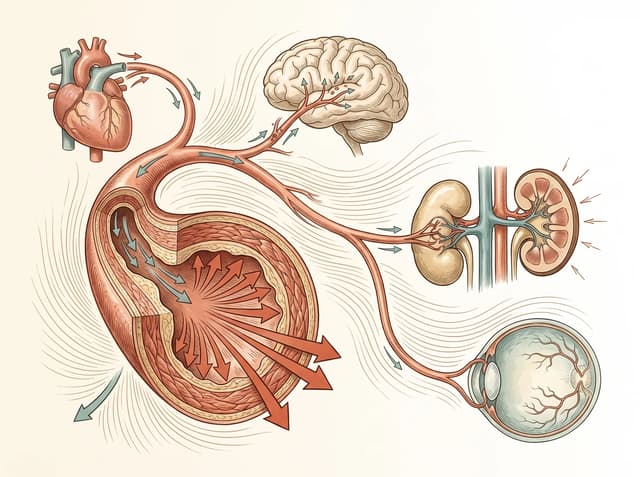
Most high blood pressure develops from a combination of genetics, age, kidney and blood vessel function, diet, sleep, and weight. Over time, sustained pressure can thicken and stiffen vessel walls and place an ongoing burden on the heart, brain, kidneys, and retina.
Blood vessels narrow and stiffen.
Small arteries offer greater resistance to blood flow while larger arteries lose elasticity.
Kidneys retain salt and water.
The kidneys and hormones regulate blood volume. Disruption can increase blood pressure.
Chronic strain on organs.
Heart muscle thickening, stroke, and kidney disease can develop even without noticeable symptoms.
Values or criteria that you should know
Compare blood pressure readings with recommended next steps.
Use averages from correct measurements, not a single reading. A general treatment target is below 130/80 mmHg, adjusted to individual circumstances.
blood pressure
Systolic / diastolic pressure, in mmHg.
- Reference range
- Normal blood pressure is below 120 systolic and below 80 diastolic.
- You should make an appointment for an evaluation.
- Under this classification, 130–139 systolic or 80–89 diastolic is stage 1; at least 140 systolic or 90 diastolic is stage 2.
- Should be evaluated urgently
- A systolic pressure above 180 or diastolic pressure above 120 mmHg needs immediate assessment. With chest pain, breathlessness, weakness, slurred speech, or vision changes, seek emergency help.
Goals during treatment
Average values from home and clinic
- Reference range
- The cited 2025 guideline uses a target below 130/80 mmHg for most adults.
- You should make an appointment for an evaluation.
- Targets need individual adjustment for frail older adults, pregnancy, or treatment side effects.
- Should be evaluated urgently
- Do not increase, reduce, or stop medication based on one result without consulting your doctor.
BMI for Asian adults
Weight (kg) ÷ Height² (meters)
- Reference range
- BMI below 18.5 indicates underweight. The range 18.5–22.9 is below the increased-risk threshold commonly used for Asian adults.
- You should make an appointment for an evaluation.
- For Asian populations, BMI 23 and 27.5 kg/m² are commonly used action points for increased and high risk, respectively.
- Should be evaluated urgently
- BMI alone does not indicate an emergency or measure abdominal fat. Consider waist circumference, blood pressure, glucose, and lipids as well.
Waist circumference
Measure midway between the lowest rib and the top of the hip bone.
- Reference range
- For Asian adults, waist measurements below 90 cm in men and 80 cm in women are below commonly used increased-risk thresholds.
- You should make an appointment for an evaluation.
- A waist circumference of at least 90 cm in men or 80 cm in women indicates increased metabolic risk.
- Should be evaluated urgently
- Waist circumference alone is not a diagnosis. An increased measurement warrants review of blood pressure, glucose, and lipids.
Causes · Symptoms · Examination · Care
See important information in one place.
Causes and related factors
- Age, genetics and family history
- High sodium intake, excess weight, alcohol, and inactivity.
- Sleep apnea, kidney disease, certain medications, or hormonal disorders.
Common symptoms
- Often have no symptoms
- Some people experience headaches or dizziness. But it cannot be used to confirm disease.
- Chest pain, breathlessness, one-sided paralysis, or confusion are emergency symptoms.
How do doctors check?
- Use correct posture and a properly sized blood pressure cuff.
- Confirm readings over several days or with 24-hour monitoring.
- Review risks related to glucose, lipids, kidney function, and heart health.
Start taking care of it systematically.
- Reduce salt and processed foods and manage weight.
- Regular aerobic and resistance training
- Continue using the medication as planned and monitor your readings at home.
Important things you should know
Keep these points in mind.
There are often no warning signs.
Feeling well does not establish that blood pressure is controlled. Measurement is the way to know.
Look at trends, don't just look once.
Measure at similar times and record readings to identify patterns.
Assess overall risk
Diabetes, obesity, smoking, kidney disease, and family history affect goals of care.
Daily food and care
Start with manageable everyday steps.
- Reduce salty, processed, sugary, and greasy foods. Choose more vegetables, fruit, beans, and simply prepared meals.
- Check sodium labels and consider sauces, seasonings, soups, pickled foods, and packaged foods.
- Do not stop blood pressure medication yourself, even if readings improve after dietary changes or supplements.
Read on to understand.
Read on for complete information on health and products.
Select product from label information
Choose a formula from the information that can be verified.
A varied diet remains the foundation. Explore the products below to compare formulas, formats, and label information.
Review what you regularly eat before deciding what to supplement.
Compare ingredients, quantity, product form and warnings on the label
Consult a healthcare professional if you have an existing condition, take medication, or have surgery planned.
Supplements complement diet and routines. Follow the label and any treatment plan for existing conditions.
Main references
