


Easy-to-understand health information
Hemorrhoids
Enlarged or irritated hemorrhoidal tissues can cause bleeding, itching, pain, or lumps. Do not assume all rectal bleeding is hemorrhoids.
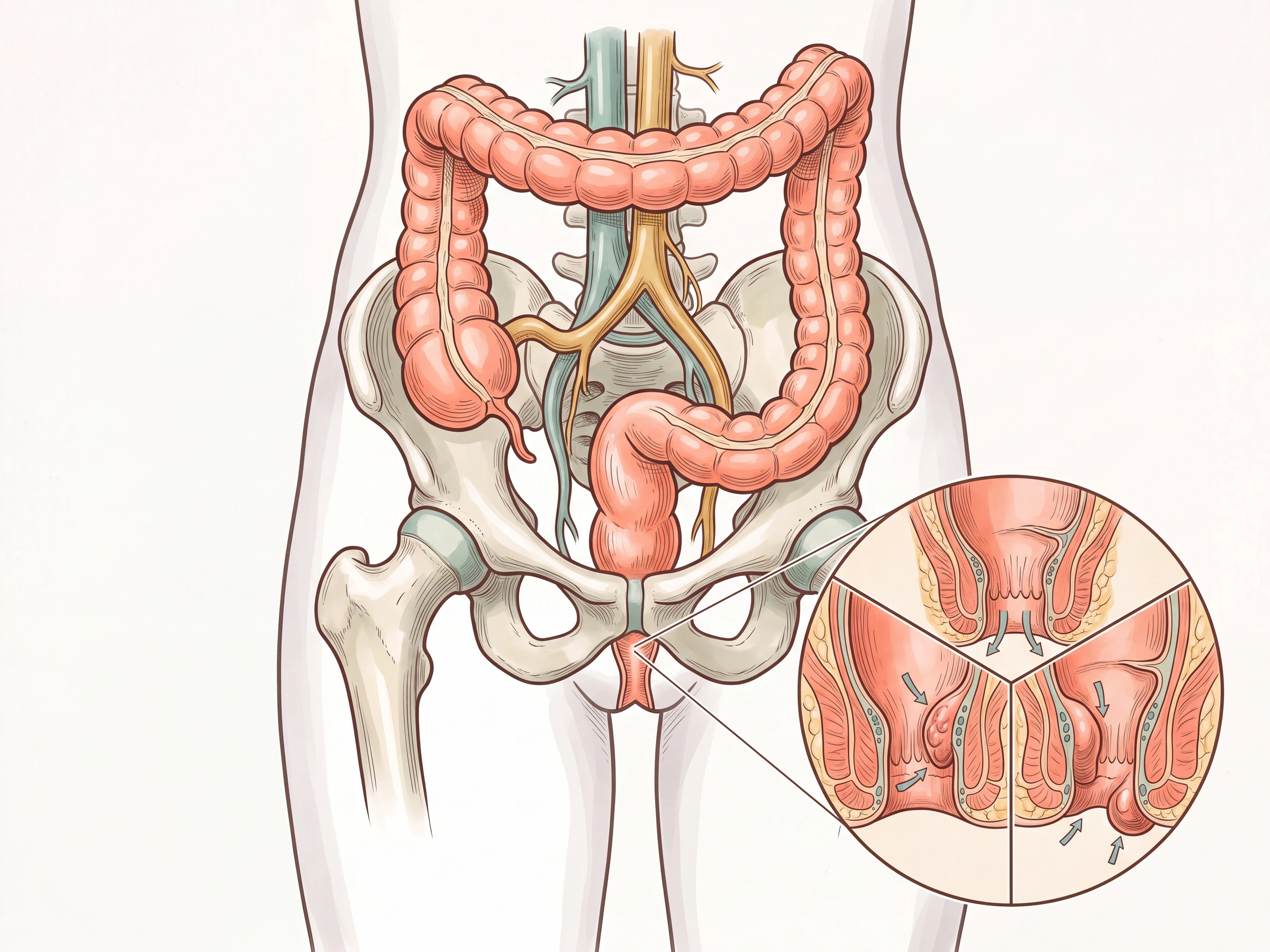
Summary before reading further
What is this topic, and why does it matter?
Internal hemorrhoids often cause painless, bright red bleeding. External hemorrhoids may itch or hurt, and a clot can form a firm lump. Constipation, straining, prolonged toilet sitting, pregnancy, heavy lifting, and chronic diarrhea can increase pressure in the area.
Assessment may include external examination, rectal examination, or colon evaluation according to age and risk, to check for fissures, abscesses, inflammatory bowel disease, polyps, or cancer.
What happens in the body?
Explain the mechanism step by step.
Hemorrhoids can cause bright red rectal bleeding, but do not assume they are the cause. Polyps, cancer, and other bowel conditions can also bleed, especially when symptoms change or occur with weight loss or anemia.
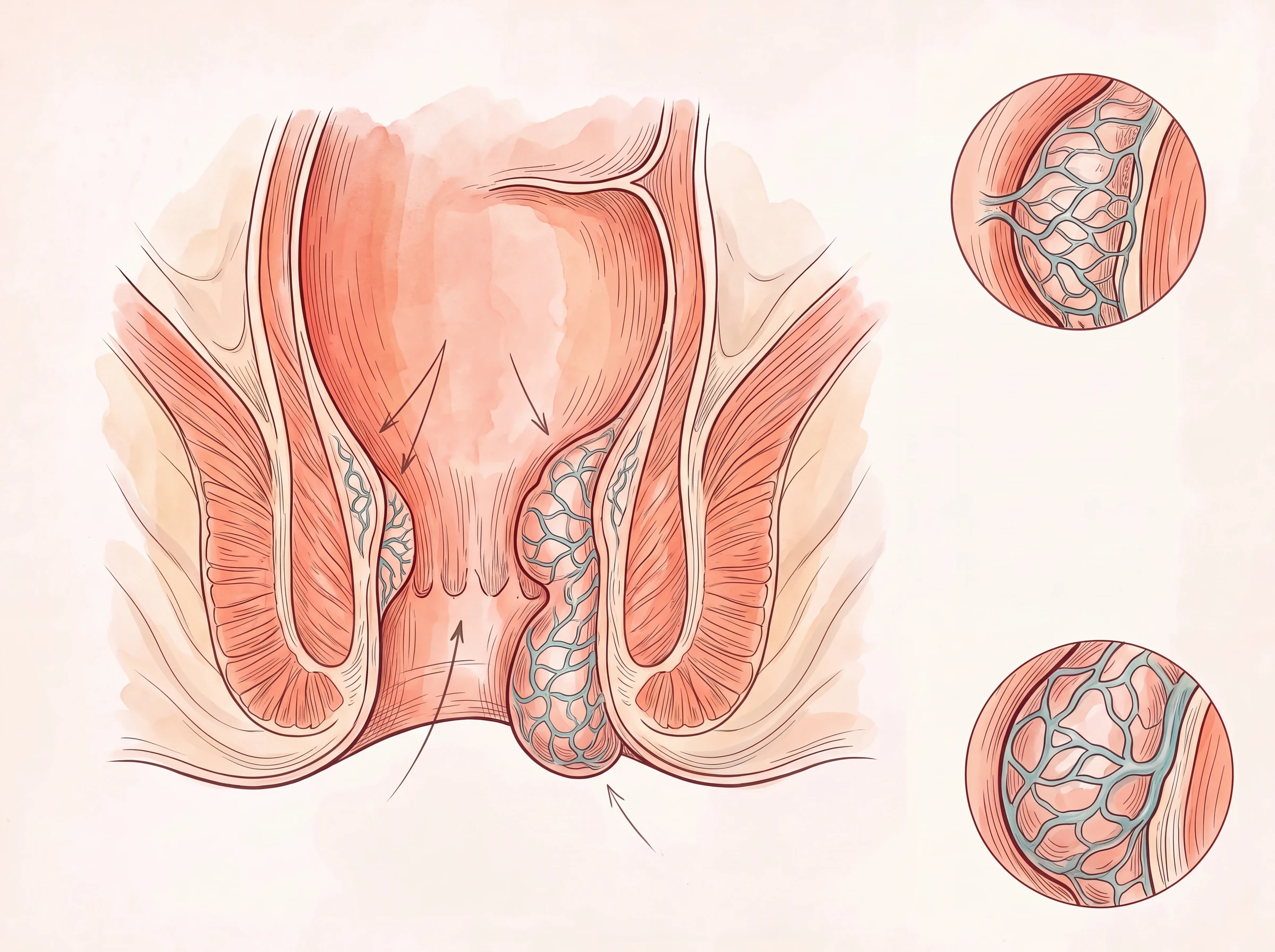
Increased pressure in the anal area
Straining, constipation, prolonged toilet sitting, and pregnancy increase pressure on the anal vascular cushions.
Supporting tissue stretches
Anal vascular cushions descend and swell; bleeding or a clot may develop.
An external haemorrhoid can develop a clot.
A thrombosed external haemorrhoid causes a painful, tender lump.
Values or criteria that you should know
Rectal bleeding should not be assumed to be hemorrhoids without evaluation.
Hemorrhoid grades describe prolapse. Treatment also depends on bleeding, pain, clots, and impact on daily life.
Internal haemorrhoid grades I–IV
Grade I: no prolapse. Grade II: prolapse returns on its own. Grade III: must be pushed back. Grade IV: cannot be pushed back.
- Reference range
- Grade I–II haemorrhoids are usually managed initially by improving stool consistency and toilet habits.
- You should make an appointment for an evaluation.
- Recurrent bleeding, grade III–IV prolapse, or painful lumps need assessment to choose appropriate treatment.
- Should be evaluated urgently
- Heavy bleeding, faintness, palpitations, black stools, or severe pain and swelling need urgent assessment.
dietary fiber
Total amount from food per day
- Reference range
- Many adults aim for about 20–35 grams of fibre daily, increasing gradually according to their health needs.
- You should make an appointment for an evaluation.
- If added fibre causes marked bloating or stools remain hard and difficult to pass, review the fibre type and medication options.
- Should be evaluated urgently
- People with bowel obstruction, swallowing difficulty, or fluid restrictions for heart or kidney disease should seek advice before adding fibre.
Causes · Symptoms · Examination · Care
See important information in one place.
Causes and related factors
- Constipation, hard stools, and straining
- Sitting on the toilet for a long time, pregnancy and being overweight
- Chronic diarrhoea and age-related weakening of supporting tissues.
Common symptoms
- Bright red blood on toilet paper or dripping after a bowel movement.
- Itching, irritation, lumps, or feeling unclean.
- A thrombosed external haemorrhoid can be very painful.
How do doctors check?
- Appropriate inspection and examination of the anal area.
- Anoscopy to examine internal haemorrhoids.
- Colonoscopy when there are warning signs or reaching screening age.
Start taking care of it systematically.
- Increase fiber and water gradually.
- Avoid straining or spending long periods on the toilet.
- See a doctor for heavy or recurrent bleeding, faintness, or black stools.
Important things you should know
Keep these points in mind.
The cause of the bright red blood still needs to be found.
The colour and amount of bleeding may suggest its source, but cannot confirm haemorrhoids or exclude serious disease.
Improving stool consistency matters more than straining harder.
Fibre, adequate fluids, and using the toilet when you feel the urge help keep stools soft and reduce straining and time spent sitting on the toilet.
There are many levels of treatment.
Treatment ranges from home care and topical medicines to rubber band ligation, injections, or surgery, depending on the type, grade, symptoms, and recurrence.
Daily food and care
Keep stools soft and reduce straining.
- Increase fiber from vegetables, fruit, beans, and whole grains gradually to limit bloating. Drink an amount of water appropriate for your health conditions.
- Reduce sugary, greasy, and processed foods and your own constipation or diarrhea triggers. Avoid prolonged toilet sitting while using a phone.
Read on to understand.
Read on for complete information on health and products.
Main references
