Easy-to-understand health information
gout
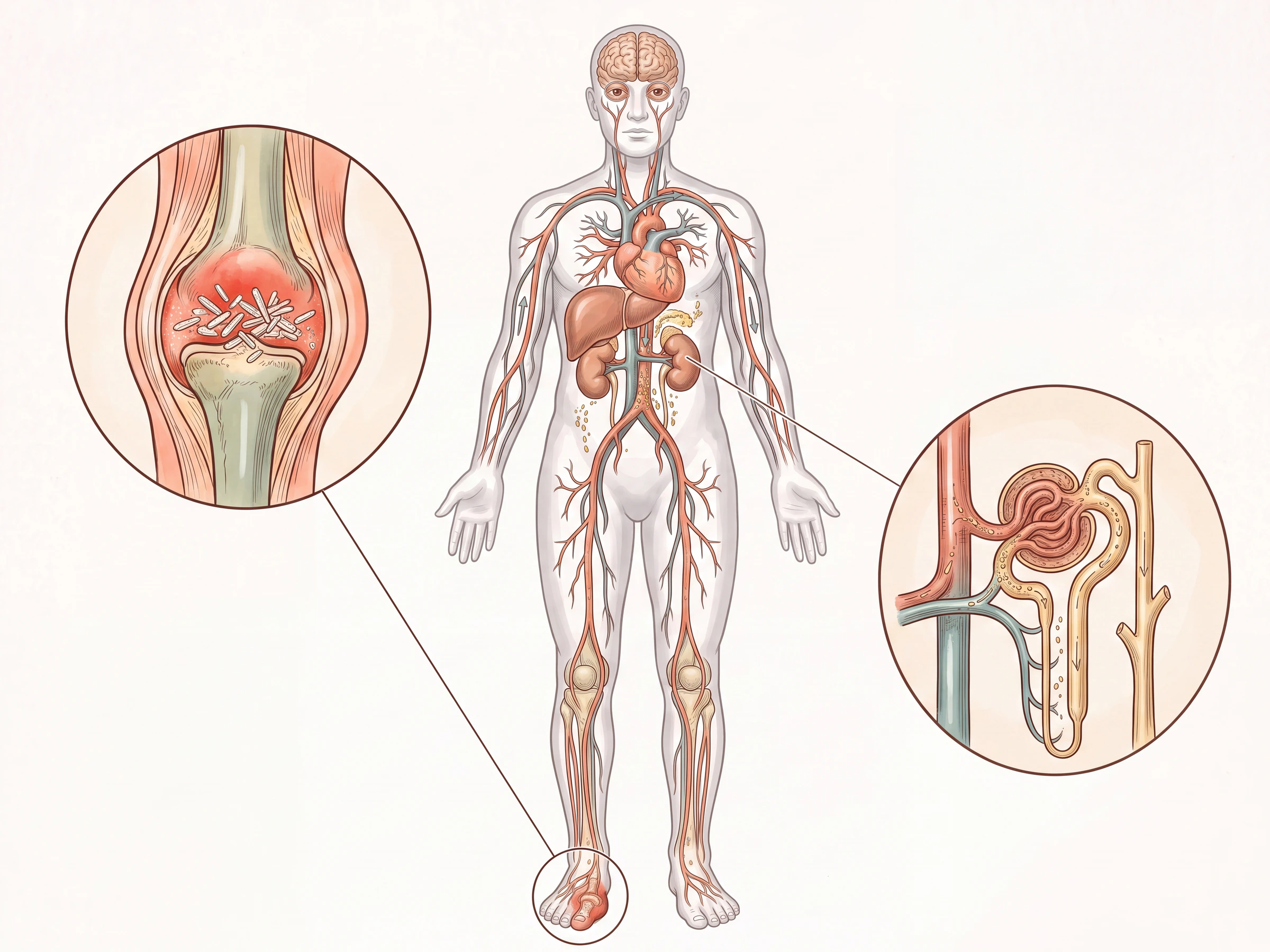
Urate crystals cause acute joint inflammation. Relieving pain is only part of care; long-term urate reduction helps protect joints and kidneys.
Summary before reading further
What is this topic, and why does it matter?
Rapid pain, redness, warmth, and swelling at the big toe or another joint may be gout, but joint infection must be excluded.
Urate-lowering medicines prevent future problems; they are not immediate painkillers. Do not stop them during a flare without advice.
Health glossary
- DECT
- A specialised CT scan that can identify urate crystals in joints, used in selected cases when other tests are inconclusive.
What happens in the body?
Explain the mechanism step by step.
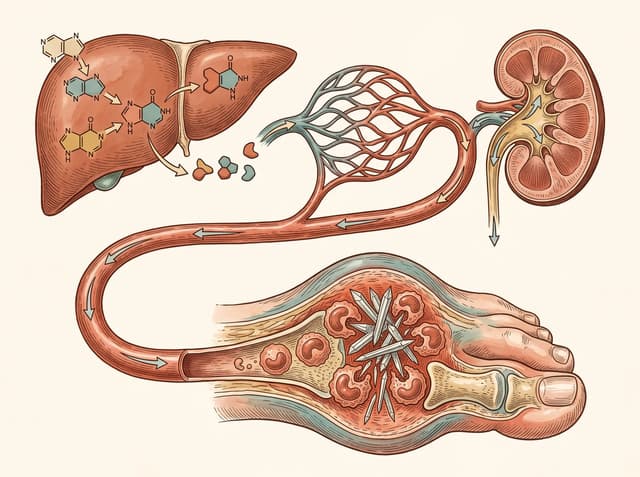
Reduced kidney excretion of uric acid is the main mechanism in many people. Genetics, kidney disease, diuretics, alcohol, fructose-containing drinks, and weight can contribute. Fasting or dehydration can trigger attacks.
urate accumulates beyond saturation point
Crystals start to form even though you haven't had joint pain yet.
Crystals activate the immune response.
Neutrophils release inflammatory substances, making the joint red, hot, and very painful.
Chronic crystal accumulation
Tophi can erode joints, and gout is also associated with kidney stones.
Values or criteria that you should know
The target uric acid level is different from the reference value for people without gout.
Urate-lowering treatment for gout aims to dissolve crystals, not simply return a result to the laboratory reference range.
Serum urate
Serum uric acid, units mg/dL
- Reference range
- The goal during gout treatment is below 6 mg/dL.
- You should make an appointment for an evaluation.
- Uric acid above 9 mg/dL, together with chronic kidney disease, urinary stones, or gout attacks, influences treatment decisions.
- Should be evaluated urgently
- Normal uric acid during an acute attack does not exclude gout. Do not adjust medication from a single result.
Swollen, red, hot joints
Speed of change and accompanying symptoms.
- Reference range
- Gout is usually very painful and progresses quickly within a few hours.
- You should make an appointment for an evaluation.
- Recurrent gout attacks, tophi, or urinary stones require a long-term urate-lowering plan.
- Should be evaluated urgently
- Fever, chills, or feeling very unwell with a swollen joint require assessment for joint infection.
Causes · Symptoms · Examination · Care
See important information in one place.
Causes and related factors
- Genetics, kidney disease and diuretics
- Obesity, diabetes, high blood pressure, and high fructose foods.
- Beer, liquor, offal and some seafood
Common symptoms
- Severe pain in a hot, red joint, often beginning at night.
- Gout often affects the base of the big toe, but other joints can be involved.
- Tophi on the ears, fingers, elbows, or feet in chronic gout.
How do doctors check?
- Finding crystals in joint fluid supports diagnosis; joint infection must also be excluded.
- Uric acid may be normal during an attack.
- Ultrasound or DECT helps in some cases.
Start taking care of it systematically.
- Treat acute inflammation as planned and rest the affected joint.
- Reduce sugary drinks and alcohol, and work towards gradual weight loss when appropriate.
- Urate-lowering medicines help dissolve crystals over time. They require consistent use and monitoring.
Important things you should know
Keep these points in mind.
The goal is a target uric acid level, not simply avoiding trigger foods.
Genetics, kidney disease, diuretics, weight, and alcohol all interact together.
Gout flares can occur when urate-lowering treatment is first started.
Your doctor may prescribe flare-prevention treatment initially and adjust urate-lowering therapy using blood results.
Beer and sugary drinks increase the risk.
Alcohol and high fructose intake are associated with gout attacks in many people.
Daily food and care
Start with manageable everyday steps.
- Reduce beer, spirits, sugary drinks, organ meats, processed meats, and very large meals. Choose water, vegetables, and simply prepared foods, taking other conditions into account.
- You do not need to eliminate all protein. Choose suitable sources and amounts to maintain muscle.
Read on to understand.
Read on for complete information on health and products.
Main references