Easy-to-understand health information
Glaucoma
A group of conditions that damage the optic nerve, often without early symptoms. Regular eye examinations can detect disease before visual field loss occurs.
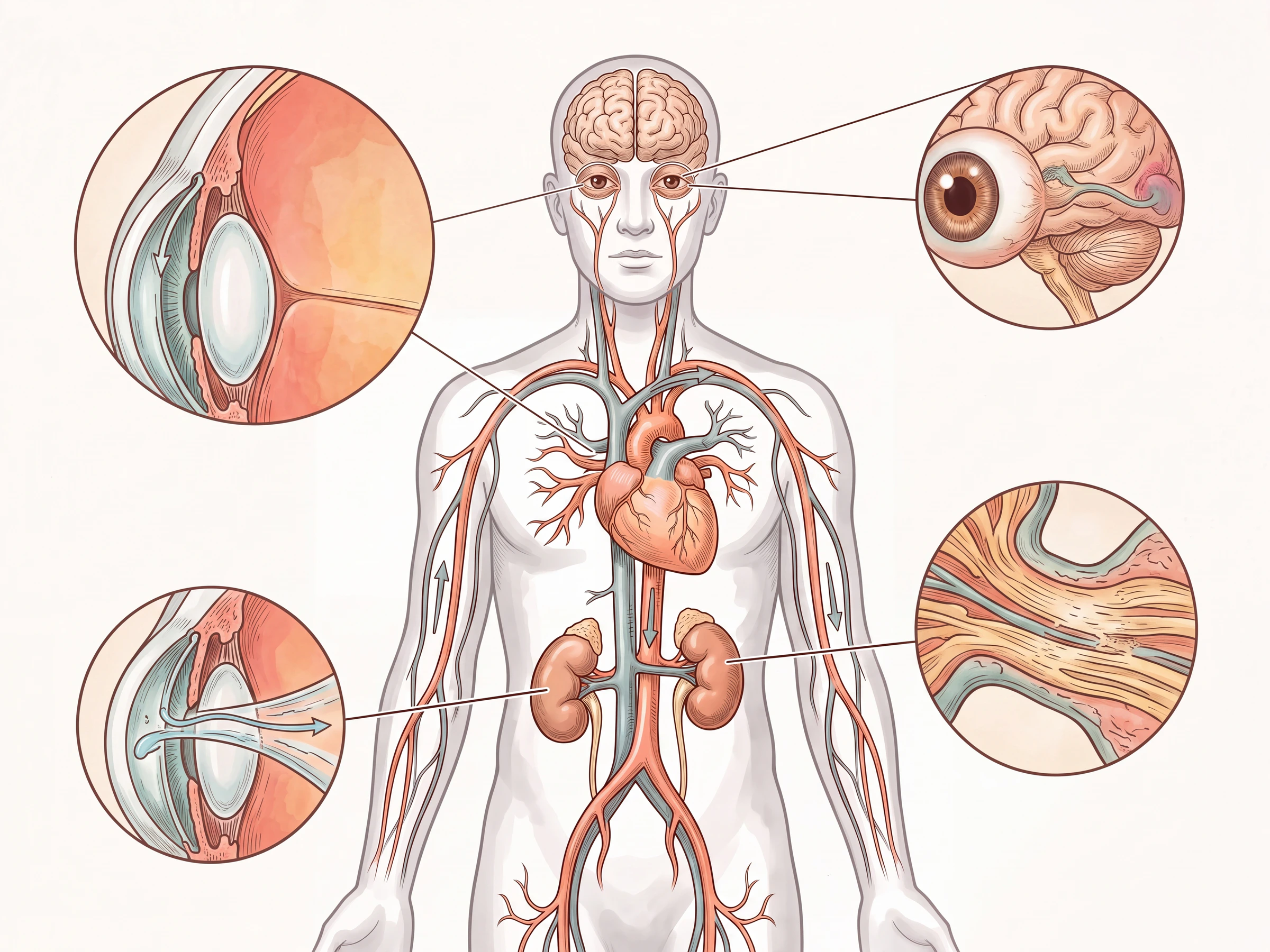
Summary before reading further
What is this topic, and why does it matter?
Glaucoma damages the optic nerve. The common open-angle form often progresses painlessly and unnoticed until peripheral vision is reduced.
Eye pressure alone is insufficient. An ophthalmologist may assess the optic nerve, visual field, and drainage angle. Treatment slows further damage but does not restore vision already lost.
What happens in the body?
Explain the mechanism step by step.
Glaucoma often causes gradual, painless loss of peripheral vision, which may go unnoticed. Assessment needs the optic nerve and visual field as well as eye pressure.
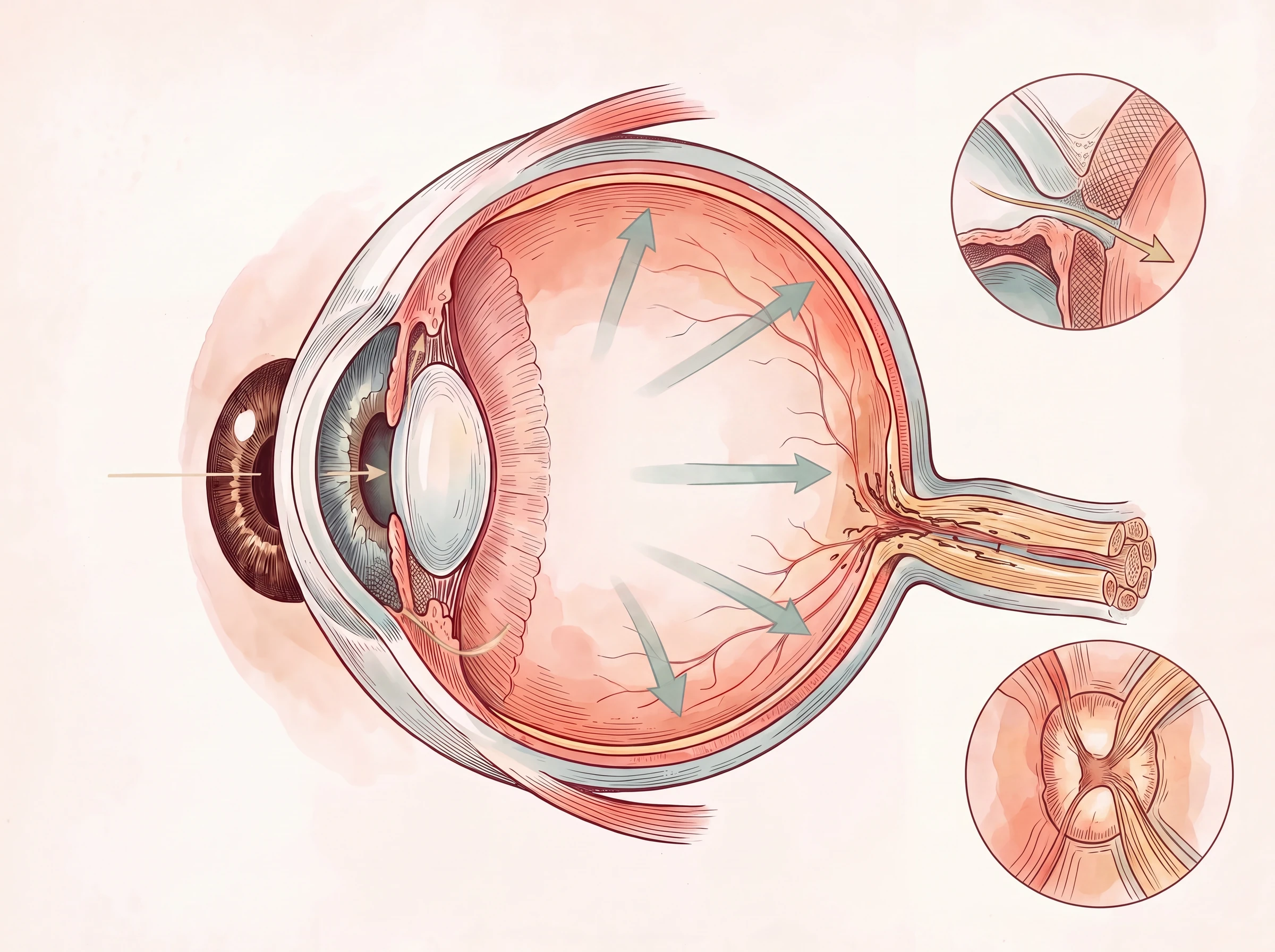
Fluid circulates within the eye
Aqueous flows from behind the iris, through the pupil, into the anterior chamber.
The drainage pathway is impaired.
The eye's drainage meshwork becomes less effective, or the drainage angle closes suddenly.
optic nerve damage
Nerve fibres at the optic nerve head gradually disappear, reducing the visual field.
Values or criteria that you should know
Normal eye pressure does not rule out glaucoma. And high eye pressure does not confirm that the optic nerve is damaged.
Glaucoma follow-up assesses trends in eye pressure, optic nerve appearance, OCT, and visual fields together.
Eye pressure IOP
Millimeter of mercury
- Reference range
- Eye pressure is commonly around 10–21 mmHg, but glaucoma can occur within this range.
- You should make an appointment for an evaluation.
- Eye pressure above 21 mmHg or rising from baseline warrants assessment alongside corneal thickness and optic nerve findings.
- Should be evaluated urgently
- Severe eye pain, redness, halos around lights, headache, nausea, or sudden vision loss require emergency eye care.
Individual treatment targets.
target IOP prescribed by the ophthalmologist
- Reference range
- There is no single eye pressure target. It depends on disease stage and the rate of visual field change.
- You should make an appointment for an evaluation.
- Eye pressure repeatedly above target or worsening OCT or visual fields warrants treatment review.
- Should be evaluated urgently
- Do not stop glaucoma drops because you have no symptoms. Early glaucoma is often painless.
Causes · Symptoms · Examination · Care
See important information in one place.
Causes and related factors
- Age, family history and some ethnic groups
- High eye pressure, nearsightedness or farsightedness, and diabetes.
- Steroid use, injury, or eye angle abnormalities
Common symptoms
- The chronic type often has no symptoms in the early stages.
- Gradual narrowing of peripheral vision or bumping into objects at the sides.
- Severe eye pain, redness, halos, and nausea may indicate acute angle closure, an eye emergency.
How do doctors check?
- Measure eye pressure and check eye angles
- Examine the optic nerve and take OCT.
- Check your visual field and track changes.
Start taking care of it systematically.
- Use drops on schedule and gently press the inner corner of the eye as instructed.
- Continue glaucoma follow-up even with normal vision, and report all steroid use.
- Sudden eye pain and redness with blurred vision or nausea require emergency eye care.
Important things you should know
Keep these points in mind.
Early disease is often silent
Central vision may remain good, so an eye examination is needed to detect glaucoma.
Continue treatment
Eye drops, laser treatment, or surgery lower eye pressure according to the ophthalmologist's plan.
Angle-closure glaucoma may come on quickly.
Severe eye pain, redness, halos around lights, and nausea need urgent eye care.
Daily food and care
Start with manageable everyday steps.
- Use eye drops at the times and with the technique taught by your ophthalmologist. Do not stop because your vision seems normal.
- Tell your clinician about all medicines and attend regular eye checks. Monitoring the optic nerve is more reliable than waiting for symptoms.
Read on to understand.
Read on for complete information on health and products.
Main references