Easy-to-understand health information
gastritis
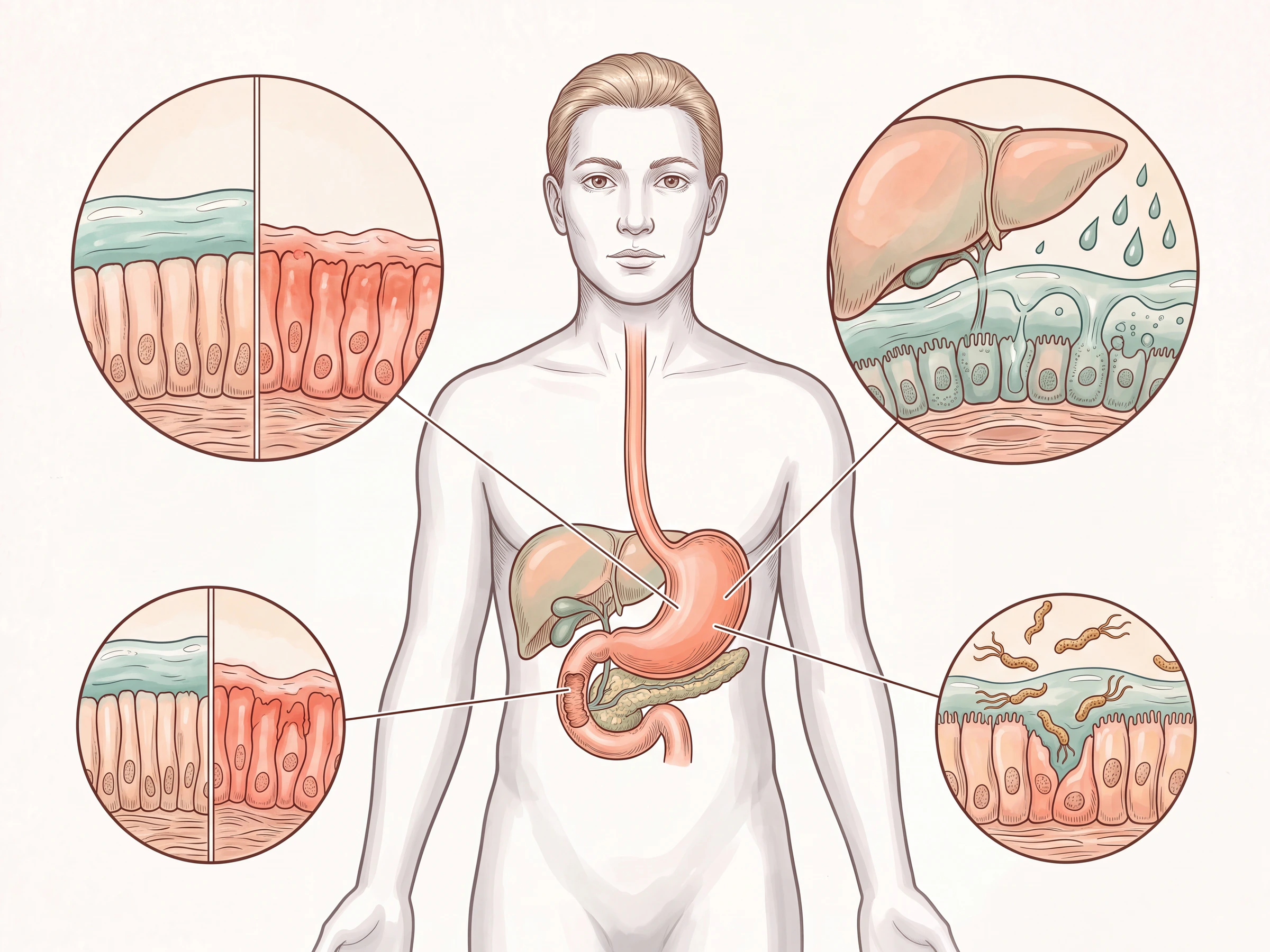
An irritated or inflamed stomach lining may cause no symptoms, or upper abdominal pain, nausea, and early fullness. Assessment should consider causes such as H. pylori or certain painkillers.
Summary before reading further
What is this topic, and why does it matter?
Gastritis is inflammation of the stomach lining. Gastropathy describes lining damage that may involve less inflammation. Their symptoms overlap, so symptoms alone cannot confirm either condition.
Care depends on the cause, such as treating H. pylori, reviewing NSAID use, or using acid-related medicines as prescribed. Avoid prolonged self-treatment without assessment.
Health glossary
- H. pylori
- A bacterium that can cause gastritis and ulcers. Appropriate testing guides diagnosis and treatment.
- NSAIDs pain relievers
- Medicines used for pain and inflammation that can affect the stomach, kidneys, blood pressure, and heart, particularly with prolonged use or duplicate products.
What happens in the body?
Explain the mechanism step by step.
Gastritis is not a general label for all upper abdominal pain. Similar symptoms can result from ulcers, reflux, gallbladder disease, heart problems, or medicines. Assessment should also consider warning signs.
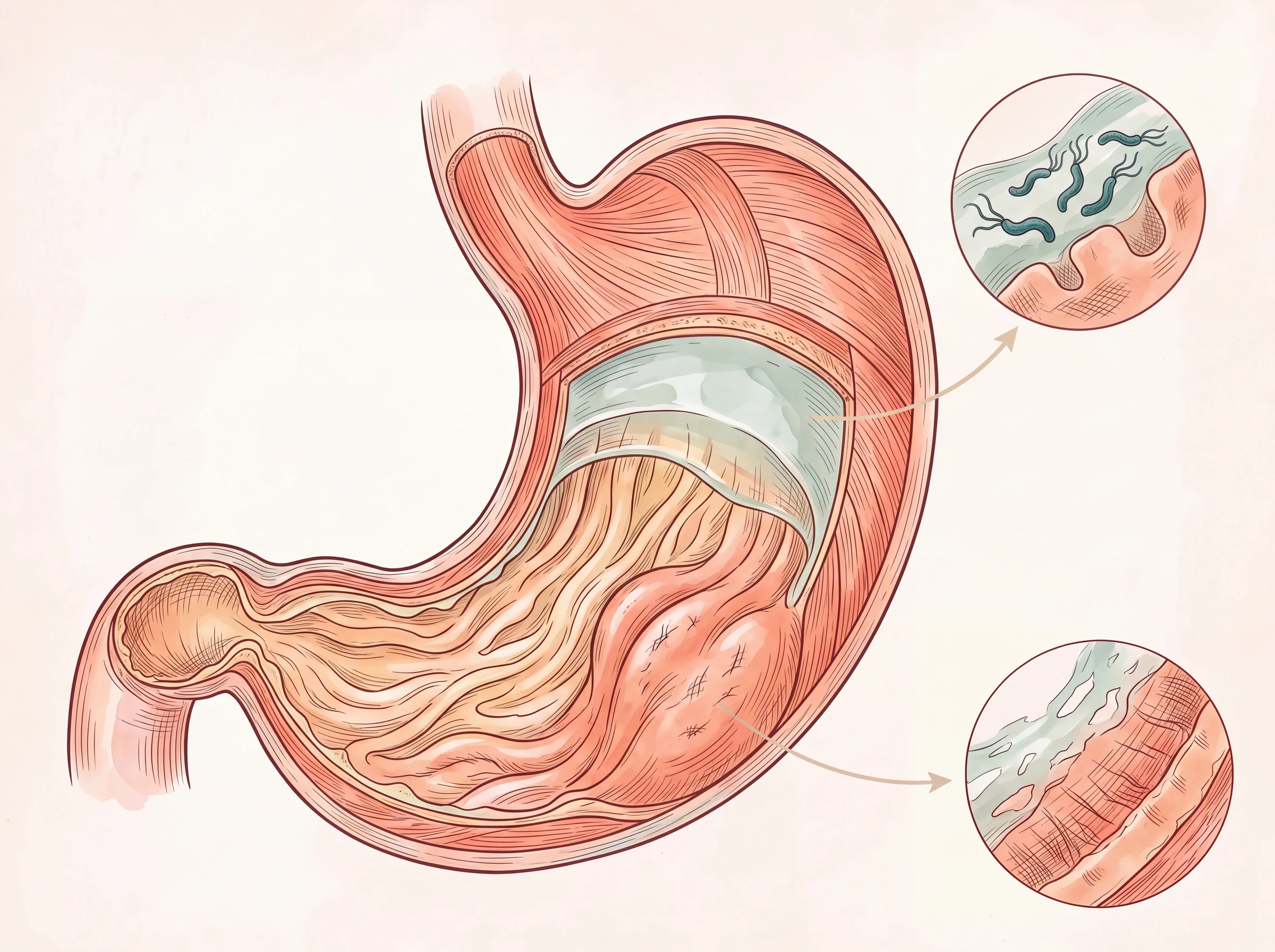
The protective barrier weakens.
NSAIDs, alcohol, or severe illness can weaken the stomach lining's protective barrier.
Irritated or inflamed mucosa
Acid and enzymes contact a weakened stomach lining, causing inflammation or erosions.
The infection may remain.
H. pylori lives in the mucus layer and causes chronic inflammation in some people.
Values or criteria that you should know
Differentiate stomach irritation from ulcers, bleeding, and H. pylori infection.
Gastritis means inflammation of the stomach lining, not every form of upper abdominal discomfort. Assessment depends on age, warning signs, and medicines.
Confirm H. pylori eradication.
urea breath test or stool antigen after treatment
- Reference range
- Test for cure at least four weeks after finishing H. pylori antibiotics.
- You should make an appointment for an evaluation.
- PPIs generally need to be paused for about two weeks before testing, under your doctor's instructions, to reduce false-negative results.
- Should be evaluated urgently
- Do not stop essential medication yourself. Your doctor can choose suitable test timing or an alternative test.
Warning signs
Bleeding, blockage, or disease
- Reference range
- Mild, improving burning discomfort may be assessed in a routine appointment.
- You should make an appointment for an evaluation.
- Difficulty swallowing, feeling full quickly, anemia, or weight loss should be evaluated further.
- Should be evaluated urgently
- Vomiting blood, black stools, faintness, or sudden severe abdominal pain require emergency care.
Causes · Symptoms · Examination · Care
See important information in one place.
Causes and related factors
- H. pylori infection
- Painkillers, NSAIDs, alcohol, and cigarettes
- Autoimmune damage to stomach cells or severe illness.
Common symptoms
- Pain or burning in the epigastric region, nausea, or feeling full quickly.
- Some people have no symptoms.
- Vomiting blood or black stool indicates bleeding.
How do doctors check?
- Review symptoms, medications, and warning signs.
- Test for H. pylori with breath, stool, or biopsy.
- Endoscopy may be indicated by warning signs, age, or risk factors.
Start taking care of it systematically.
- Avoid unnecessary NSAIDs and review medications with your doctor.
- Complete treatment for confirmed H. pylori and attend the follow-up test of cure.
- Seek emergency care for vomiting blood, black stools, faintness, or severe pain.
Important things you should know
Keep these points in mind.
Many people have no symptoms.
When symptoms appear, they may include pain in the upper abdomen, nausea, vomiting, feeling full quickly or fullness after meals.
The cause is not just spicy food.
H. pylori, NSAIDs, alcohol, and other conditions may be involved.
Bleeding must be checked immediately.
Vomiting blood or coffee-ground material, or passing black, sticky stools, may indicate gastrointestinal bleeding.
Daily food and care
Start with manageable everyday steps.
- Choose meals that don't trigger your symptoms, cut down on alcohol, and avoid taking NSAIDs more than recommended.
- Complete prescribed H. pylori treatment and return for a test of cure as advised by your doctor.
Read on to understand.
Read on for complete information on health and products.
Main references