


Easy-to-understand health information
Gallstones in the gallbladder
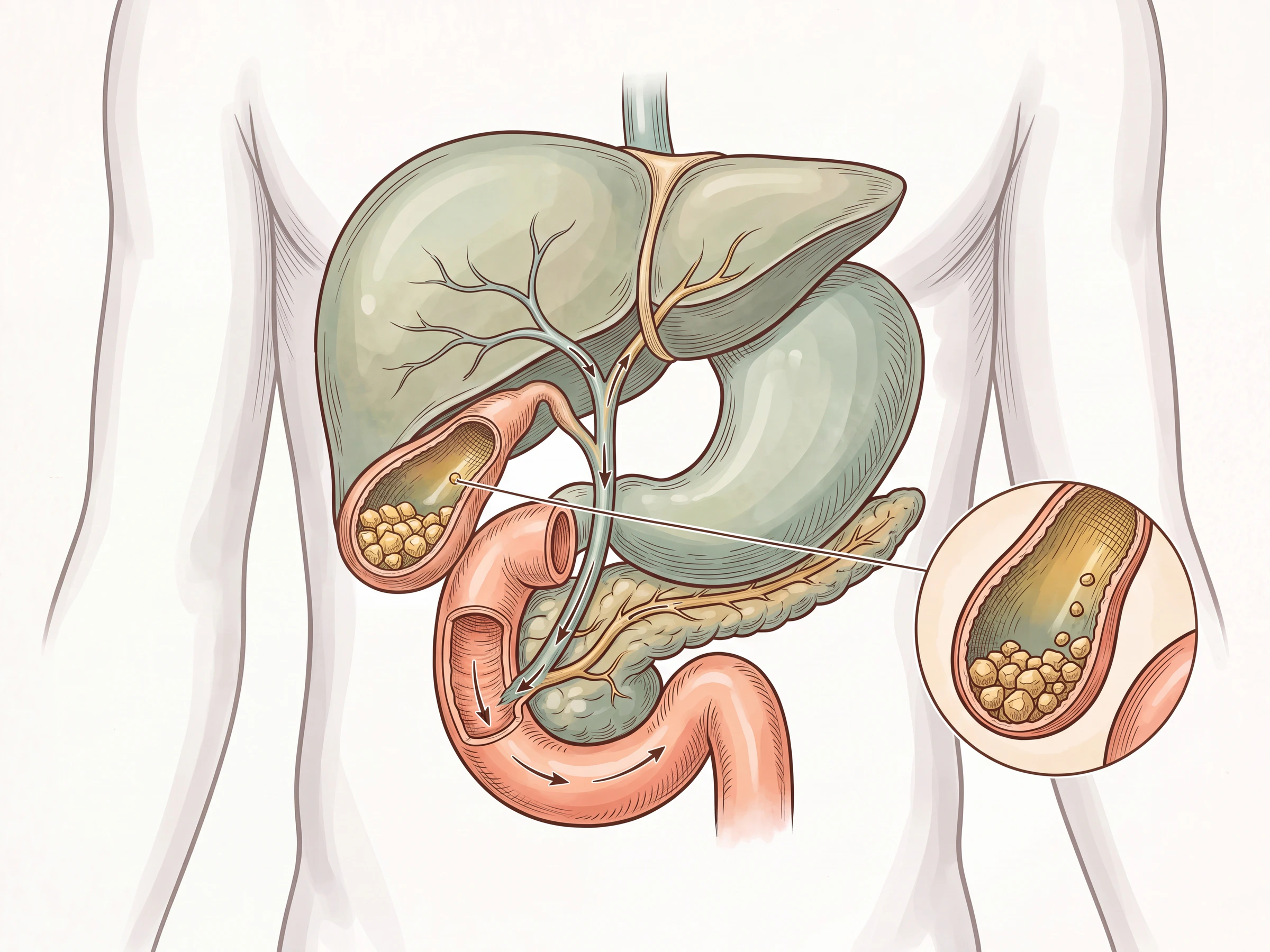
Gallstones form from components of bile. Many remain silent, but obstruction can cause severe abdominal pain and complications.
Summary before reading further
What is this topic, and why does it matter?
Most gallstones are cholesterol stones; others are pigment stones. Incidentally detected, symptom-free stones often do not need immediate treatment.
A gallstone blocking the gallbladder outlet can cause right upper abdominal or epigastric pain lasting minutes to hours, often after a large or high-fat meal.
Health glossary
- CT and MRI
- CT uses X-rays, while MRI uses magnetic fields and radio waves. The choice depends on the organ and clinical question.
What happens in the body?
Explain the mechanism step by step.
Many gallstones cause no symptoms and need no treatment. Pain after meals alone does not confirm gallstones as the cause. Assessment considers pain location and duration, blood tests, and ultrasound.
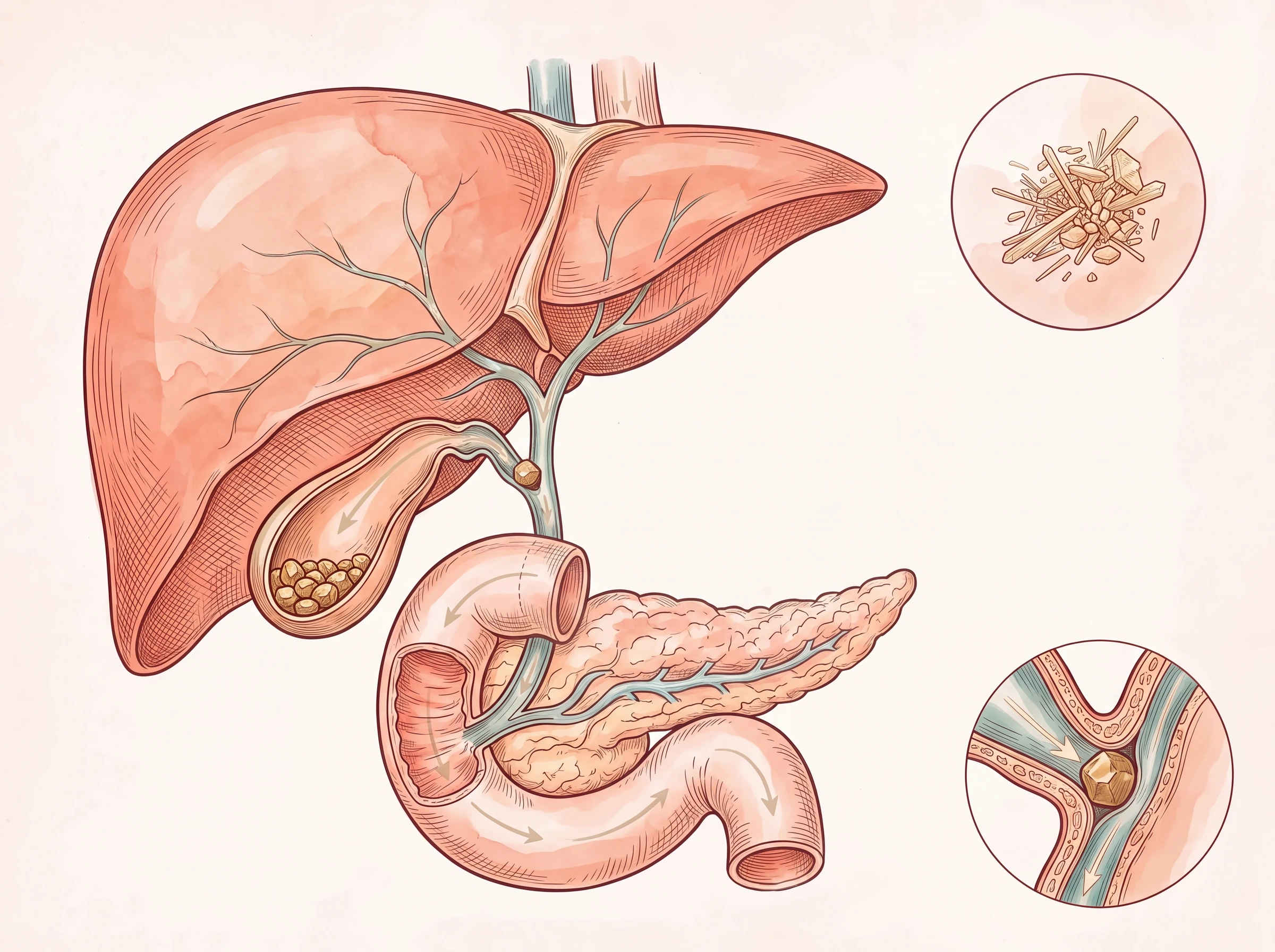
bile crystallizes
Cholesterol, pigments, and bile components are out of balance and begin to crystallize.
Crystals grow into stones.
Stones may lie quietly in the gallbladder without causing any discomfort.
A stone moves into and blocks a duct.
A blockage makes the gallbladder contract against it, causing pain, inflammation, or jaundice depending on the site.
Values or criteria that you should know
Silent gallbladder stones differ from stones blocking a bile duct and require different levels of urgency.
Gallstones on ultrasound do not explain every symptom. Consider pain location and duration, fever, jaundice, and pancreatic findings.
Duration of biliary colic pain
Pain in the upper central abdomen or under the right ribs after meals, sometimes spreading to the back.
- Reference range
- It usually lasts at least 30 minutes and may continue for several hours before relief occurs.
- You should make an appointment for an evaluation.
- Recurring gallstone symptoms warrant a surgical consultation even if they settle on their own.
- Should be evaluated urgently
- Seek urgent assessment for pain lasting more than about six hours, fever, chills, jaundice, persistent vomiting, or reduced alertness.
Gallstones without symptoms
Found incidentally on imaging.
- Reference range
- Monitoring without immediate surgery is often appropriate.
- You should make an appointment for an evaluation.
- Review care if symptoms develop or another condition increases complication risk.
- Should be evaluated urgently
- Do not replace assessment with gallbladder flushes or herbal remedies. They may trigger symptoms and have not been shown to reliably dissolve stones.
Causes · Symptoms · Examination · Care
See important information in one place.
Causes and related factors
- Female gender, age, overweight and genetics
- Rapid weight loss, pregnancy and diabetes
- Hemolytic disease and certain intestinal diseases
Common symptoms
- Cramping pain under the right ribs or in the upper central abdomen lasting at least half an hour.
- Nausea, pain radiating to the back or right shoulder
- Fever, chills, jaundice, or persistent pain are signs of complications.
How do doctors check?
- Abdominal ultrasound is the main examination.
- Check your liver, blood cells, and pancreas when you have symptoms.
- MRCP or additional testing may be needed if bile duct stones are suspected.
Start taking care of it systematically.
- Asymptomatic gallstones are often monitored without intervention.
- Discuss surgery with your doctor if gallstone symptoms recur. Do not attempt a gallbladder flush.
- If pain is accompanied by fever, chills, jaundice, or severe vomiting, go to the hospital.
Important things you should know
Keep these points in mind.
Asymptomatic gallstones may not require treatment.
Decisions should be made based on symptoms, risks, and test results, not just the discovery of a stone on imaging.
Ultrasound is the main examination.
Ultrasound helps assess gallstones, the gallbladder wall, and obstruction. Blood tests help assess liver and pancreatic inflammation.
Recurrent symptoms should prompt evaluation for surgery.
You can live without a gallbladder. Surgery is the main treatment when gallstones cause symptoms or complications.
Daily food and care
Manage weight gradually and choose suitable dietary fats.
- Eat fiber from vegetables, fruits, nuts, and whole grains. Reduce refined carbohydrates, sugar, saturated fat, and trans fat.
- Avoid rapid weight loss or prolonged fasting, which can increase cholesterol in bile and reduce gallbladder emptying.
Read on to understand.
Read on for complete information on health and products.
Main references
