


Easy-to-understand health information
Vitreous changes and eye floaters.
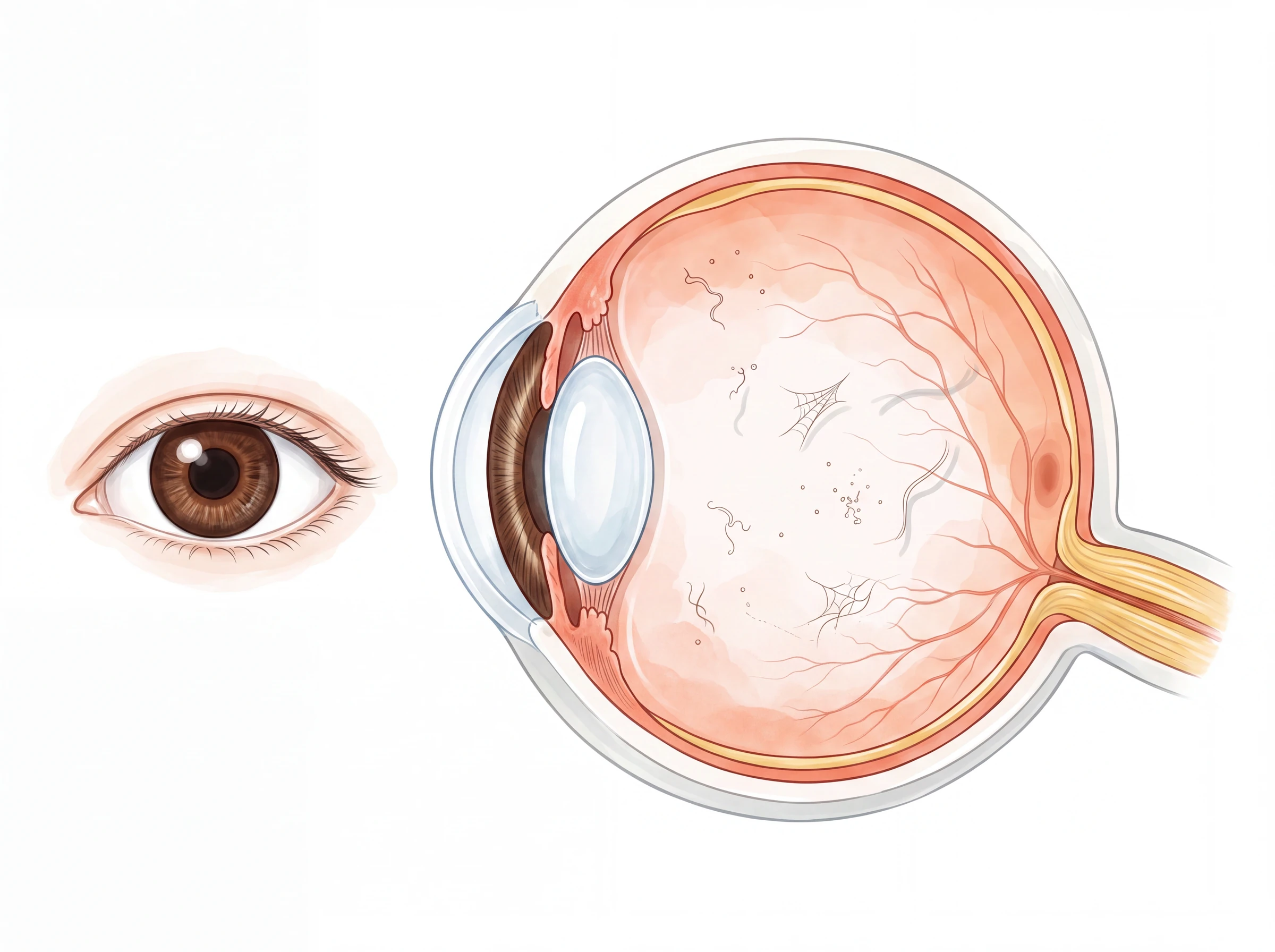
Floaters appear as spots, lines, or cobweb-like shadows that move with the eyes, often from age-related vitreous changes. A sudden increase needs prompt retinal assessment.
Summary before reading further
What is this topic, and why does it matter?
Age-related vitreous fibers can clump and cast retinal shadows, appearing as spots, lines, or cobwebs, often most noticeable against a bright background.
Most floaters need no treatment, but a sudden increase with flashes or a curtain-like shadow may indicate a retinal tear or detachment.
What happens in the body?
Explain the mechanism step by step.
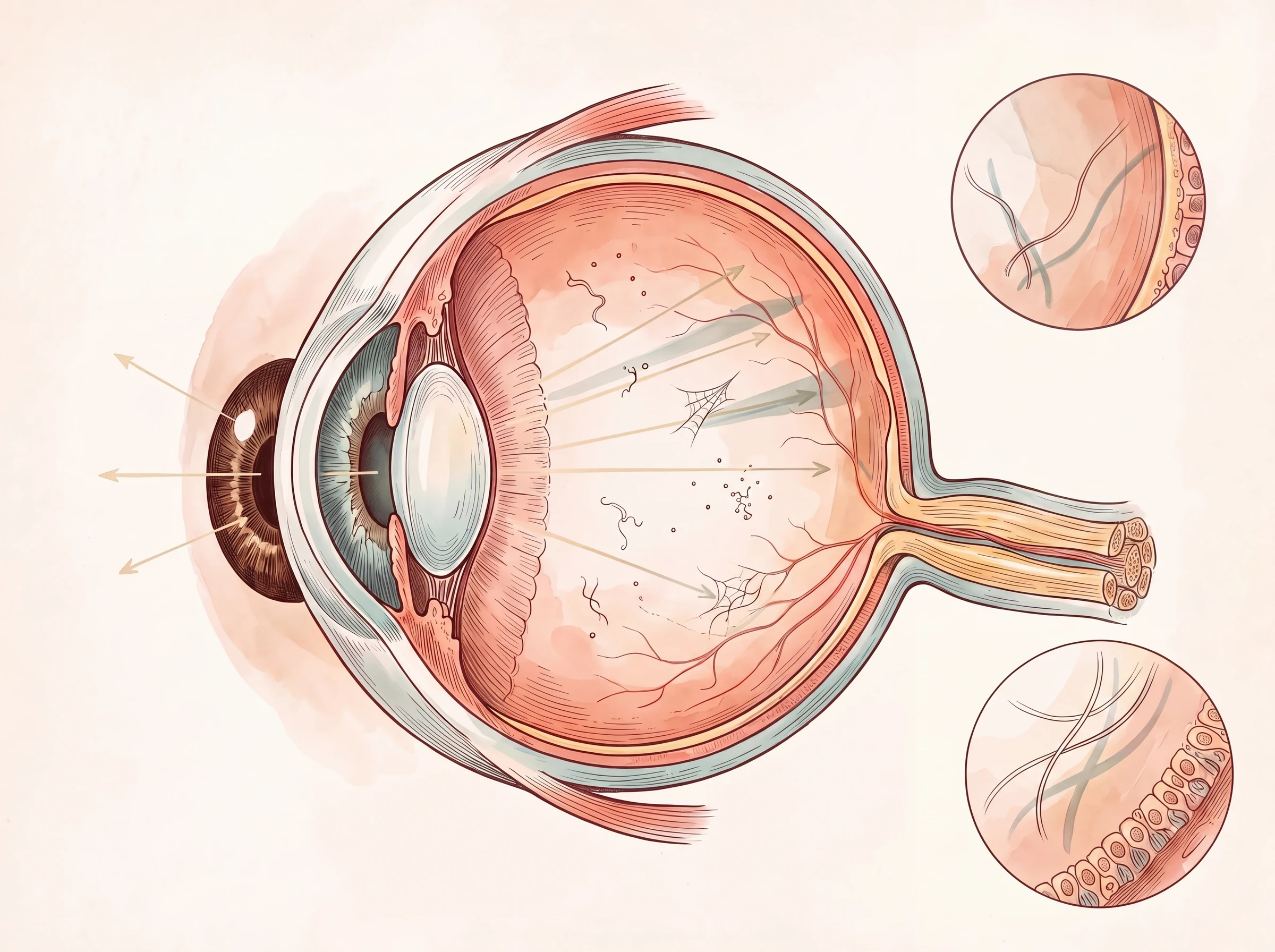
The vitreous is the clear gel inside the eye. With age, its collagen fibers can clump and cast shadows on the retina, appearing as floating spots or lines that move with the eyes.
The vitreous humor changes with age.
Parts of the vitreous gel become more liquid while its fine fibres may clump together.
Fibers cast shadows on the retina.
Fibres in the vitreous block some incoming light and cast small shadows on the retina.
Floating dots or strands in vision.
These shadows move with the vitreous as the eyes move, appearing as drifting dots, strands, or cobwebs.
Values or criteria that you should know
No number of floaters establishes that vitreous changes are harmless.
Pay attention to new floaters, how suddenly they appear, and accompanying symptoms. New floaters can occur with a retinal tear.
Features suitable for monitoring.
Existing floaters remain stable.
- Reference range
- Floaters remain unchanged in number and shape, without flashes or dark shadows.
- You should make an appointment for an evaluation.
- Arrange an assessment if floaters affect reading or driving, even without an increase in number.
- Should be evaluated urgently
- The number of floaters cannot establish that the retina is safe.
new changes
A sudden increase in floaters or new flashes.
- Reference range
- You shouldn't wait several days to see if it goes away on its own.
- You should make an appointment for an evaluation.
- Arrange a dilated retinal examination the same day or as soon as possible.
- Should be evaluated urgently
- A curtain-like shadow, missing areas of vision, or sudden vision loss is an eye emergency.
Causes · Symptoms · Examination · Care
See important information in one place.
Causes and related factors
- Changes in the vitreous humor of the eye with age
- Severe short-sightedness, diabetes, or previous cataract surgery.
- Vitreous detachment from the retina, inflammation, bleeding, or injury in the eye
Common symptoms
- Dark spots, drifting strands, or cobweb-like shadows.
- Floaters follow eye movement and may continue drifting briefly after the eyes stop.
- Floaters are often more visible against white paper, the sky, or a bright background.
How do doctors check?
- Check your eyes after using pupil dilator drops.
- Examine the vitreous and retina for tears or detachment.
- Note when symptoms began, which eye is affected, and whether flashes or dark shadows accompany them.
Start taking care of it systematically.
- Longstanding stable floaters that do not affect daily life can often be monitored after assessment.
- Get regular eye exams and control underlying diseases such as diabetes.
- A sudden increase in floaters, flashes, or a dark curtain-like shadow requires immediate eye assessment.
Important things you should know
Keep these points in mind.
Examined by dilating the pupils.
An ophthalmologist examines the vitreous and retina to distinguish common changes from emergencies.
The risk increases with age.
Severe short-sightedness, diabetes, and cataract surgery can increase the likelihood of floaters.
The number and time of start are important.
Longstanding stable floaters differ from a sudden increase in new floaters.
Daily food and care
Start with manageable everyday steps.
- Manage diabetes and attend recommended eye examinations. Food or supplements do not replace retinal assessment when warning signs occur.
- Note when floaters started, which eye is affected, and whether flashes or dark shadows accompany them. Share this with your eye doctor.
Read on to understand.
Read on for complete information on health and products.
Main references
