Easy-to-understand health information
dengue hemorrhagic fever
Dengue is spread by Aedes mosquitoes. The critical phase may begin as fever falls. Know warning signs and avoid painkillers that increase bleeding.
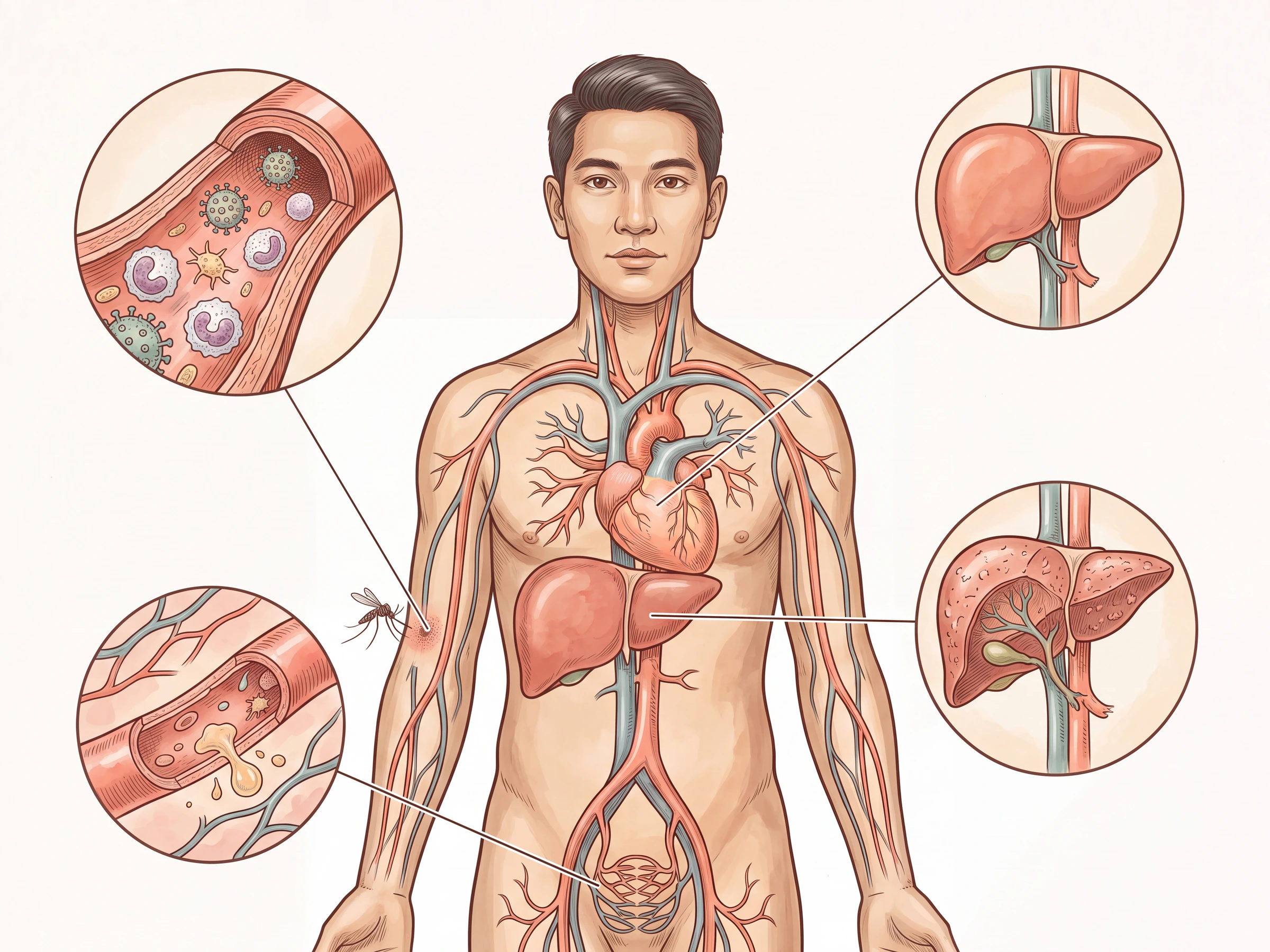
Summary before reading further
What is this topic, and why does it matter?
High fever, headache, pain behind the eyes, body aches, nausea, and rash may occur. Assessment and monitoring depend on the day of illness.
Care centers on appropriate fluids, rest, and paracetamol when indicated. Avoid aspirin and ibuprofen because they can increase bleeding risk.
Health glossary
- PCR and NS1
- A test that directly detects viral material or proteins. Timing affects how the result is interpreted.
What happens in the body?
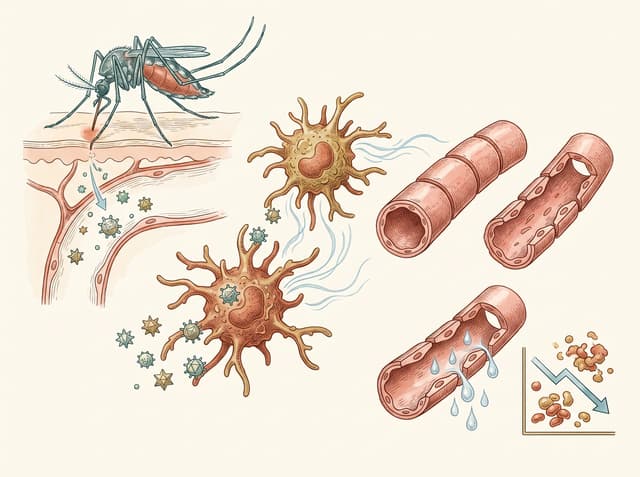
Explain the mechanism step by step.
The critical phase can begin as fever falls, often around days 3 to 7. A lower fever does not necessarily mean the danger has passed. Appropriate fluids and attention to warning signs matter more than a platelet count alone.
The virus multiplies
The infection enters immune cells and triggers a response throughout the body.
Leaky capillaries
Plasma leaks through blood vessel walls, concentrating the blood and lowering blood pressure.
organs not receiving enough blood
Severe plasma leakage can lead to shock; liver inflammation or bleeding may also occur.
Values or criteria that you should know
The danger may begin when the fever subsides. Not when the temperature is the highest.
Assess dengue using symptoms, circulation, urine output, hematocrit, and platelet trends, rather than platelets alone.
Critical phase
Day of illness and the time the fever began to settle.
- Reference range
- The high fever period is usually early in the disease.
- You should make an appointment for an evaluation.
- Watch closely for warning signs around days 3–7, especially during the 24–48 hours after the fever subsides.
- Should be evaluated urgently
- Reduced alertness, restlessness, cold hands and feet, little urine, breathlessness, or faintness are emergency warning signs.
Persistent vomiting
short term frequency
- Reference range
- Mild nausea may be experienced. But you must still be able to drink and urinate.
- You should make an appointment for an evaluation.
- Vomiting at least 3 times in 1 hour or 4 times in 6 hours is one of the warning signs.
- Should be evaluated urgently
- Vomiting blood, black stools, severe abdominal pain, or heavy bleeding require hospital assessment.
platelets
Platelet count and trends with hematocrit
- Reference range
- No single platelet count establishes safety or determines the need for transfusion.
- You should make an appointment for an evaluation.
- Decreased platelets with elevated hematocrit or warning signs require closer evaluation.
- Should be evaluated urgently
- Avoid aspirin and ibuprofen because they increase bleeding risk, unless a doctor has prescribed them for another essential reason.
Causes · Symptoms · Examination · Care
See important information in one place.
Causes and related factors
- Bitten by an infected Aedes mosquito.
- Living in an outbreak area with standing water nearby.
- A later infection with a different dengue serotype can increase the risk of severe disease.
Common symptoms
- High fever, body aches, pain behind the eyes, nausea, or rash.
- Abdominal pain, repeated vomiting, bleeding, reduced alertness, or restlessness are warning signs.
- Cold hands and feet, little urination, or dizziness may indicate shock.
How do doctors check?
- Choose blood testing by the day of illness, such as NS1, PCR, or antibody tests.
- Review haematocrit, platelet trends, and symptoms together.
- Assess plasma leakage, liver function, and circulation together rather than relying on one result.
Start taking care of it systematically.
- Follow fluid advice and monitor closely as the fever subsides.
- Avoid aspirin and ibuprofen; use paracetamol at the recommended dose.
- Eliminate standing water and prevent mosquito bites for both patients and families.
Important things you should know
Keep these points in mind.
A falling fever does not guarantee safety.
The 24 to 48 hours after a fever subsides can be critical.
Prevent mosquito bites throughout the day.
Aedes mosquitoes bite during the day. Remove standing water, cover containers, and use repellent.
It can recur after a previous episode.
There are several dengue serotypes. Infection with one does not protect against all others.
Daily food and care
Start with manageable everyday steps.
- Sip water or oral rehydration solution as advised and monitor urination. People with heart or kidney disease should not force excessive fluids.
- Herbal drinks and supplements cannot replace monitoring of vital signs, blood tests, and warning symptoms.
Read on to understand.
Read on for complete information on health and products.
Main references