


Easy-to-understand health information
chronic muscle pain
Pain lasting more than three months can relate to activity, injury, medicines, infection, or other conditions. Assess the cause rather than assuming age or stress alone.
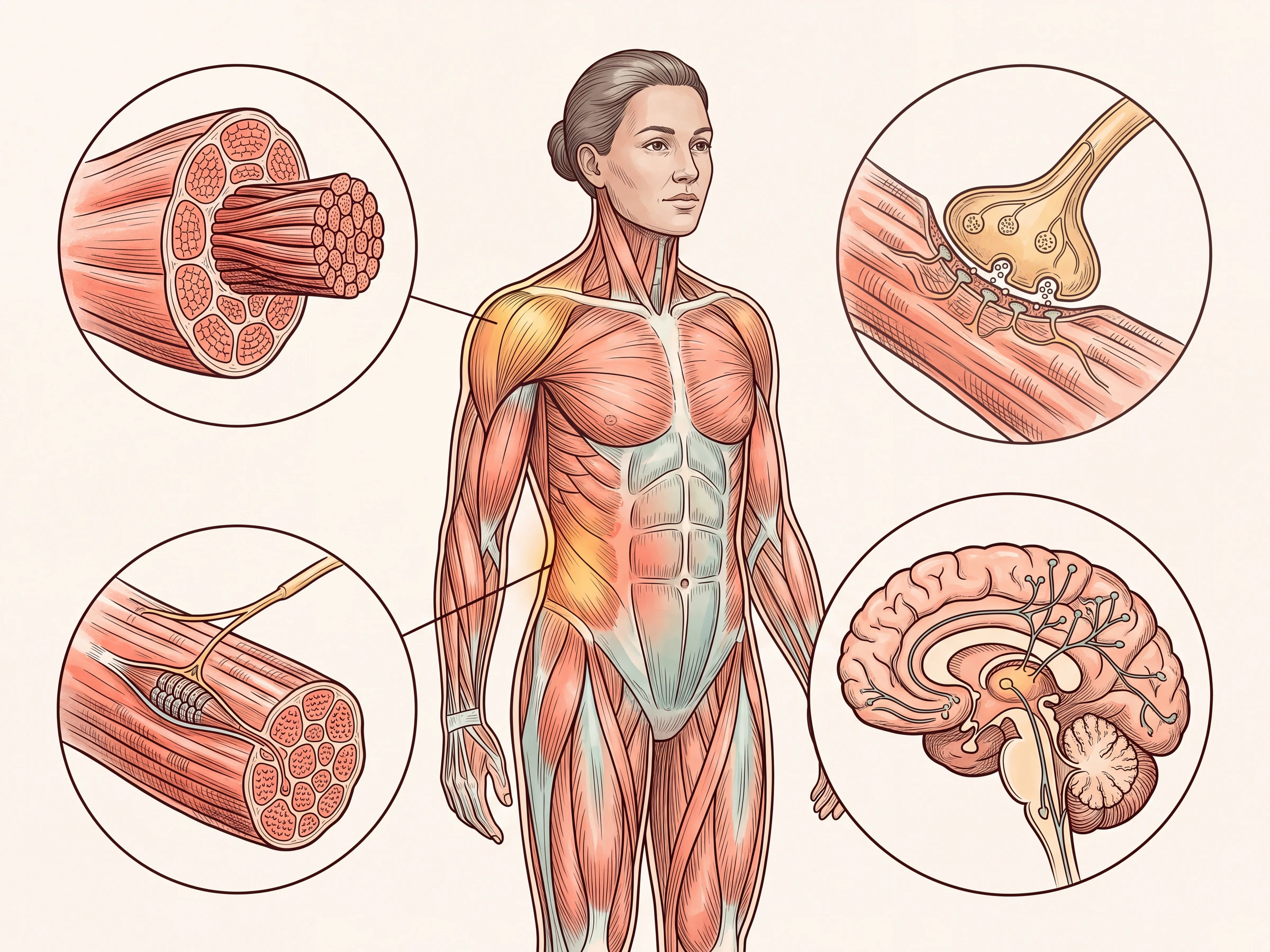
Summary before reading further
What is this topic, and why does it matter?
Activity-related muscle pain often improves gradually. Persistent, spreading pain or pain with weakness warrants review of medical conditions, medicines, sleep, mood, and examination findings.
Care may include gradual movement, physiotherapy, posture changes, sleep, and treatment of the cause. The aim is better function and quality of life, rather than relying only on painkillers.
What happens in the body?
Explain the mechanism step by step.
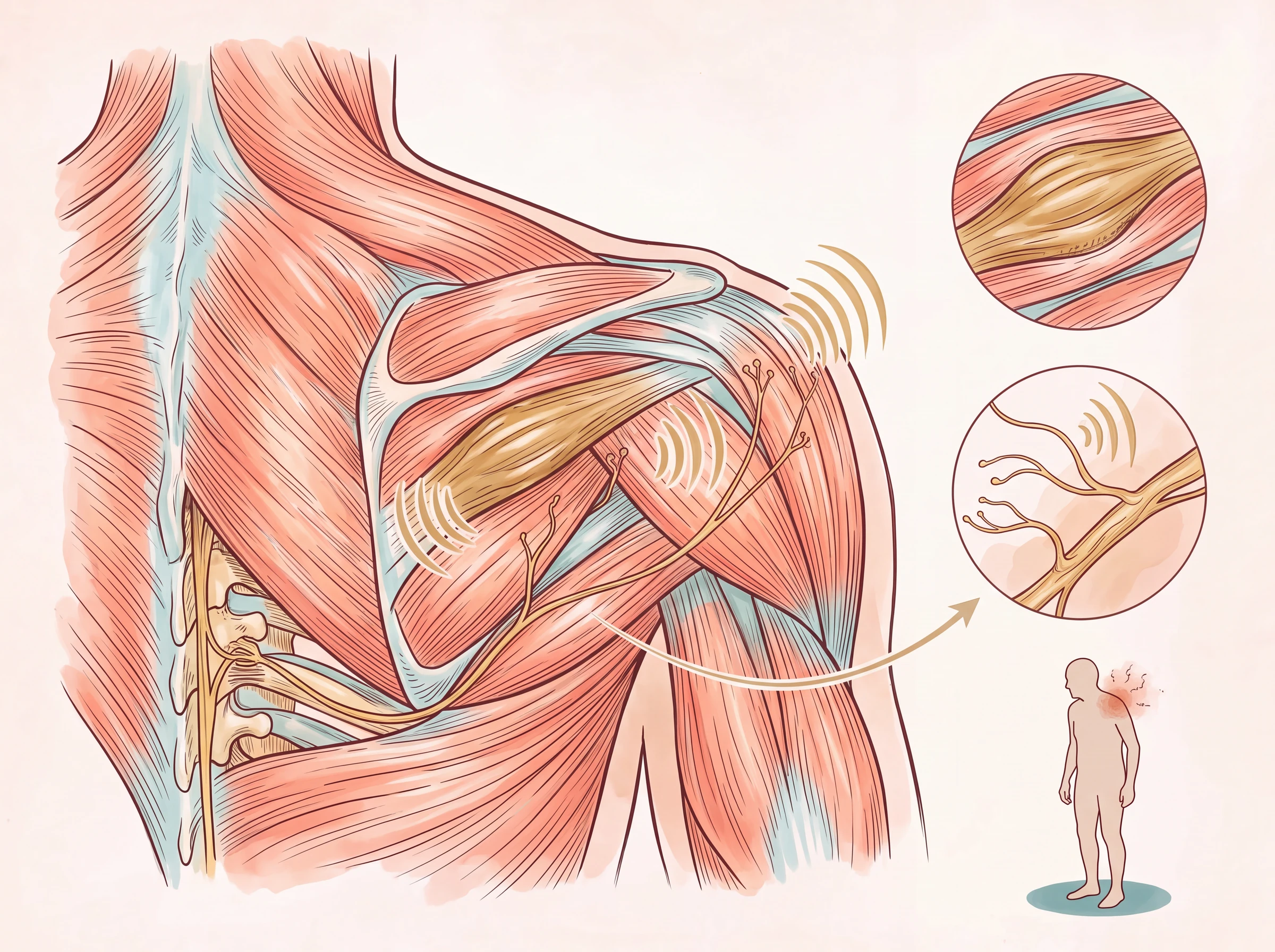
Chronic pain does not necessarily mean ongoing inflammation. Care aims to identify treatable causes, check warning signs, and gradually restore movement, sleep, and confidence.
Muscles take repeated loads
Prolonged posture, insufficient recovery, or a previous injury may contribute to symptoms.
Nerve endings and spinal cord become more sensitive.
Signals that were previously painless may be amplified the longer the pain system is stimulated.
The pain–tension–avoidance cycle.
Fear of movement can reduce muscle strength and endurance, making activity more difficult and painful.
Values or criteria that you should know
Symptoms lasting longer than three months are considered chronic, but still need assessment for treatable causes and effects on daily life.
Pain scores do not measure muscle damage directly. Assessment also considers energy, sleep, activity, medicines, and other symptoms.
duration
Persistent or recurring pain for more than 3 months
- Reference range
- Acute symptoms that gradually improve are not yet considered chronic.
- You should make an appointment for an evaluation.
- Symptoms lasting more than three months or limiting activity need a comprehensive assessment and functional goals.
- Should be evaluated urgently
- Marked weakness, severe swelling, fever, dark urine, or pain after starting a medicine need urgent assessment.
Recovery goals.
such as walking, cooking, sleeping, and doing housework.
- Reference range
- Track daily function alongside the pain score.
- You should make an appointment for an evaluation.
- Review the plan if activity declines, even when the pain score is unchanged.
- Should be evaluated urgently
- Do not push through weakness or symptoms of an unknown cause during exercise.
Causes · Symptoms · Examination · Care
See important information in one place.
Causes and related factors
- Repetitive use, posture, and inadequate recovery
- Joint disease, thyroid disease, infection, or certain medications
- Sleep, mood, and stress affect pain processing.
Common symptoms
- Persistent aching, tightness, stiffness, or tenderness.
- Strength and endurance decline with reduced use.
- Unrefreshing sleep, fatigue, or pain in several areas.
How do doctors check?
- Review the symptom pattern and examine strength, movement, and neurological function.
- Blood tests or imaging only if history indicates
- Assess sleep, medications, work, and their impact on life
Start taking care of it systematically.
- Gradually increase activity and resistance as tolerated.
- Change position, take brief breaks, and prioritise sleep rather than prolonged inactivity.
- See a doctor for fever, weight loss, actual loss of muscle strength, dark urine, or severe back pain after injury.
Important things you should know
Keep these points in mind.
Chronic pain has many causes.
Repetitive use, certain medicines, and muscle, nerve, endocrine, or infectious conditions may contribute.
Movement must be appropriate.
Prolonged complete rest can reduce strength. Discuss an appropriate activity level with a professional if symptoms persist.
Note the pattern to help find the cause.
Location, timing, triggers, weakness, fever, rash, and newly started medications are important information.
Daily food and care
Start with manageable everyday steps.
- Eat a balanced diet with enough protein and appropriate fluid. Avoid using high-dose vitamins to treat symptoms without confirming a deficiency.
- If symptoms follow a new medicine or dose change, especially a lipid-lowering medicine, contact the prescriber rather than stopping it yourself.
Read on to understand.
Read on for complete information on health and products.
Main references
