Easy-to-understand health information
Chronic hepatitis B
Hepatitis B can remain silent for years while increasing cirrhosis and liver cancer risk. Vaccination, testing, and appropriate follow-up help reduce harm.
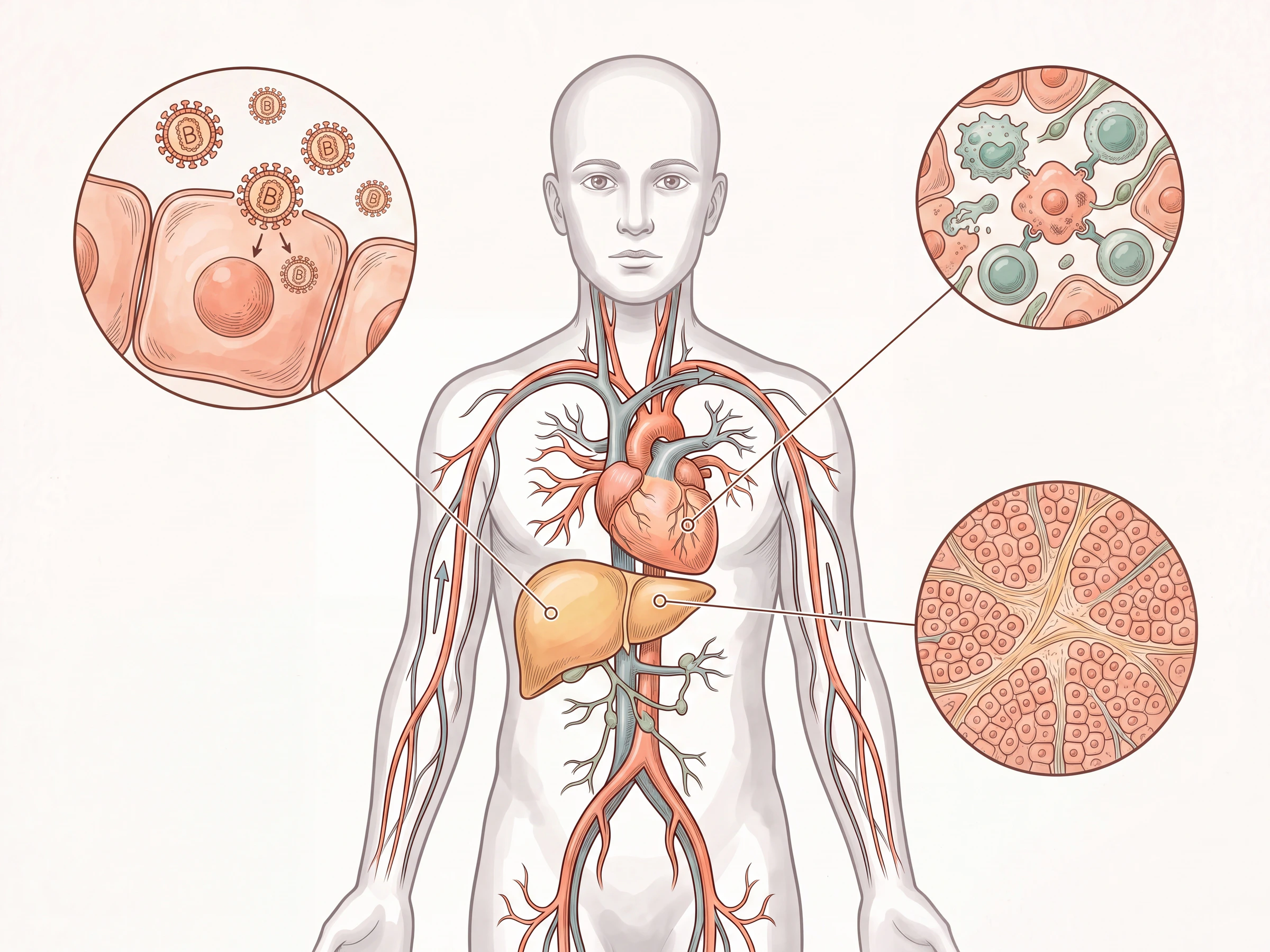
Summary before reading further
What is this topic, and why does it matter?
Hepatitis B spreads through blood, certain body fluids, and from mother to infant. Chronic infection may be silent, so test according to risk.
Not everyone needs immediate medication, but everyone needs appropriate follow-up of liver enzymes, viral load, and liver cancer surveillance when indicated.
Health glossary
- Hepatitis B test
- HBsAg, anti-HBc, and anti-HBs help distinguish current infection, past exposure, and immunity. HBV DNA measures viral load.
- ALT
- Blood enzymes that may rise when liver cells are injured. A single reading does not establish the cause or extent of liver scarring.
- Fibrosis
- The gradual accumulation of scar tissue in an organ, which can impair its function.
- Elastography
- A test that measures liver stiffness using sound waves or imaging to help assess liver scarring.
What happens in the body?
Explain the mechanism step by step.
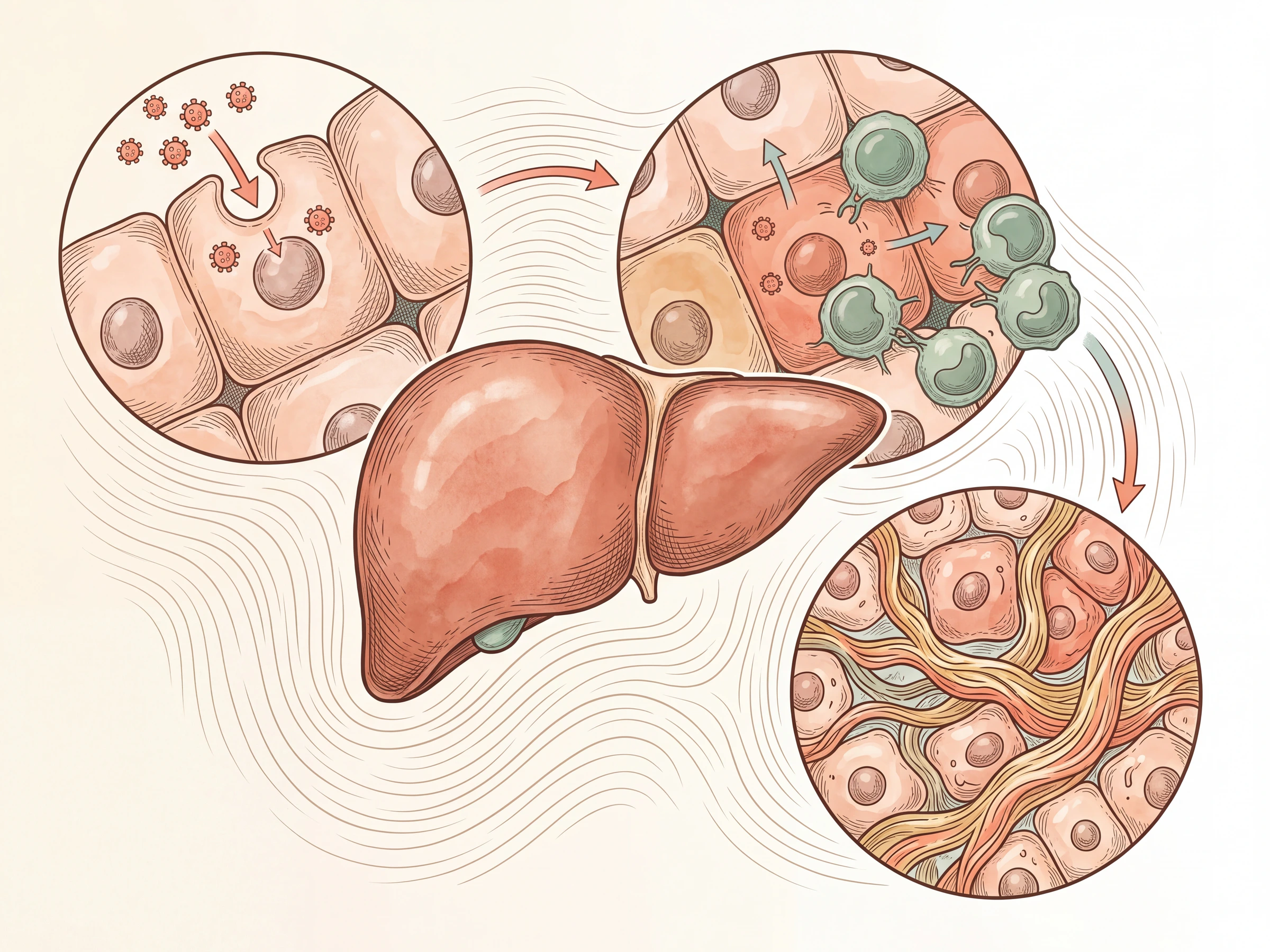
Chronic hepatitis B can alternate between quieter and inflammatory phases without obvious symptoms. Monitoring HBV DNA, ALT, and fibrosis matters because years of inflammation can lead to cirrhosis or liver cancer; cancer can sometimes develop before cirrhosis.
The infection remains in the liver cells.
cccDNA serves as a template for viruses to replicate.
The immune system causes hepatitis.
Immune attacks on infected liver cells can raise ALT and cause cell injury.
Fibrosis buildup
Progressive scarring can lead to cirrhosis, portal hypertension, and liver cancer risk.
Values or criteria that you should know
Distinguish chronic infection from disease activity that requires treatment.
HBsAg, HBV DNA, ALT, liver imaging, and fibrosis assessment provide different information. No single result establishes that the liver is healthy.
Duration of HBsAg positivity.
Hepatitis B surface antigen detected.
- Reference range
- A single positive result requires confirmation and evaluation of other blood tests.
- You should make an appointment for an evaluation.
- HBsAg present for at least six months indicates chronic hepatitis B infection.
- Should be evaluated urgently
- Reduced alertness, confusion, vomiting blood, rapid abdominal swelling, or worsening jaundice need urgent assessment.
HBV DNA and ALT
Viral load and signs of liver injury
- Reference range
- There is no single HBV DNA value that is considered safe for everyone.
- You should make an appointment for an evaluation.
- Your doctor interprets trends alongside age, ALT, fibrosis, pregnancy, and family history of liver cancer.
- Should be evaluated urgently
- Do not stop antiviral treatment yourself. The virus may reactivate and cause severe hepatitis.
Liver cancer surveillance
Liver ultrasound in people at risk
- Reference range
- People meeting liver cancer risk criteria usually undergo surveillance every six months as advised.
- You should make an appointment for an evaluation.
- Arrange liver surveillance if overdue or if you have cirrhosis. Do not wait for symptoms.
- Should be evaluated urgently
- See a doctor for unexplained weight loss, persistent pain under the right ribs, or abdominal enlargement.
Causes · Symptoms · Examination · Care
See important information in one place.
Causes and related factors
- Mother-to-child transmission is an important route in Asia.
- Blood, needles, sex, and non-sterile equipment
- It is not spread from sharing food, hugging, or coughing or sneezing.
Common symptoms
- Most often have no symptoms.
- Fatigue, jaundice, or pain under the right ribs during liver inflammation.
- Ascites, vomiting blood, or confusion in advanced liver disease.
How do doctors check?
- HBsAg, anti-HBc, and anti-HBs help distinguish infection and immunity status.
- HBV DNA and ALT assess viral and inflammatory activity; elastography assesses fibrosis.
- Ultrasound screening for liver cancer according to risk
Start taking care of it systematically.
- Assess the need for antiviral treatment using HBV DNA, ALT, fibrosis, and individual circumstances.
- Avoid alcohol and check for drugs or herbs that harm the liver.
- Test household contacts and vaccinate those without immunity when indicated.
Important things you should know
Keep these points in mind.
Vaccines to prevent new infections
Infants should receive scheduled vaccination. Adults without immunity should ask about vaccination.
Antiviral drugs can reduce complications.
For people who need treatment, antiviral therapy can reduce viral load and cirrhosis risk.
Household contacts should be tested
Spouses and family members should be tested and vaccinated when necessary.
Daily food and care
Start with manageable everyday steps.
- Avoid alcohol and manage weight to reduce liver fat. Limit sugary, greasy, and highly processed foods.
- Check herbs and supplements with your doctor. Some can injure the liver or interact with medicines.
Read on to understand.
Read on for complete information on health and products.
Main references