Product information · Capsule
H Plus 2
H Plus 2
Dietary supplement H Plus 2
Shipping, payment and returns
- Shipping
- Ask our team about delivery fees, service areas and delivery times before confirming your order.
- Payment
- Confirm payment methods and the total amount with our team through the shop’s official channels.
- Returns
- Ask about exchange and return conditions and procedures before ordering.
Explore probiotics and their roles in gut health.
From age 40 into later life, bloating, irregular bowel movements, or feeling less refreshed after rest may become more noticeable. Digestive health deserves attention as part of staying ready for work, travel, and favorite activities.
The gut is home to a community of microorganisms. Probiotics are live microorganisms, while prebiotics provide food for certain microorganisms. The currently confirmed ingredients in H Plus 2 are inulin and FOS, both prebiotics. It can therefore be described as providing "food for our tiny friends," without suggesting that the product itself contains live microorganisms.
Explore how probiotics, prebiotics, and everyday gut care relate to long-term health.
Bowel function and regularity.
Inulin and FOS are fibers used by certain gut microorganisms. Appropriate amounts, alongside adequate water, can contribute to the gut environment and bowel regularity.
Intestinal lining and immunity: the body's internal barrier.
The gut brings microorganisms, the lining, and the immune system together. Microbial balance contributes to normal defenses and function throughout life.
Digestion: breaking down nutrients for use.
Normal digestive function helps the body break down and use nutrients from meals. Support it with varied foods supplying protein, vitamins, minerals, and calcium for bones.
Brain, mood, and rest: the gut–brain connection.
The gut and brain communicate through the gut-brain axis. Gut care fits into a routine that includes sleep and stress management to support mood, mental clarity, and rest.
Metabolism after meals.
Fiber and certain microbial strains have been studied in bile acid metabolism, blood lipids, and post-meal glucose responses. Consider them within a wider plan of diet, movement, and health monitoring.
Vaginal and urinary health: strain-specific effects.
Some probiotic strains have been studied in vaginal and urinary microbiome health. Evaluate the specific strain and formulation rather than assuming all probiotics share this effect.
Skin: “a reflection of inner balance”
The microbiome and immune system are linked with skin health. Gut care can sit alongside diet, rest, and external skin care.
Liver and gut–liver communication.
Nutrients absorbed from the gut are connected with liver processing. Regular bowel function and gut balance fit into digestive and liver care alongside appropriate food and lifestyle habits.
A healthy gut starts with a balanced microbiome.
The intestinal wall is like a “city wall” that absorbs nutrients and helps control what passes from the gut into the body
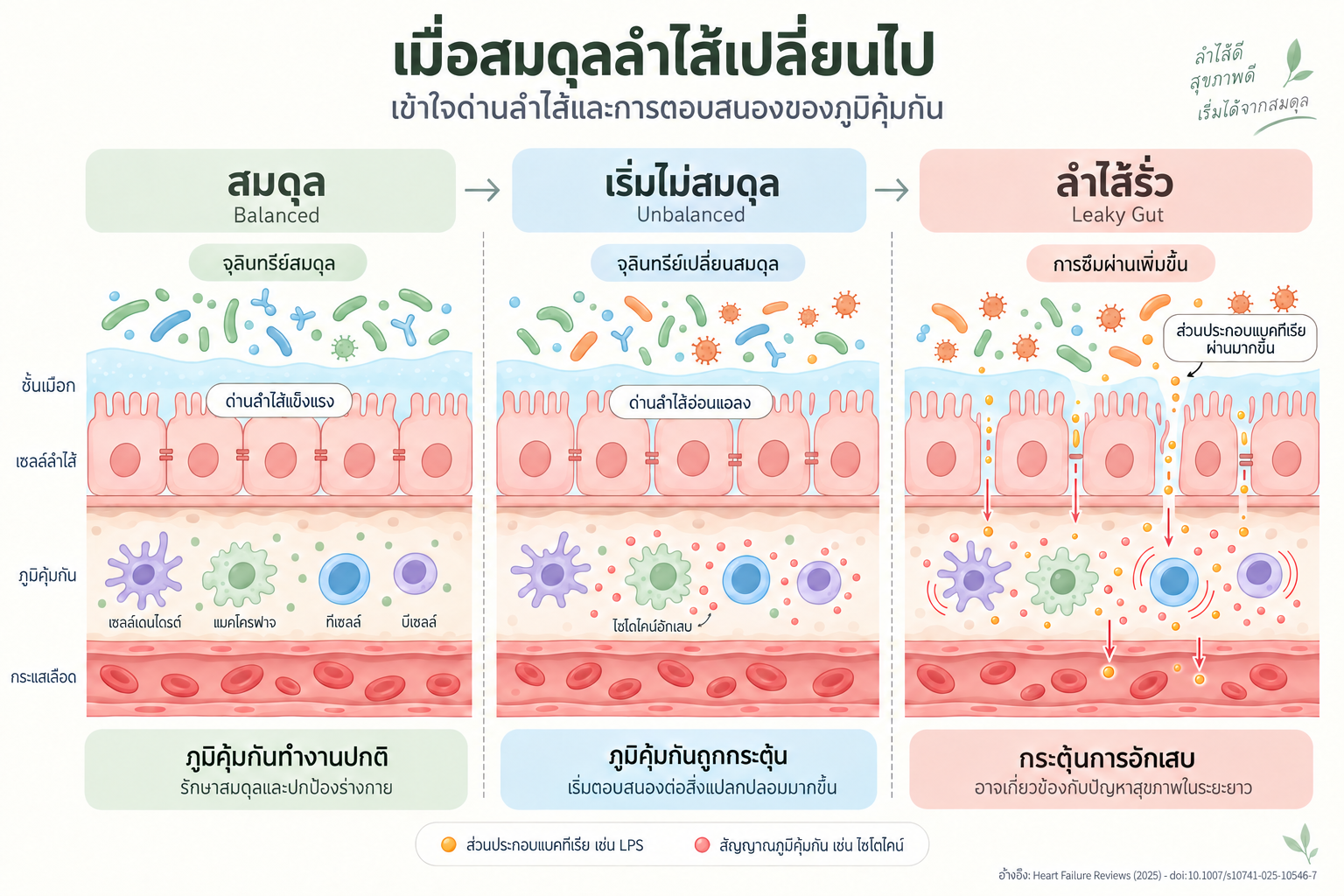
⚠️ What can weaken the intestinal barrier?
Regularly eating sugary, greasy, and processed foods with few vegetables can favour potentially harmful bacteria and allow them to multiply. An imbalance can contribute to intestinal inflammation. The illustration shows three states:
🟢 Phase 1: Balance — a strong barrier
Microorganisms coexist in balance. A protective mucus layer and closely connected intestinal cells help maintain the barrier, while immune function remains regulated.
🟡 Phase 2: Imbalance — a weakened barrier
As harmful bacteria increase in the context of sugary, fatty foods and insufficient fiber, the intestinal lining can become inflamed. Tight junctions between cells loosen, and the protective mucus layer becomes thinner.
🔴 Stage 3: Increased intestinal permeability (Leaky Gut)
When the intestinal barrier becomes more permeable, bacterial components such as LPS may cross it more readily and stimulate immune responses. Persistent immune activation can contribute to “chronic systemic inflammation”, which may be associated with longer-term health problems. Allergies, itchy rashes and unexplained fatigue can have many causes.
Three steps to support your intestinal barrier
- Limit foods that favour imbalance: Reduce sugar, refined flour, processed foods, and trans fats to limit foods that can favour an imbalanced gut microbiota.
- Support the helpful defenders: Choose foods that provide prebiotics. Examples include onions, garlic, bananas, and asparagus, which provide fibers used by beneficial microorganisms to produce short-chain fatty acids for the intestinal lining.
- Add beneficial microorganisms: Supplement with natural fermented foods that contain probiotics , such as kimchi, yogurt or kombucha, or consider a probiotic supplement with identified strains.
- Regular price
- 1,200 baht
- Member price
- 750 baht
- score
- 100 PV
- Pack size
- 60 capsules
Product information
- Thai FDA food serial number
- 10-1-00653-5-0085
Health map · Health articles
Understand before choosing
Explore health information related to a product's format and ingredients. These links support learning and do not guarantee product outcomes.
Digestive health
Gut & Digestive Health
Explore digestion from stomach to bowel, with practical guidance on bowel regularity, reflux, and microbial balance.
DISEASE & CONDITION LIBRARY
Read about related diseases and conditions
Links reflect an ingredient or learning topic, not a guarantee that a product prevents or treats disease.