


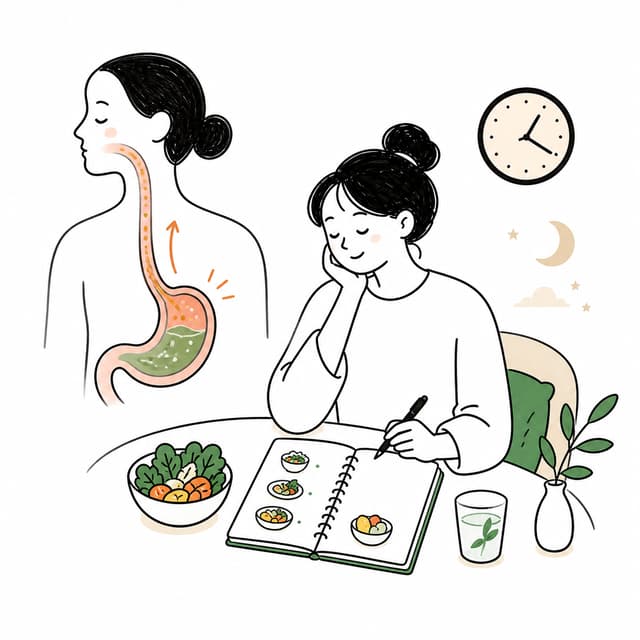
Reflux involves sphincter function, hiatal hernia, abdominal pressure, meal size, and timing. Considering these together gives a fuller picture of its causes.

Reduce sugary, greasy, and highly processed foods. Choose appropriate portions of vegetables, beans, tofu, fish, and gently prepared foods that do not trigger your symptoms.
Use medicines for their intended purpose and duration. Antacids relieve symptoms, while acid-suppressing medicines are used when indicated. Review ongoing need and dosage with your doctor if long-term treatment is required.
Things you can start doing
Start with practical steps.
- Keep a 14-day record of meal timing and size, fried foods, sugary drinks, coffee, alcohol, sleeping position, and symptom severity.
- Limit sugary, greasy, and highly processed foods, including sweetened drinks, desserts, fried foods, packaged snacks, and processed meats.
- Base meals on vegetables and plant foods that do not trigger symptoms. Increase fiber gradually, and replace processed or fatty meats with beans, tofu, fish, or lean protein.
- Cut back on large meals in the evening and finish your last meal at least 3 hours before lying down or sleeping.
- Review medicines, supplements, and the need for acid-suppressing treatment with your doctor or pharmacist. Do not stop regular medication yourself.
