Easy-to-understand health information
sleep apnea
Repeated breathing pauses or reductions disrupt sleep and oxygen levels, leaving you unrefreshed despite hours in bed.
Summary before reading further
What is this topic, and why does it matter?
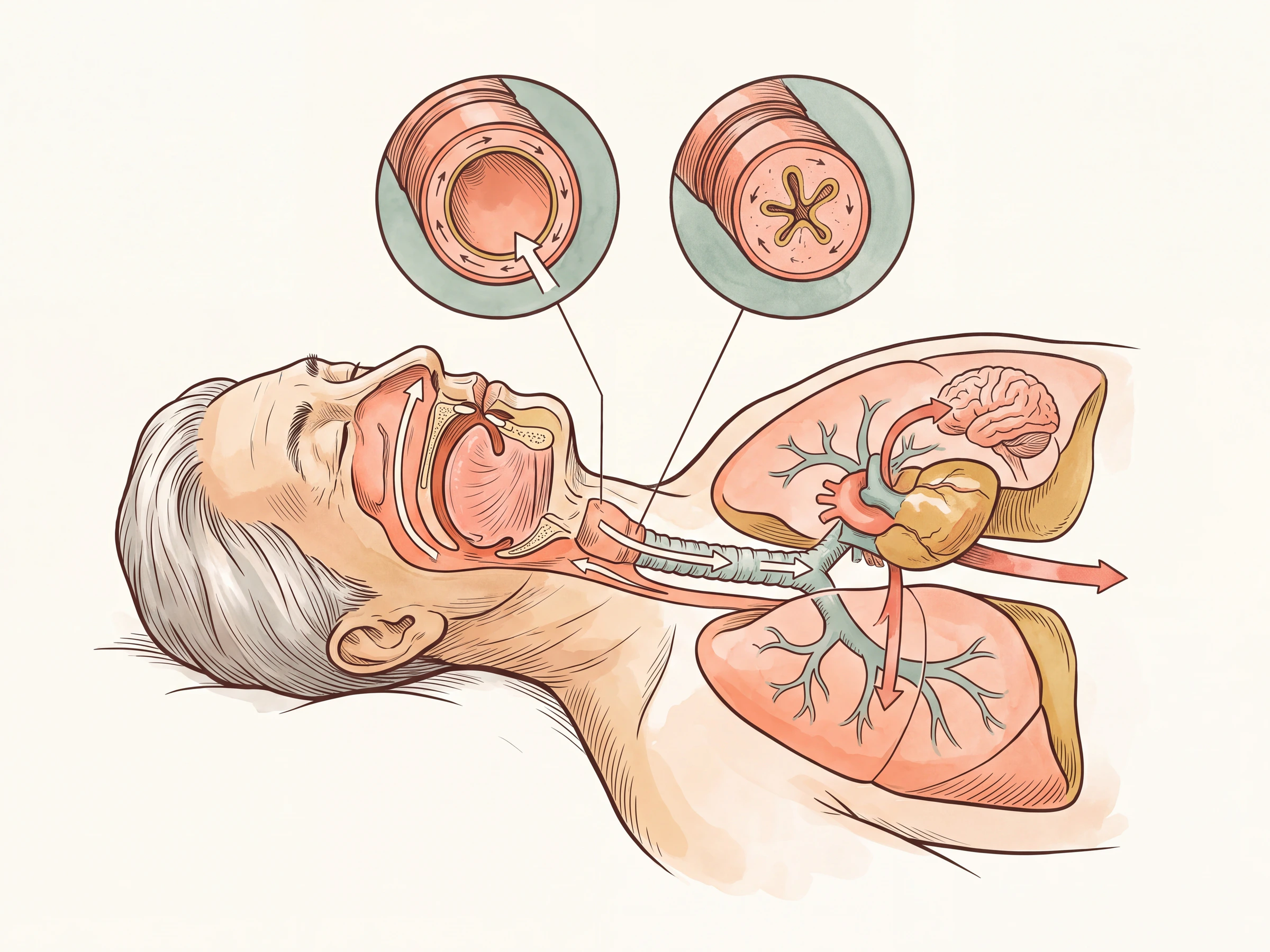
Obstructive sleep apnea involves repeated narrowing or closure of the upper airway during sleep. Others may notice loud snoring, pauses in breathing, and gasping. Symptoms can include dry mouth, morning headaches, marked daytime sleepiness, reduced concentration, or mood changes.
This condition is associated with hypertension, arrhythmia, stroke, diabetes, and accidents related to sleepiness. Assessment includes history and respiratory evaluation, with home or laboratory sleep testing selected according to risk.
Health glossary
- CPAP
- A device that delivers pressurised air through a mask during sleep to keep the airway open in some people with sleep apnoea.
What happens in the body?
Explain the mechanism step by step.
Loud snoring alone does not diagnose sleep apnea. Witnessed breathing pauses, marked daytime sleepiness, or difficult-to-control blood pressure warrant assessment because disrupted sleep affects alertness, heart health, and driving safety.
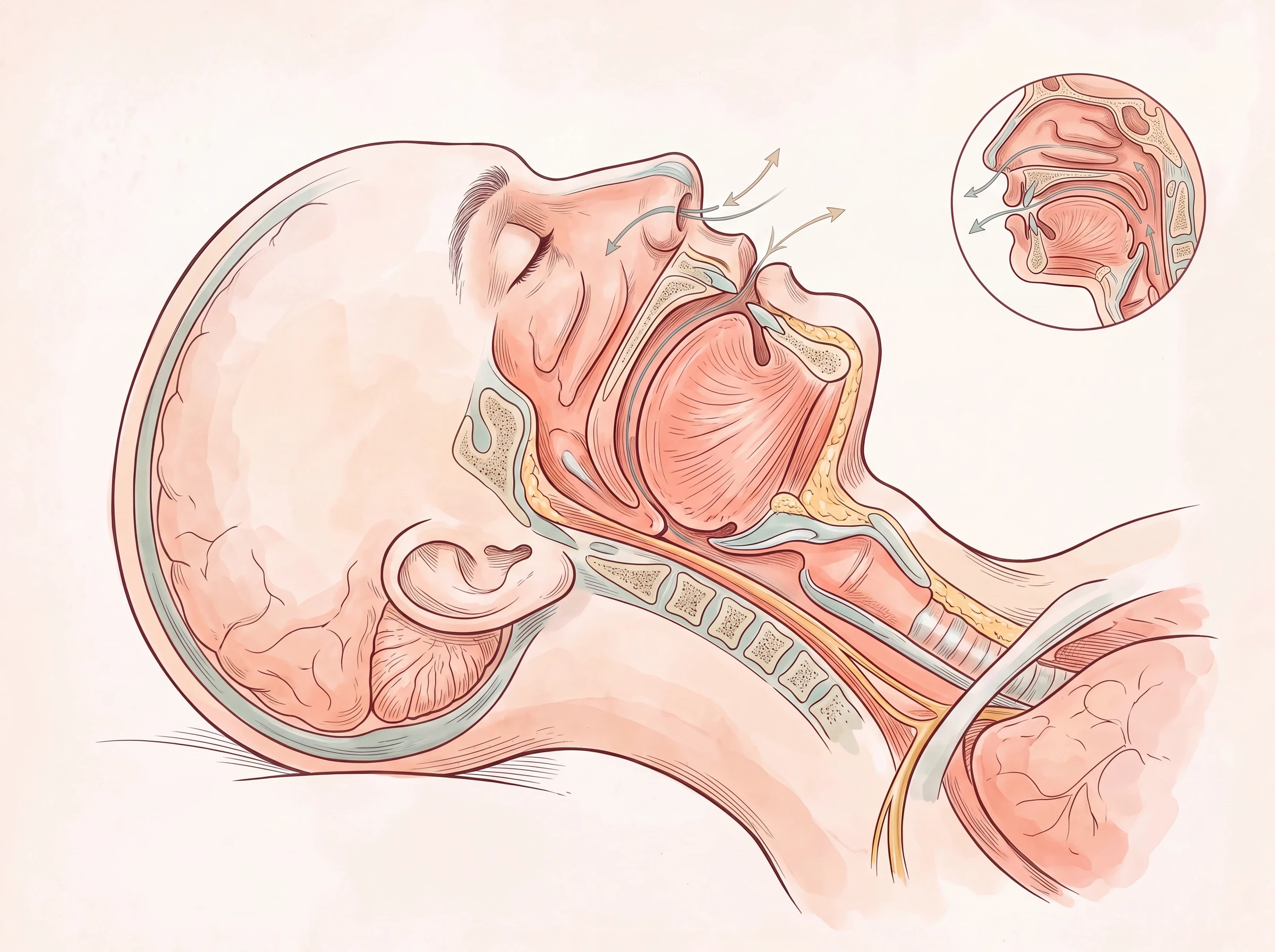
Throat muscles relax.
The tongue, soft palate, and tissue around the throat move toward the airway during sleep.
Little or no air passes.
Oxygen falls, carbon dioxide rises, and pressure within the chest fluctuates.
Repeated brief awakenings
A brief arousal reopens the airway but repeatedly disrupts sleep.
Values or criteria that you should know
AHI counts breathing events per hour. Oxygen levels, daytime sleepiness, and other conditions also determine their impact.
Snoring does not necessarily mean sleep apnoea, and a smartwatch cannot confirm it. Diagnosis requires an appropriate sleep assessment.
AHI in adults
Average number of apnea and hypopnea per hour of sleep.
- Reference range
- An AHI below five events per hour does not meet the AHI threshold for OSA, but does not exclude other sleep disorders.
- You should make an appointment for an evaluation.
- An AHI of 5–14 is mild, 15–29 moderate, and 30 or higher severe.
- Should be evaluated urgently
- Stop driving and seek prompt assessment if you are sleepy enough to doze while driving, have breathing difficulty, or have a serious heart condition.
BMI for Asian adults
Weight (kg) ÷ Height² (meters)
- Reference range
- BMI below 18.5 indicates underweight. The range 18.5–22.9 is below the increased-risk threshold commonly used for Asian adults.
- You should make an appointment for an evaluation.
- For Asian populations, BMI 23 and 27.5 kg/m² are commonly used action points for increased and high risk, respectively.
- Should be evaluated urgently
- BMI alone does not indicate an emergency or measure abdominal fat. Consider waist circumference, blood pressure, glucose, and lipids as well.
Waist circumference
Measure midway between the lowest rib and the top of the hip bone.
- Reference range
- For Asian adults, waist measurements below 90 cm in men and 80 cm in women are below commonly used increased-risk thresholds.
- You should make an appointment for an evaluation.
- A waist circumference of at least 90 cm in men or 80 cm in women indicates increased metabolic risk.
- Should be evaluated urgently
- Waist circumference alone is not a diagnosis. An increased measurement warrants review of blood pressure, glucose, and lipids.
Causes · Symptoms · Examination · Care
See important information in one place.
Causes and related factors
- Excess weight, a large neck circumference, and jaw or throat anatomy.
- Age, alcohol, sleeping pills, and sleeping on your back
- Enlarged tonsils, nasal congestion, and family history
Common symptoms
- Snores loudly, stops breathing, or chokes.
- Daytime sleepiness, morning headache, decreased concentration
- Waking up to urinate frequently, high blood pressure, or mood changes
How do doctors check?
- Evaluate symptoms, risks, and examine the respiratory tract.
- Sleep test at home or in the laboratory
- Assess breathing events, oxygen levels, and the type of sleep-related breathing disorder.
Start taking care of it systematically.
- Avoid unnecessary alcohol and sedatives before bed.
- Lose weight when appropriate and adjust your sleeping position as recommended.
- CPAP, oral appliances, or treatment of airway anatomy, selected according to test results and clinical assessment.
Important things you should know
Keep these points in mind.
Sleep apnoea can occur without obesity or loud snoring.
Facial anatomy, tonsils, age, hormones, alcohol, sedatives, and weight all contribute. Appearance alone cannot establish risk.
A sleep study assesses event frequency and severity.
Sleep studies assess breathing events, oxygen, pulse, and sleep stages. Apps or smartwatches do not replace diagnosis.
A CPAP device uses air pressure to keep the airway open.
CPAP is a main treatment for many people. Oral appliances, positional therapy, or surgery may suit selected cases after individual assessment.
Daily food and care
Restore sleep quality by correcting respiratory problems and associated factors.
- Gradual weight loss, if appropriate, may reduce severity. Do not delay necessary treatment while waiting to lose weight.
- Avoid large late meals, alcohol, and sleeping medicines not reviewed with your doctor. Base meals on minimally processed foods and reduce sugary, greasy, and processed choices.
Read on to understand.
Read on for complete information on health and products.
Main references