Easy-to-understand health information
sinusitis
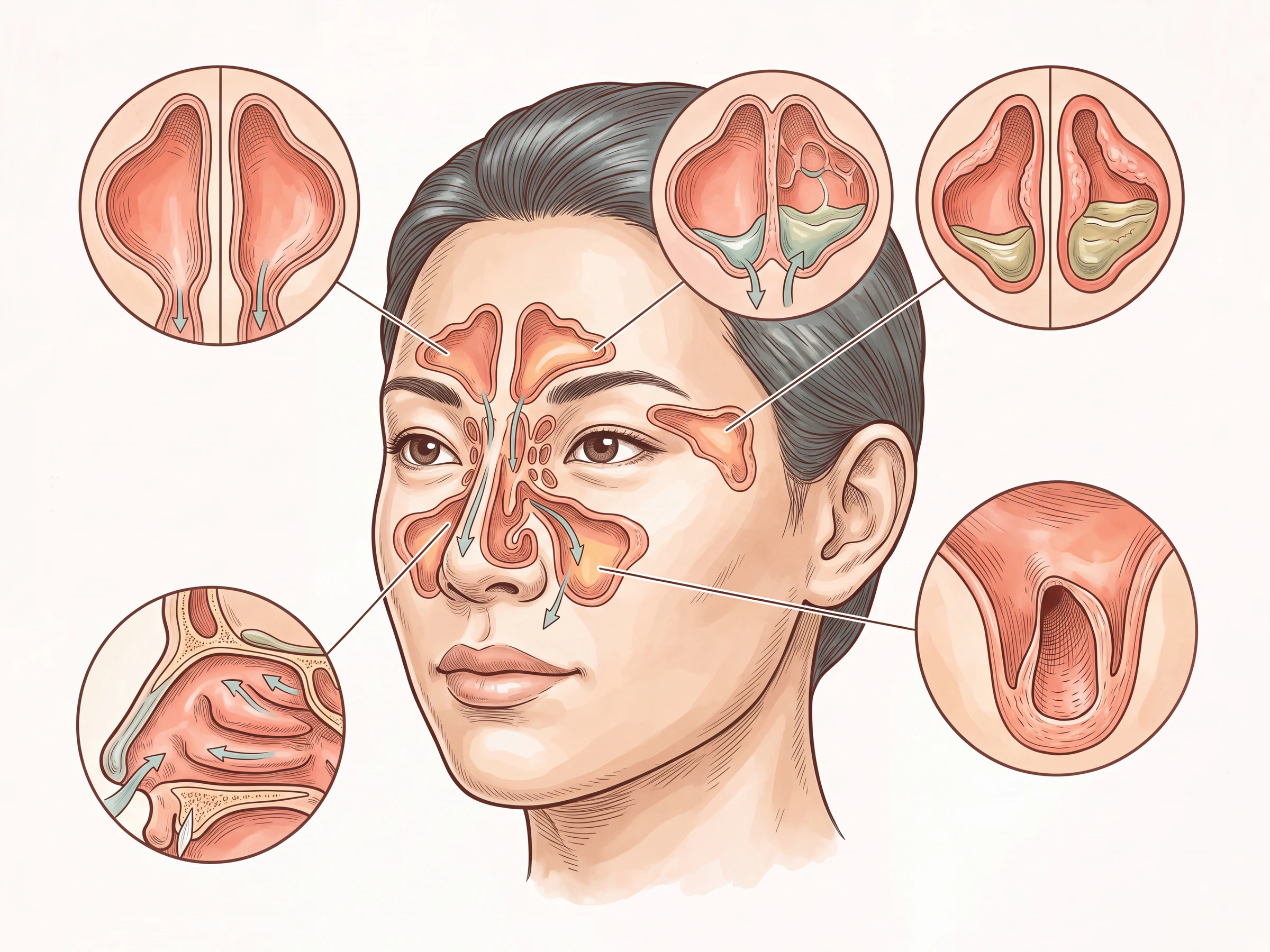
Swelling of the sinus lining can trap fluid, causing congestion, discharge, facial pressure, cough, or postnasal drip. Many cases are viral.
Summary before reading further
What is this topic, and why does it matter?
Sinusitis may follow a cold or relate to allergies, smoke, or nasal anatomy. Viral and bacterial symptoms overlap, so do not self-prescribe antibiotics.
Many cases improve without antibiotics. Safe saline rinsing and symptom relief may help. Seek assessment if symptoms persist, worsen after improvement, or recur.
Health glossary
- CT and MRI
- CT uses X-rays, while MRI uses magnetic fields and radio waves. The choice depends on the organ and clinical question.
What happens in the body?
Explain the mechanism step by step.
Acute sinusitis often follows a cold and is usually viral, so antibiotics are not always needed. Duration, severity, and whether symptoms improve or worsen help determine who needs further assessment.
Swollen lining of the nose and sinuses
Colds, allergies, or other irritations can cause the opening between your sinuses and nose to narrow.
Mucus cannot drain easily.
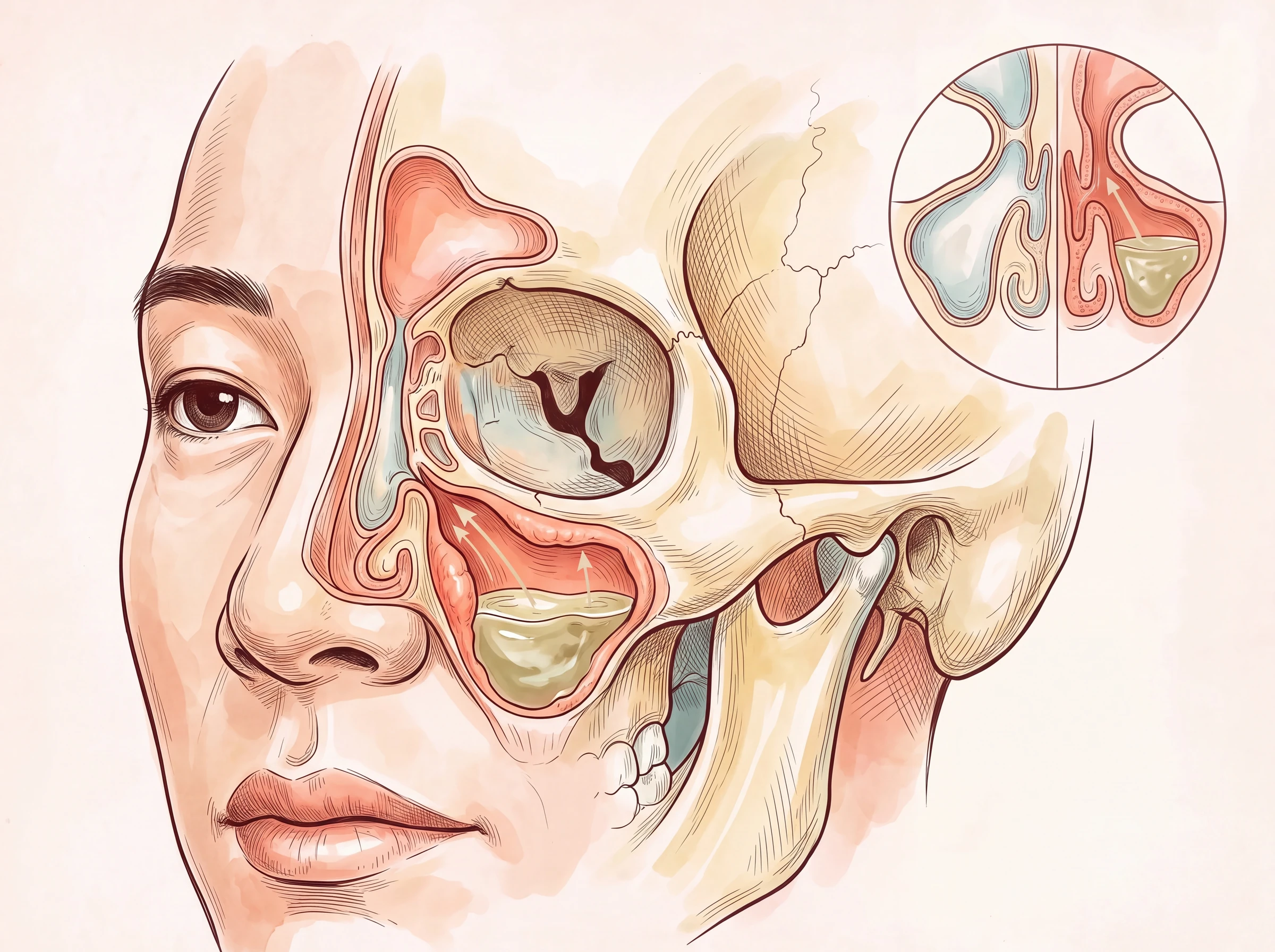
Reduced ciliary movement allows fluid to collect in the sinuses.
Pressure occurs and infection may increase.
Trapped sinus fluid causes facial pressure, and a secondary bacterial infection can develop.
Values or criteria that you should know
The duration and pattern of symptoms help differentiate common viruses from bacterial sinusitis.
Green mucus alone does not confirm a bacterial infection. Inflammatory cells can also change mucus colour during a viral cold.
Symptoms last for a long time without getting better
Stuffy nose, mucus, and facial pain
- Reference range
- Symptoms last less than 10 days and gradually improve, often consistent with a virus.
- You should make an appointment for an evaluation.
- Symptoms lasting at least 10 days without improvement, or improving then worsening, warrant assessment for bacterial sinusitis.
- Should be evaluated urgently
- Eye swelling, visual changes, severe headache, stiff neck, confusion, or weakness need emergency assessment.
early severe symptoms
High fever with purulent mucus or facial pain
- Reference range
- Mild early symptoms can usually be managed according to the care plan.
- You should make an appointment for an evaluation.
- Severe symptoms lasting about three to four days also warrant medical assessment.
- Should be evaluated urgently
- People who are immunocompromised or have eye or neurological symptoms should not wait until the next day.
Causes · Symptoms · Examination · Care
See important information in one place.
Causes and related factors
- Cold viruses are a common cause.
- Allergies, cigarette smoke, pollution, and nasal polyps
- An abnormal nasal septum or impaired sinus drainage.
Common symptoms
- Nasal congestion, thick mucus, or postnasal drip.
- Facial pressure, headache, cough, or loss of smell
- High fever, swollen eyes, or vision changes are warning signs.
How do doctors check?
- Diagnosed by symptoms, duration, and nasal examination.
- No need for x-rays in uncomplicated cases.
- Endoscopy or CT may be appropriate for chronic, recurrent, or potentially complicated sinus symptoms.
Start taking care of it systematically.
- Rest, drink appropriate fluids, and use safe saline nasal rinsing techniques.
- Use medicines as directed; antibiotics are not needed for every illness.
- Go to hospital for severe pain, swelling around the eye, visual changes, stiff neck, or reduced alertness.
Important things you should know
Keep these points in mind.
Mostly from viruses.
Antibiotics do not treat viral infections. Unnecessary use can cause side effects and increase antibiotic resistance.
Key time window.
See a doctor for symptoms lasting more than 10 days without improvement, or worsening after initial improvement.
Separate from allergies
Itchy eyes, sneezing, and repeated nasal discharge may point to an allergy.
Daily food and care
Start with manageable everyday steps.
- Drink enough water, rest, avoid smoke, and if you rinse your nose, use distilled water, sterile water, or boiled water that has been allowed to cool.
- Ask a doctor or pharmacist before decongestants if you have hypertension, heart disease, glaucoma, an enlarged prostate, or other medicines.
Read on to understand.
Read on for complete information on health and products.
Main references