Easy-to-understand health information
Shingles
Shingles results from reactivation of the chickenpox virus in nerves. Learn its risks, early signs, and vaccine prevention.
Summary before reading further
What is this topic, and why does it matter?
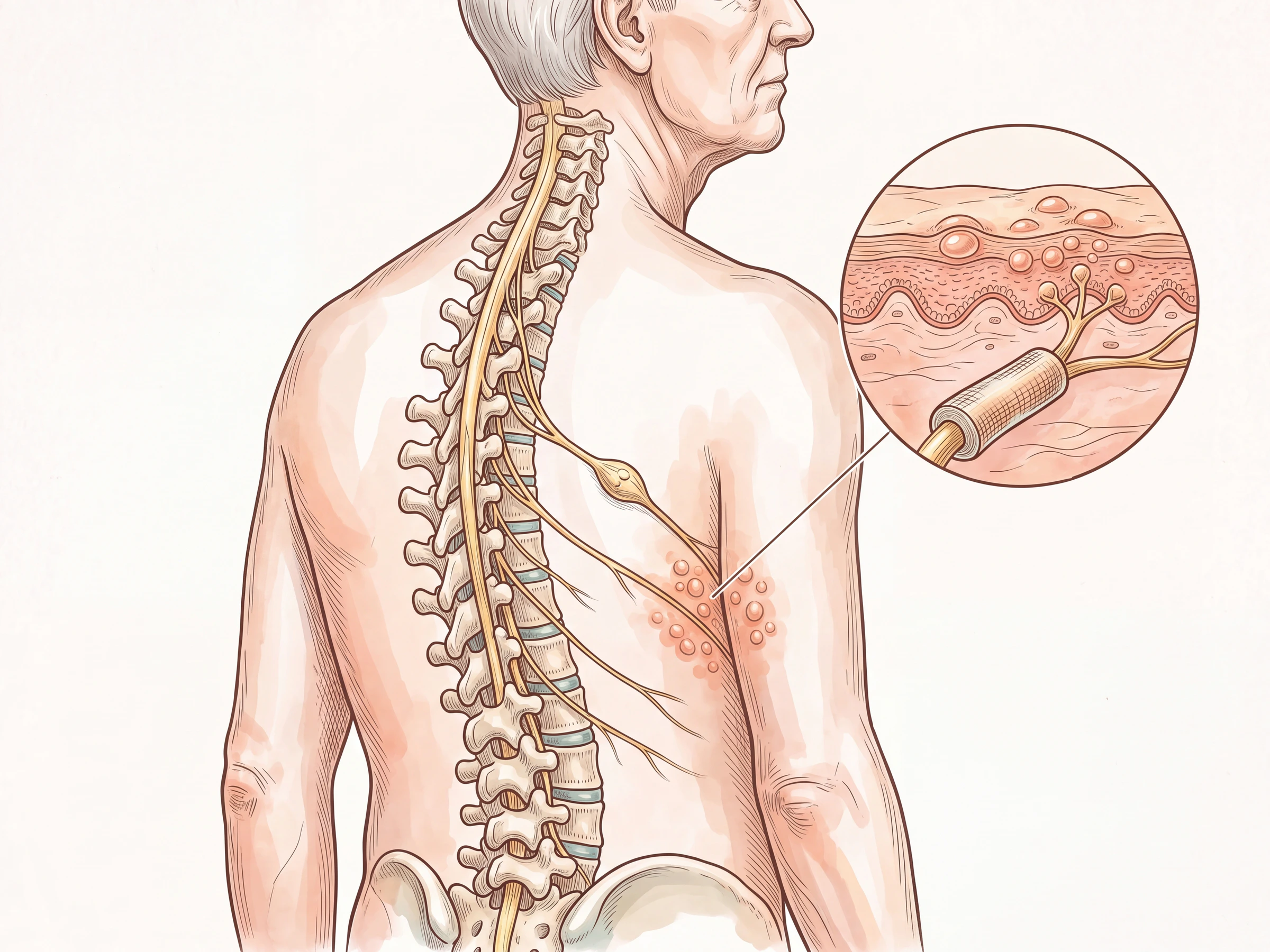
After chickenpox, the varicella-zoster virus remains dormant in the nervous system. It can reactivate as people age or immunity weakens, causing pain, burning, or a blistering rash along an affected nerve, usually on one side of the body.
Nerve pain can persist after a shingles rash heals. Shingles near the eyes or in someone with reduced immunity can be particularly serious. Recognize symptoms and seek early assessment.
Health glossary
- PCR and NS1
- A test that directly detects viral material or proteins. Timing affects how the result is interpreted.
What happens in the body?
Explain the mechanism step by step.
Shingles often begins with pain, burning, or touch sensitivity before a one-sided band of blisters appears. Persistent nerve pain is a major complication, especially in older adults; eye or nervous-system involvement can also occur.
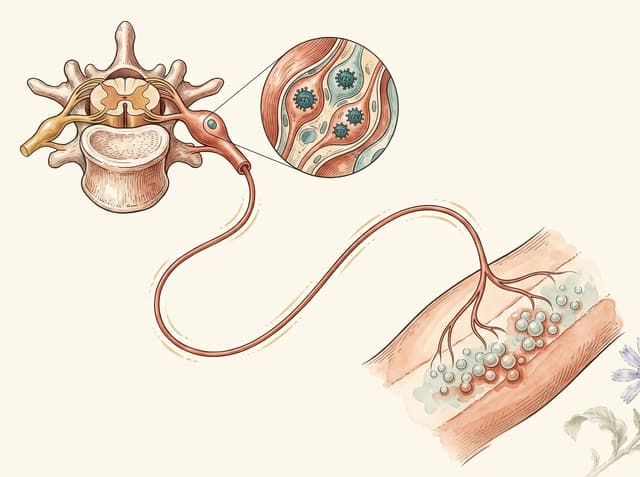
The infection hides in the nerve ganglia.
After chickenpox, varicella-zoster remains dormant.
Reduced immune control allows the infection to reactivate.
Older age, immune conditions, or immunosuppressive medicines can allow the virus to reactivate.
nerve inflammation
The infection travels along the nerves. It causes pain and the formation of blisters in specific areas.
Values or criteria that you should know
The time of starting the medication and the location of the rash are more important than the number of blisters.
The number of shingles blisters does not determine whether it is safe to wait. Early antiviral treatment and assessment of high-risk areas help reduce complications.
Time window for starting treatment
Time since the rash or blisters began
- Reference range
- Antiviral medications work best when started within 72 hours.
- You should make an appointment for an evaluation.
- Seek care even after 72 hours if new shingles blisters are appearing, pain is severe, or you are older or immunocompromised.
- Should be evaluated urgently
- A shingles rash near the eye, nose tip, or ear, or facial weakness needs same-day assessment.
Distribution of the rash
The rash is usually on one side along the nerve.
- Reference range
- Localised shingles in someone with normal immunity can usually be managed with the prescribed treatment plan.
- You should make an appointment for an evaluation.
- Widespread shingles, high fever, or immunosuppressant use require prompt assessment.
- Should be evaluated urgently
- Confusion, a stiff neck, difficulty breathing, or decreased vision are urgent signs.
Causes · Symptoms · Examination · Care
See important information in one place.
Causes and related factors
- Getting older
- Immune deficiency, cancer, or immunosuppressive drugs
- Severe physical stress may also be a trigger.
Common symptoms
- Pain, burning, or tingling on one side
- Groups of blisters along the body or face
- Continued pain after the rash disappears
How do doctors check?
- Diagnosed by rash and nerve path
- PCR testing of a blister sample in unclear cases.
- Evaluate the eyes, ears, and nervous system if the rash is on the face.
Start taking care of it systematically.
- See a doctor quickly, especially within the first 72 hours.
- Cover the shingles rash and avoid contact with vulnerable people who are not immune to chickenpox.
- Age-appropriate shingles vaccination reduces shingles and postherpetic neuralgia risk.
Important things you should know
Keep these points in mind.
Shingles is reactivation of an existing virus, not a new infection.
People who have had chickenpox retain the virus. Shingles risk increases with age and reduced immunity from certain conditions or treatments.
ReferencesCDCThe pain may come before the rash.
Localized itching, burning, numbness, or sharp pain may precede blisters by several days. A rash near the eyes, ears, or face needs prompt assessment.
Vaccines are the most direct form of protection.
CDC guidance recommends two shingles vaccine doses for adults aged 50 and over and certain adults aged 19 and over with reduced immunity.
ReferencesCDCAntiviral drugs work best when started early.
Early treatment can reduce the duration and severity of shingles. Do not wait for the rash to spread or pain to become severe before seeking care.
Daily food and care
Support your immune system with proven protection.
- Eat varied foods with adequate protein, vegetables, fruit, beans, and whole grains to support health and recovery.
- Get adequate sleep, manage chronic conditions, and review vaccination needs with a doctor or pharmacist according to age and immune status.
- No food or dietary supplement is a substitute for vaccines or antivirals when indicated.
Read on to understand.
Read on for complete information on health and products.
Main references