Easy-to-understand health information
Peripheral neuropathy and peripheral nerve disorders
Numbness, burning, electric-shock sensations, or weakness can have many causes, including diabetes, vitamin deficiency, medicines, and immune conditions.
Summary before reading further
What is this topic, and why does it matter?
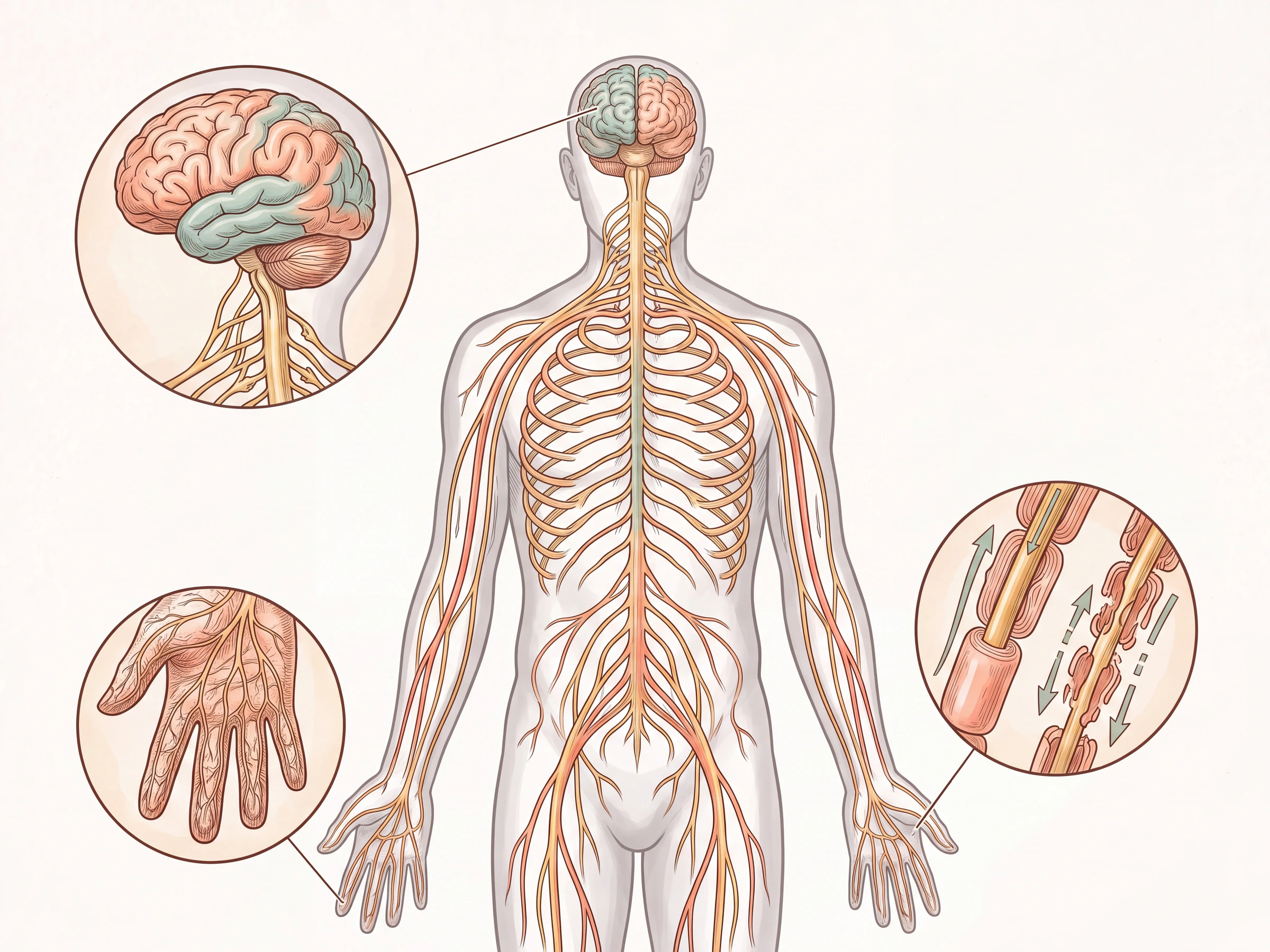
Peripheral nerves carry sensory signals, control muscles, and regulate automatic functions such as blood pressure, sweating, and digestion. Damage may cause numbness, burning pain, poor balance, weakness, dizziness, or changes in bowel function.
Diabetes is a major cause, but assessment may also consider vitamin B12 deficiency, kidney or thyroid disease, alcohol, medicines, toxins, nerve compression, infections, or immune conditions, depending on the symptom pattern.
What happens in the body?
Explain the mechanism step by step.
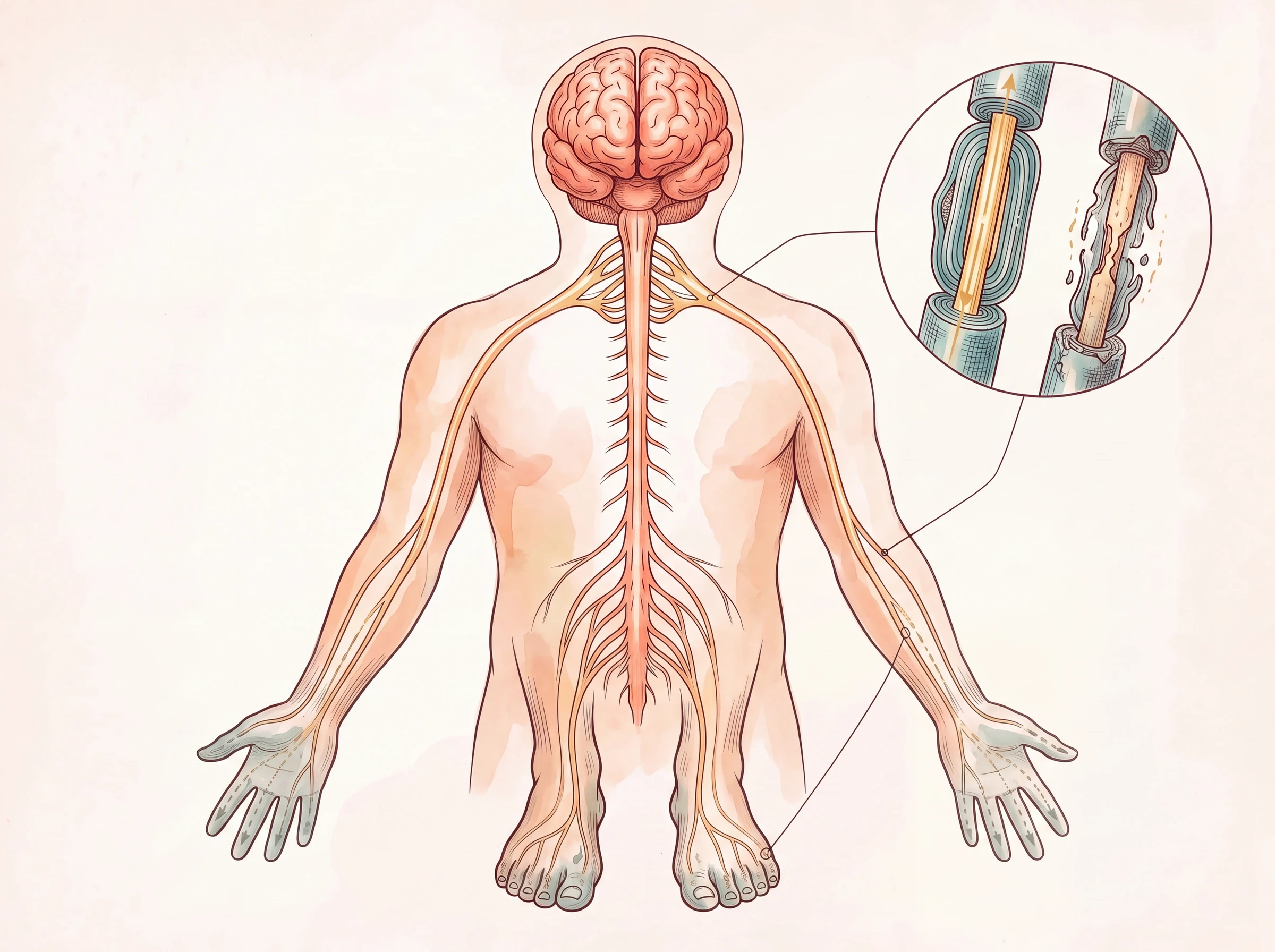
Symptoms often begin in the toes because the longest nerves can be affected first. Patterns vary by cause. Identifying causes such as diabetes, vitamin deficiency, medications, or nerve compression matters as much as symptom relief.
Damaged nerve fibers or sheaths
Damage may affect nerve axons, myelin, or small nerve fibres.
The signal travels abnormally.
Nerve damage can reduce sensation or amplify signals, causing burning, numbness, or tingling.
Symptoms begin in the hands and feet.
Long nerves are often affected first at the feet, with symptoms progressing upwards and sometimes later involving the hands.
Values or criteria that you should know
No numbness score establishes safety. Assessment considers the cause, balance, injuries, and changes from your usual sensation.
Neuropathy can relate to diabetes, alcohol, vitamin B12 deficiency, kidney or thyroid disease, medicines, or compression. Identify the cause.
foot examination
Check the skin, between the toes, nails, temperature, and any wounds daily.
- Reference range
- Check feet regularly when sensation is reduced, even if the skin looks normal and there are no wounds.
- You should make an appointment for an evaluation.
- Remove pressure from blisters, pressure sores, or footwear injuries and arrange prompt assessment.
- Should be evaluated urgently
- Wounds with redness, warmth, swelling, pus, fever, or darkened tissue need urgent assessment.
Symptom pattern
Symmetrical symptoms or symptoms limited to particular areas.
- Reference range
- Symptoms starting in both feet and progressing upwards can occur in polyneuropathy.
- You should make an appointment for an evaluation.
- Rapid progression, unsteady walking, muscle weakness, or symptoms also affecting the hands warrant neurological assessment.
- Should be evaluated urgently
- Sudden one-sided weakness or numbness, face drooping, or slurred speech may indicate a stroke.
Causes · Symptoms · Examination · Care
See important information in one place.
Causes and related factors
- Diabetes and alcohol
- Vitamin B12 deficiency, kidney disease, thyroid conditions, and immune disorders.
- Chemotherapy, toxins, infection, genetics, or compression
Common symptoms
- Numbness, burning, tingling, or electric-shock sensations.
- Muscle weakness, poor balance, or unnoticed foot wounds.
- Dizziness, sweating changes, or bowel and bladder dysfunction can occur when autonomic nerves are affected.
How do doctors check?
- Examine sensation, muscle strength, reflexes, and the feet.
- Blood tests for treatable causes.
- Nerve conduction, muscle testing, or small-fibre assessment may be needed.
Start taking care of it systematically.
- Address the cause and review medicines or relevant exposures.
- Check feet daily, wear suitable shoes, and prevent burns.
- Physical therapy and nerve pain relief medication as assessed by the doctor
Important things you should know
Keep these points in mind.
Symptom patterns help pinpoint the cause.
Symptoms starting in both feet differ from a single-nerve pattern or rapidly developing weakness. Record location, timing, progression, and triggers.
Check your feet before sores develop.
People with numbness should check their skin, nails, pressure points, and water temperature daily. Injuries may be painless and go unnoticed.
Do not take high-dose B vitamin supplements yourself.
Some vitamin deficiencies can damage nerves, but excessive vitamin B6 can also cause neuropathy.
Daily food and care
Treat the underlying cause and protect remaining nerve function.
- Manage blood glucose and alcohol intake. Eat varied foods providing protein, B vitamins, and minerals, while reducing sugary and processed choices.
- If deficiency or a medication effect is suspected, seek assessment before taking supplements. The wrong product or dose can mask the cause or worsen symptoms.
Read on to understand.
Read on for complete information on health and products.
Main references