Easy-to-understand health information
Parkinson's disease
A progressive brain condition affecting movement, balance, sleep, mood, and thinking. Recognizing signs supports earlier, appropriate care.
Summary before reading further
What is this topic, and why does it matter?
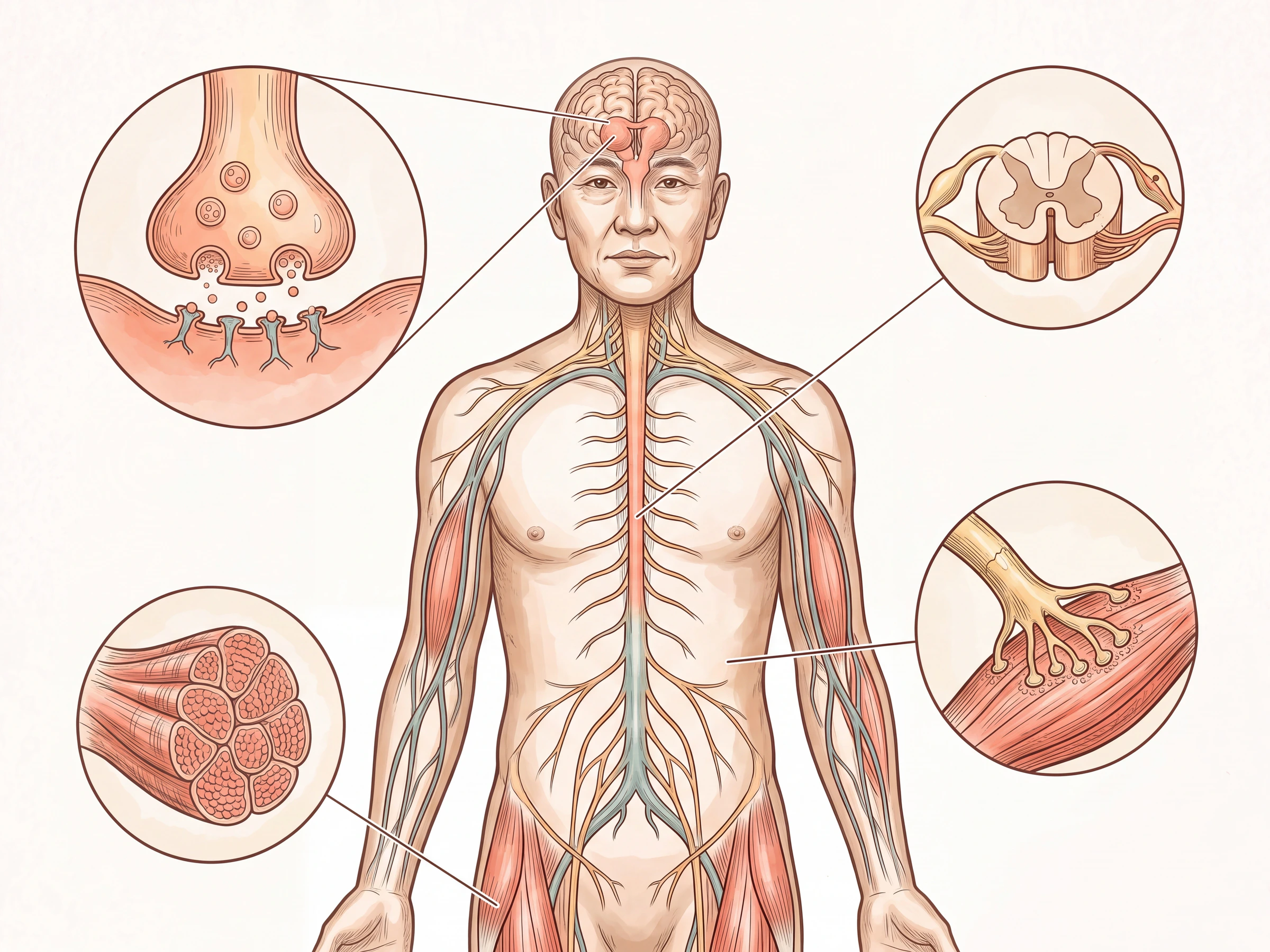
Parkinson's disease involves progressive loss of function in certain dopamine-producing nerve cells. Its cause is not fully understood; age, genetics in some families, and certain environmental exposures contribute.
Symptoms include more than hand tremor: slowed movement, muscle stiffness, short steps, poor balance, constipation, sleep problems, depression, and changes in thinking. Early diagnosis helps guide medication, physiotherapy, and routines that preserve everyday function.
What happens in the body?
Explain the mechanism step by step.
Age, genetic susceptibility, and environmental factors can contribute. Alpha-synuclein aggregation and mitochondrial dysfunction are among the mechanisms being studied.
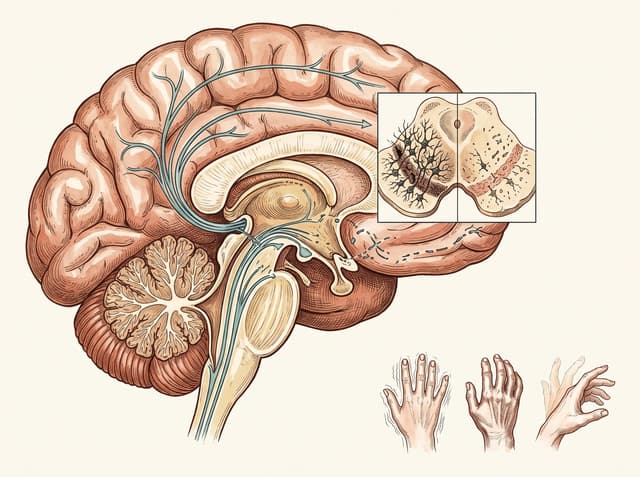
Dopamine-producing cells decrease.
The basal ganglia circuits have more difficulty sending commands to initiate and adjust movement.
Several brain networks change.
Constipation, sleep changes, reduced sense of smell, and mood changes may precede movement symptoms.
The brain can compensate for a long time.
Symptoms usually appear when losses have accumulated and then progress gradually.
Values or criteria that you should know
No blood test determines the stage of Parkinson's disease.
Specialists assess slowed movement with tremor, stiffness, balance, and everyday function, while considering medicines and other possible causes.
core symptoms
Slowness of movement combined with other symptoms
- Reference range
- Slowness of movement is a key feature and may occur with resting tremor or muscle rigidity.
- You should make an appointment for an evaluation.
- Frequent falls, swallowing difficulty, or medication wearing off sooner warrant a treatment review.
- Should be evaluated urgently
- Sudden one-sided weakness, slurred speech, or confusion are not typical Parkinson's symptoms. Seek assessment for another emergency cause.
Response to medication
When medication begins working and when symptoms return.
- Reference range
- Recording symptoms and medication times is more helpful than adjusting the dose yourself.
- You should make an appointment for an evaluation.
- Tell your clinician about fluctuating symptoms, involuntary movements, or hallucinations.
- Should be evaluated urgently
- Stopping Parkinson's medicine suddenly can worsen symptoms and should not be done on your own.
Causes · Symptoms · Examination · Care
See important information in one place.
Causes and related factors
- Age and certain genetics
- Exposure to certain pesticides or solvents
- Head injuries and environmental factors are still being researched.
Common symptoms
- Slowness of movement, stiffness, or resting tremor.
- Short steps, stooping, losing balance
- Loss of smell, constipation, trouble sleeping, depression, or slow thinking.
How do doctors check?
- Clinically diagnosed by a neurologist.
- Assess the response to dopaminergic medication.
- Brain imaging helps exclude other causes; it does not confirm Parkinson's in every case.
Start taking care of it systematically.
- Aerobic activity, resistance exercise, balance training, and walking.
- Begin physiotherapy, speech therapy, and occupational therapy promptly when indicated.
- Plan protein and medication timing with your care team.
Important things you should know
Keep these points in mind.
There may be several causes.
The World Health Organization says the cause is not yet known. Family history and exposure to air pollution, pesticides, or solvents may increase the risk.
ReferencesWHOSymptoms not related to movement are also important.
Sleep, mood, memory, pain, constipation, and swallowing can affect quality of life as much as tremor or stiffness.
No approach prevents every case.
No single food should be promised to prevent Parkinson's disease. Regular movement, reduced exposure to toxins, and heart and brain care support long-term health.
Rehabilitation helps maintain independence.
Physiotherapy, balance work, exercise, speech and swallowing support, and home adaptations can make everyday activities safer.
Daily food and care
Support thinking, muscle strength, and movement.
- Build meals around vegetables, fruit, beans, whole grains, and adequate protein. Reduce sugary, greasy, and highly processed foods.
- For constipation, adjust fluid and fibre intake appropriately. Coughing or choking during meals warrants a swallowing assessment.
- Protein intake can affect some medicines. Plan meal and medication timing with your doctor or specialist rather than adjusting medication yourself.
Read on to understand.
Read on for complete information on health and products.
Main references