


Easy-to-understand health information
Obesity and Metabolic Health
Obesity is a chronic, multifactorial condition, not a failure of discipline. Care focuses on health and function, not only the scale.
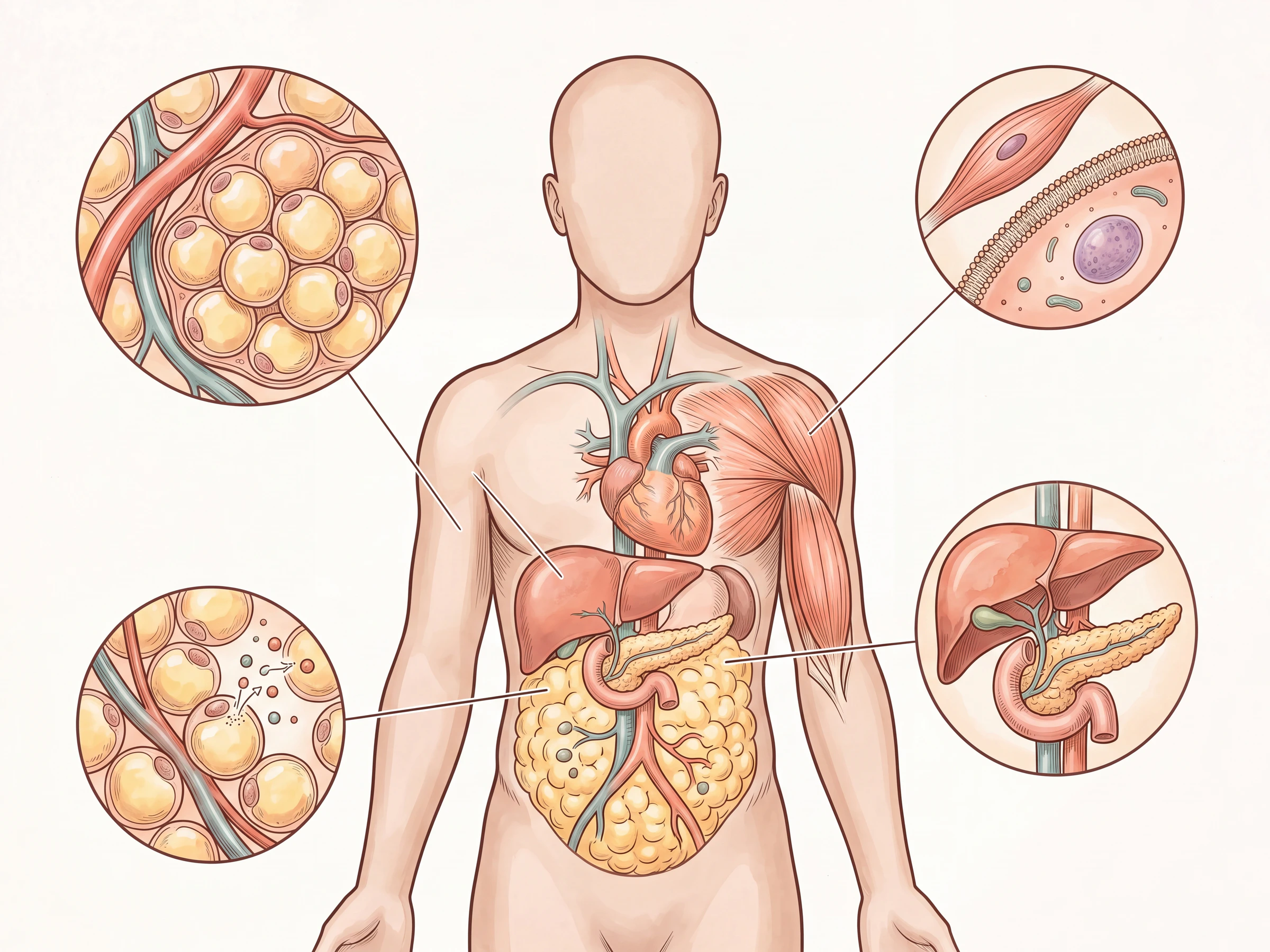
Summary before reading further
What is this topic, and why does it matter?
Genetics, sleep, medicines, mental health, environment, diet, and activity all influence weight. Assessment should also consider waist size, blood pressure, glucose, lipids, liver health, sleep, and joints.
Treatment may include nutrition therapy, physical activity, sleep support, behavioural support, medication, or surgery, depending on risk.
Health glossary
- Metabolism
- The process by which the body converts food into energy and controls sugar, fat, blood pressure, and energy storage.
- insulin resistance
- A condition in which cells do not respond well to insulin. The body therefore has to use more insulin to control blood sugar.
- BMI
- A weight-to-height measure used for initial screening. It does not directly show body fat, muscle, or total individual risk.
What happens in the body?
Explain the mechanism step by step.
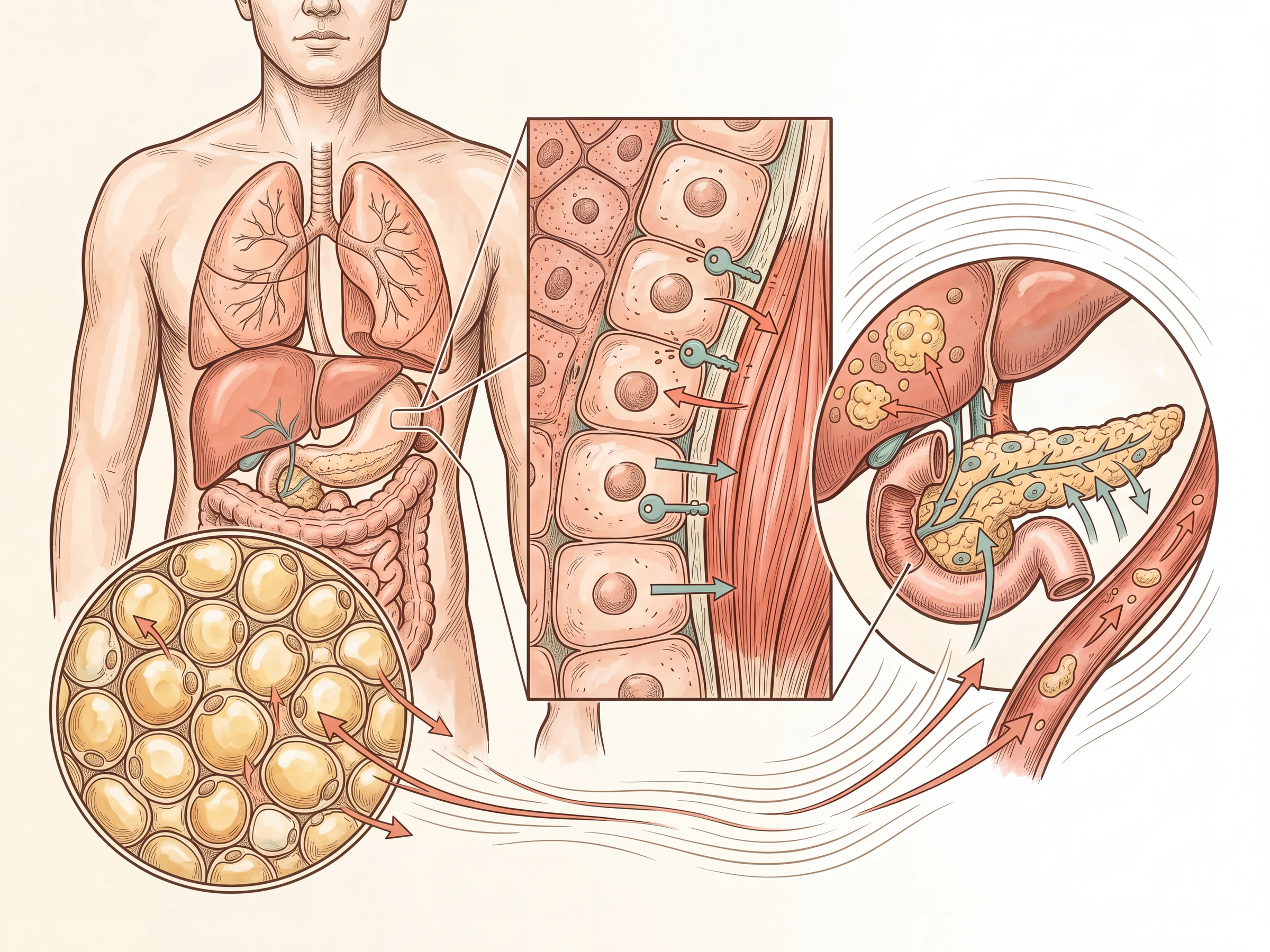
Visceral fat can matter more than body weight alone because it releases fatty acids and inflammatory substances affecting the liver and metabolism. It is associated with insulin resistance, fatty liver, hypertension, and abnormal blood lipids.
The brain resists changes to established body weight.
Weight loss can increase hunger and reduce energy expenditure, making weight regain easier.
Abdominal fat signals
Fatty acids and cytokines disrupt the liver, muscles, and pancreas.
A cycle of metabolic changes develops.
Insulin resistance, fatty liver, and sleep apnoea can reinforce one another.
Values or criteria that you should know
BMI relates weight to height; waist circumference helps assess abdominal fat.
Read BMI and waist circumference together. Abdominal fat can increase glucose, blood pressure, and lipid risk even without a high BMI.
BMI for Asian adults
Weight (kg) ÷ Height² (meters)
- Reference range
- BMI below 18.5 indicates underweight. The range 18.5–22.9 is below the increased-risk threshold commonly used for Asian adults.
- You should make an appointment for an evaluation.
- For Asian populations, BMI 23 and 27.5 kg/m² are commonly used action points for increased and high risk, respectively.
- Should be evaluated urgently
- BMI alone does not indicate an emergency or measure abdominal fat. Consider waist circumference, blood pressure, glucose, and lipids as well.
Waist circumference
Measure midway between the lowest rib and the top of the hip bone.
- Reference range
- For Asian adults, waist measurements below 90 cm in men and 80 cm in women are below commonly used increased-risk thresholds.
- You should make an appointment for an evaluation.
- A waist circumference of at least 90 cm in men or 80 cm in women indicates increased metabolic risk.
- Should be evaluated urgently
- Waist circumference alone is not a diagnosis. An increased measurement warrants review of blood pressure, glucose, and lipids.
Initial weight loss goal
percentage of initial weight
- Reference range
- Preventing further weight gain and maintaining muscle are meaningful outcomes.
- You should make an appointment for an evaluation.
- Gradual weight loss of about 5–10% improves metabolic risk in many people.
- Should be evaluated urgently
- Avoid extreme diets and weight-loss products with unknown ingredients because of malnutrition, arrhythmia, and weight-regain risks.
Causes · Symptoms · Examination · Care
See important information in one place.
Causes and related factors
- Genetics and programming from childhood
- Energy-dense foods, lack of sleep, stress, and the environment
- Certain medicines, endocrine conditions, and limited mobility.
Common symptoms
- Increased waist circumference, tiredness or snoring
- Abnormal blood pressure, glucose, lipids, or liver results.
- Joint pain, irregular periods, or reduced quality of life.
How do doctors check?
- BMI with waist circumference and complications
- Assess diabetes, lipids, liver health, blood pressure, and sleep.
- Review medications and secondary causes when clues arise.
Start taking care of it systematically.
- Set goals around health and waist circumference rather than thinness alone.
- Choose more minimally processed foods, adequate protein, and fibre, while limiting sugar and excess fat.
- Use lifestyle changes, medicines, or surgery according to severity and individual suitability.
Important things you should know
Keep these points in mind.
Thailand faces increasing obesity.
WHO reports a substantial rise in obesity among Thai adults. Obesity contributes to several noncommunicable diseases.
Focus on health improvements rather than rapid weight loss.
Blood pressure, glucose, lipids, sleep, and muscle strength may improve even with modest weight loss.
Gaining weight back is not uncommon.
The body adapts hunger and energy expenditure, so weight management needs a long-term plan rather than a short programme.
Daily food and care
Start with manageable everyday steps.
- Base meals on whole fruit, vegetables, beans, whole grains, and adequate protein. Reduce sugary, greasy, and highly processed foods.
- Choose sustainable meal patterns, timing, and a supportive home environment rather than restrictions you cannot maintain.
Read on to understand.
Read on for complete information on health and products.
Main references
