


Easy-to-understand health information
hyperthyroidism
Excess thyroid hormone speeds heart activity and metabolism. Identify the cause because Graves' disease, thyroid nodules, and thyroiditis require different approaches.
Summary before reading further
What is this topic, and why does it matter?
Palpitations, weight loss despite eating, heat intolerance, hand tremor, insomnia, frequent bowel movements, and muscle weakness can occur. Symptoms alone cannot confirm the diagnosis. Testing includes TSH and free T4, with T3 or thyroid imaging in some cases.
Causes include Graves' disease, hormone-producing thyroid nodules, thyroiditis, and excessive iodine or thyroid hormone intake.
Health glossary
- TSH, free T4 and T3
- Blood tests that assess whether the thyroid is overactive or underactive and help identify the cause before treatment.
What happens in the body?
Explain the mechanism step by step.
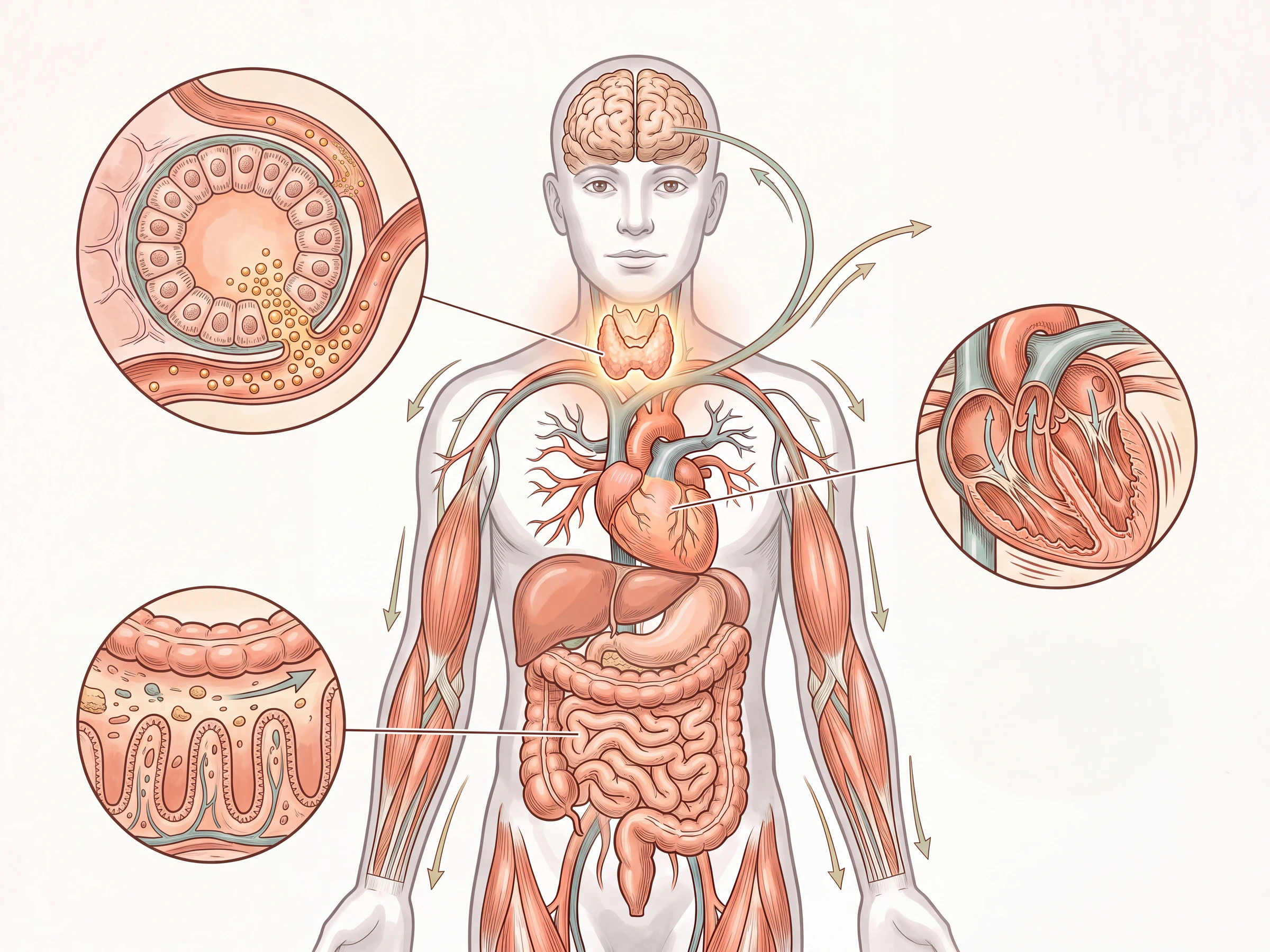
Graves' disease commonly involves antibodies stimulating the TSH receptor. Overactive thyroid nodules and thyroiditis have different mechanisms, so identify the cause before choosing medicines, radioactive iodine, or surgery.
abnormal stimulation signals
In Graves' disease, antibodies mimic TSH and stimulate the thyroid gland.
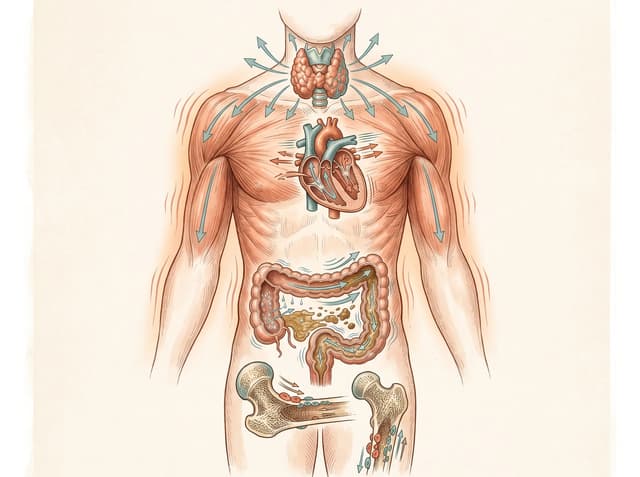
Thyroid hormones increase organ activity.
The heart, nervous system, gut, muscles, and bones become more active.
Identify the source of excess thyroid hormone.
Excess hormone production, an independently functioning nodule, and leakage of stored hormone produce different iodine uptake patterns.
Values or criteria that you should know
TSH must be read with Free T4 or T3.
A low TSH does not always mean hyperthyroidism. Reference ranges and interpretation depend on the laboratory, age, pregnancy, and medicines.
TSH
A pituitary hormone that regulates the thyroid.
- Reference range
- The common reference range is approximately 0.4–4.0 mIU/L.
- You should make an appointment for an evaluation.
- Low TSH combined with high Free T4 or T3 supports hyperthyroidism.
- Should be evaluated urgently
- A low TSH alone needs repeat testing and investigation. Do not start or stop medication yourself.
Pulse and symptoms
Resting heart rate
- Reference range
- An adult's resting pulse is usually 60–100 beats per minute, but context matters.
- You should make an appointment for an evaluation.
- A persistently resting pulse above 100, palpitations, weight loss, or tremor needs assessment.
- Should be evaluated urgently
- High fever, confusion, extreme agitation, breathlessness, or a very fast heartbeat may indicate thyroid storm, a medical emergency.
Causes · Symptoms · Examination · Care
See important information in one place.
Causes and related factors
- Graves' disease and autoimmune history.
- An autonomously functioning thyroid nodule or thyroiditis.
- Excess iodine, amiodarone, or too much thyroid hormone medication.
Common symptoms
- Palpitations, tremor, heat intolerance, sweating, and weight loss.
- Frequent bowel movements, insomnia, weakness, or menstrual changes
- Bulging or irritated eyes are seen in some Graves cases.
How do doctors check?
- Low TSH with free T4/T3
- Antibody tests and iodine uptake testing help identify the cause.
- ECG and bone assessment for people at risk.
Start taking care of it systematically.
- Treat the cause with your doctor and do not stop taking the medicine yourself.
- Avoid concentrated iodine or dietary supplements of unknown quantities.
- Monitor heart symptoms, eyes, weight, and blood results at follow-up.
Important things you should know
Keep these points in mind.
Heart health can be affected earlier than expected.
A fast or irregular heartbeat can increase heart failure and stroke risk, particularly in older adults.
Not every cause of hyperthyroidism leads to bulging eyes.
Dry, irritated, light-sensitive, or bulging eyes may be related to Graves' disease and should be evaluated separately from hormone levels.
Treat according to the cause
Antithyroid medicines, radioactive iodine, and surgery have different benefits and limitations. Choice depends on the cause, age, heart and eye health, and pregnancy plans.
Daily food and care
Food supports nutrition but does not stop excess thyroid hormone production.
- Avoid high-iodine seaweed, kelp, or iodine supplements until discussing them with your doctor; they can worsen some thyroid conditions.
- Get appropriate amounts of protein, calcium, and energy while metabolism is increased. Do not substitute a detox regimen for treatment.
Read on to understand.
Read on for complete information on health and products.
Main references
