Easy-to-understand health information
herniated disc
A herniated disc can irritate nerves and cause pain, numbness, or weakness in an arm or leg. Many cases improve with nonsurgical care.
Summary before reading further
What is this topic, and why does it matter?
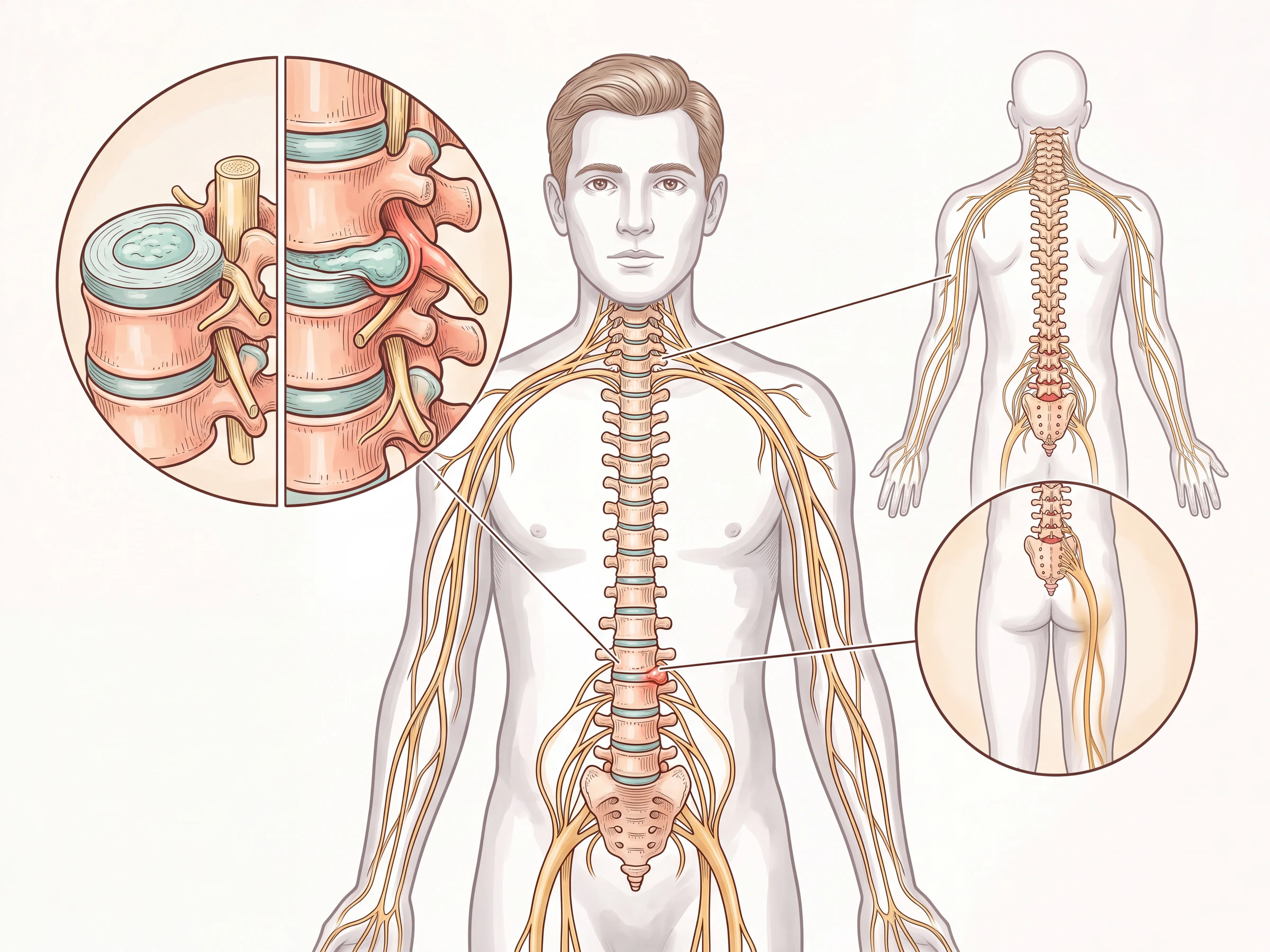
Discs cushion the vertebrae. A protruding inner portion can irritate or compress nerve roots, causing lower-back pain into the leg or neck pain into the arm, depending on the affected level.
Assessment includes history, muscle strength, sensation, and reflexes. Not everyone needs MRI, and images must be interpreted alongside symptoms because disc herniation can exist without pain.
Health glossary
- CT and MRI
- CT uses X-rays, while MRI uses magnetic fields and radio waves. The choice depends on the organ and clinical question.
What happens in the body?
Explain the mechanism step by step.
A disc protrusion on MRI does not automatically explain pain or require surgery. Imaging must be matched with symptoms and neurological findings. Many cases improve with time, appropriate movement, and nonsurgical care.
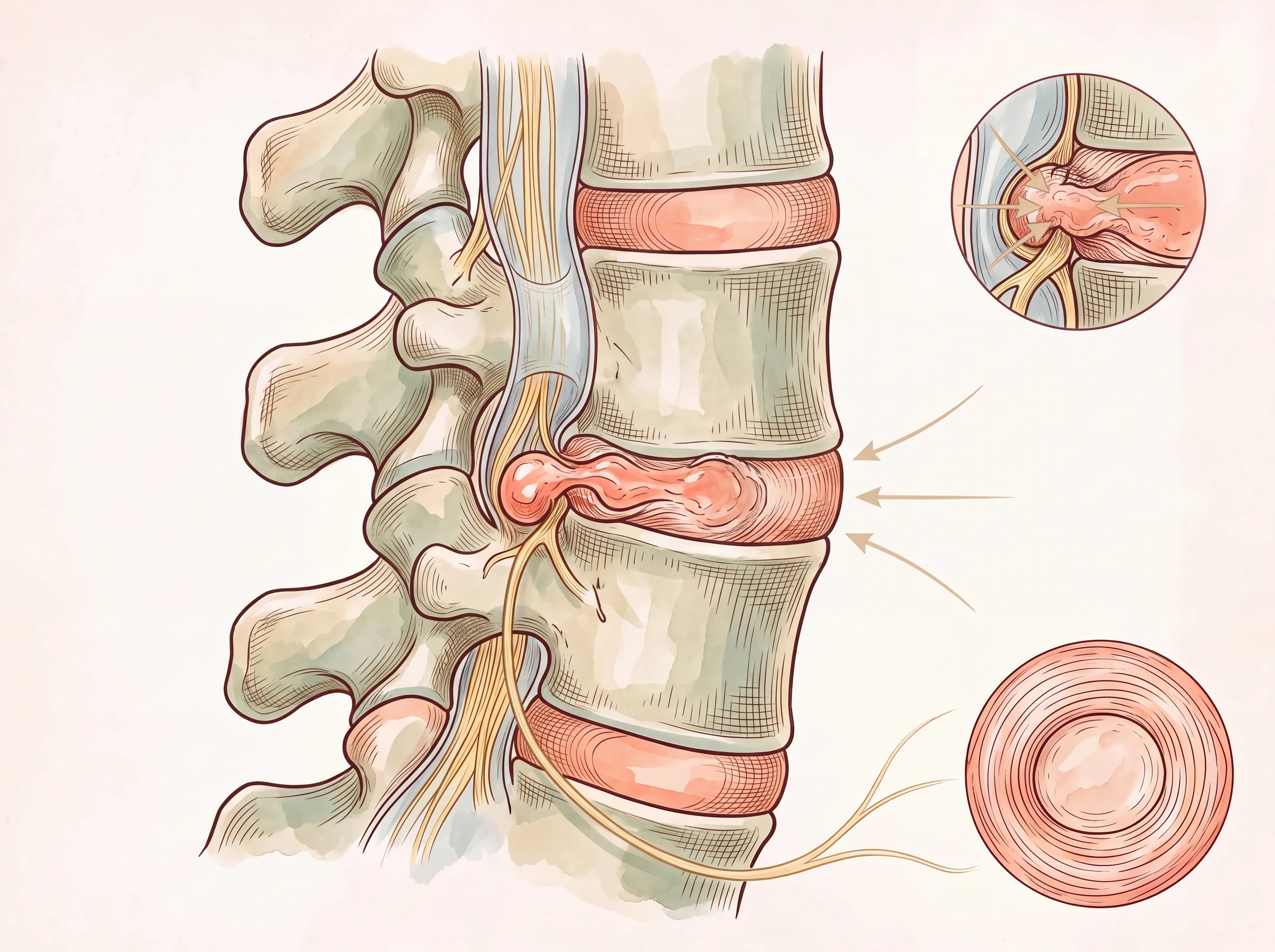
The disc's outer ring weakens or tears.
Age, repeated loading, or poor lifting technique can contribute to structural strain.
The inner disc material protrudes.
Inner disc material protrudes through a weakened outer ring into the space around a nerve root.
The nerve root is irritated.
Pressure and inflammation around the nerve causes pain, numbness, or decreased strength.
Values or criteria that you should know
MRI findings need to match symptoms. Disc protrusions can also occur in people without pain.
Treatment decisions depend on muscle strength, bladder and bowel control, walking ability, and changes in symptoms—not disc size alone.
recovery period
Trends in pain and function
- Reference range
- Many people improve in about 6–12 weeks with movement and nonsurgical treatment.
- You should make an appointment for an evaluation.
- Seek reassessment sooner if symptoms persist, strength declines, or daily activities become unmanageable.
- Should be evaluated urgently
- New numbness around the buttocks or genitals, loss of bladder or bowel control, urinary retention, or rapidly worsening leg weakness may indicate cauda equina syndrome and requires emergency assessment.
Pain score 0–10
The severity felt by the patient
- Reference range
- The score can track symptoms over time but does not measure the extent of nerve compression.
- You should make an appointment for an evaluation.
- Lower scores but worsening muscle strength are still considered a concern.
- Should be evaluated urgently
- Do not increase medication to lower a symptom score without assessing neurological signs.
Causes · Symptoms · Examination · Care
See important information in one place.
Causes and related factors
- Deterioration due to age and genetics
- Lifting objects, twisting, or receiving repeated force
- Overweight, smoking, and long periods of sitting
Common symptoms
- Pain in the back or neck that radiates down the legs or arms
- Numbness, tingling, or muscle weakness
- Coughing, sneezing, or straining can cause more pain.
How do doctors check?
- Examine strength, sensation, reflexes, and straight-leg raising.
- MRI may be indicated for weakness, warning signs, or symptoms that do not improve as expected.
- Immediate imaging is not required for common symptoms that do not have red flags.
Start taking care of it systematically.
- Maintain tolerable movement and follow the physiotherapy plan.
- Use short-term medication as directed by your doctor and avoid lying still for long periods of time.
- Loss of bladder control, numbness around the buttocks, or rapidly worsening leg weakness is an emergency.
Important things you should know
Keep these points in mind.
Symptoms along the nerve
Sharp pain, numbness, or weakness usually spread to one arm or leg.
Most begin non-surgically.
Appropriate movement, medication, and physiotherapy help many people.
New changes in bladder or bowel control are emergency warning signs.
Numbness around the genitals or buttocks with changes in bladder or bowel control may indicate severe nerve compression.
Daily food and care
Start with manageable everyday steps.
- Maintain a suitable weight, strengthen your core as advised, and use lifting techniques that minimise twisting strain on your back.
- Avoid prolonged bed rest unless advised. Return to activity gradually according to symptoms and your rehabilitation plan.
Read on to understand.
Read on for complete information on health and products.
Main references