


Easy-to-understand health information
Dry eyes and screen-related eye strain.
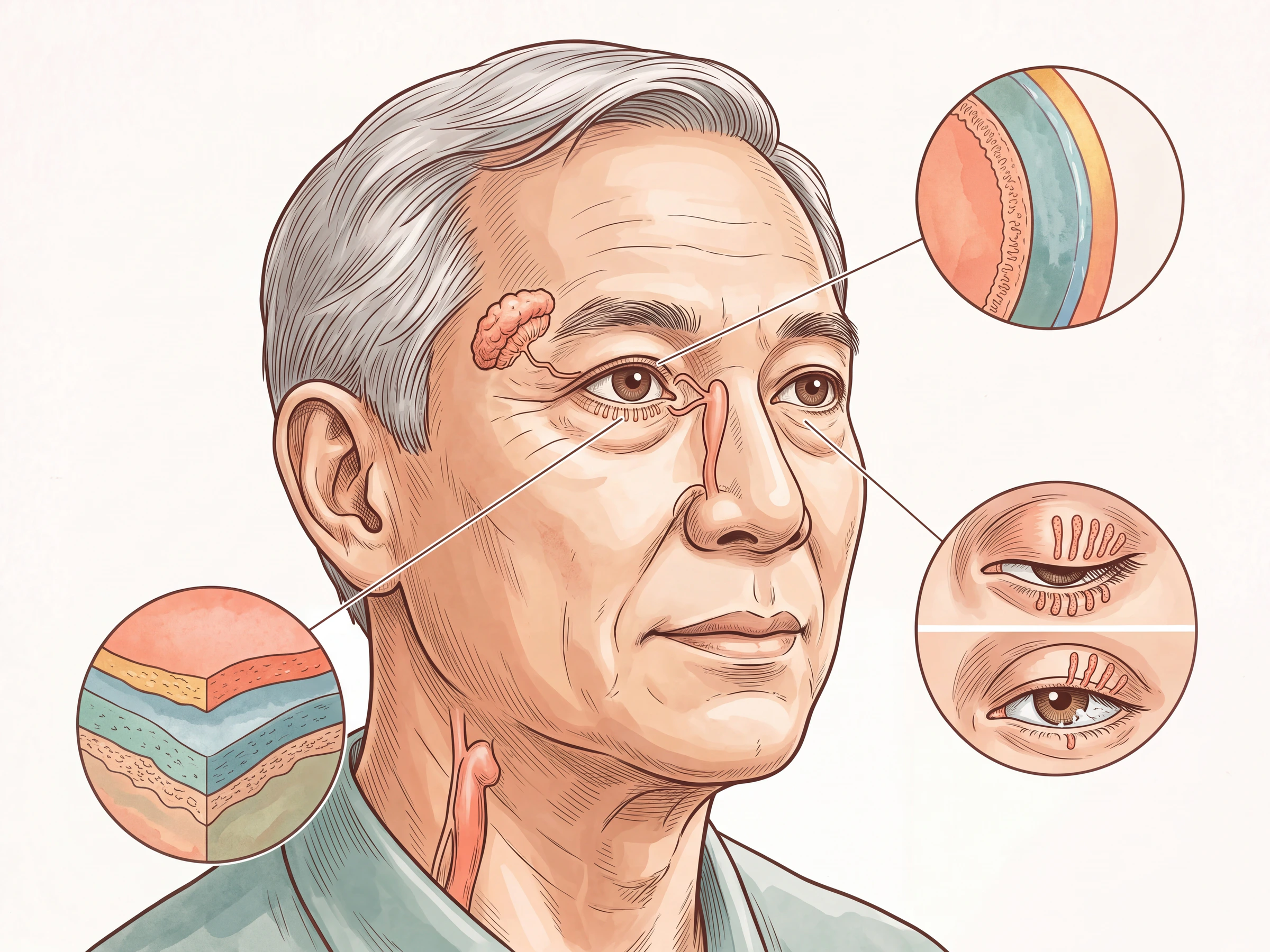
Stinging, grittiness, redness, or intermittent blur can relate to tear quality, medicines, the environment, or reduced blinking during screen use.
Summary before reading further
What is this topic, and why does it matter?
Dry eyes develop when tears are insufficient or the tear film does not function properly. Screen use can reduce blinking and worsen symptoms, but blurred vision or eye pain may have other causes.
Visual breaks, screen adjustments, avoiding direct airflow, and appropriate eye drops can help. Persistent symptoms warrant assessment and a medication review.
What happens in the body?
Explain the mechanism step by step.
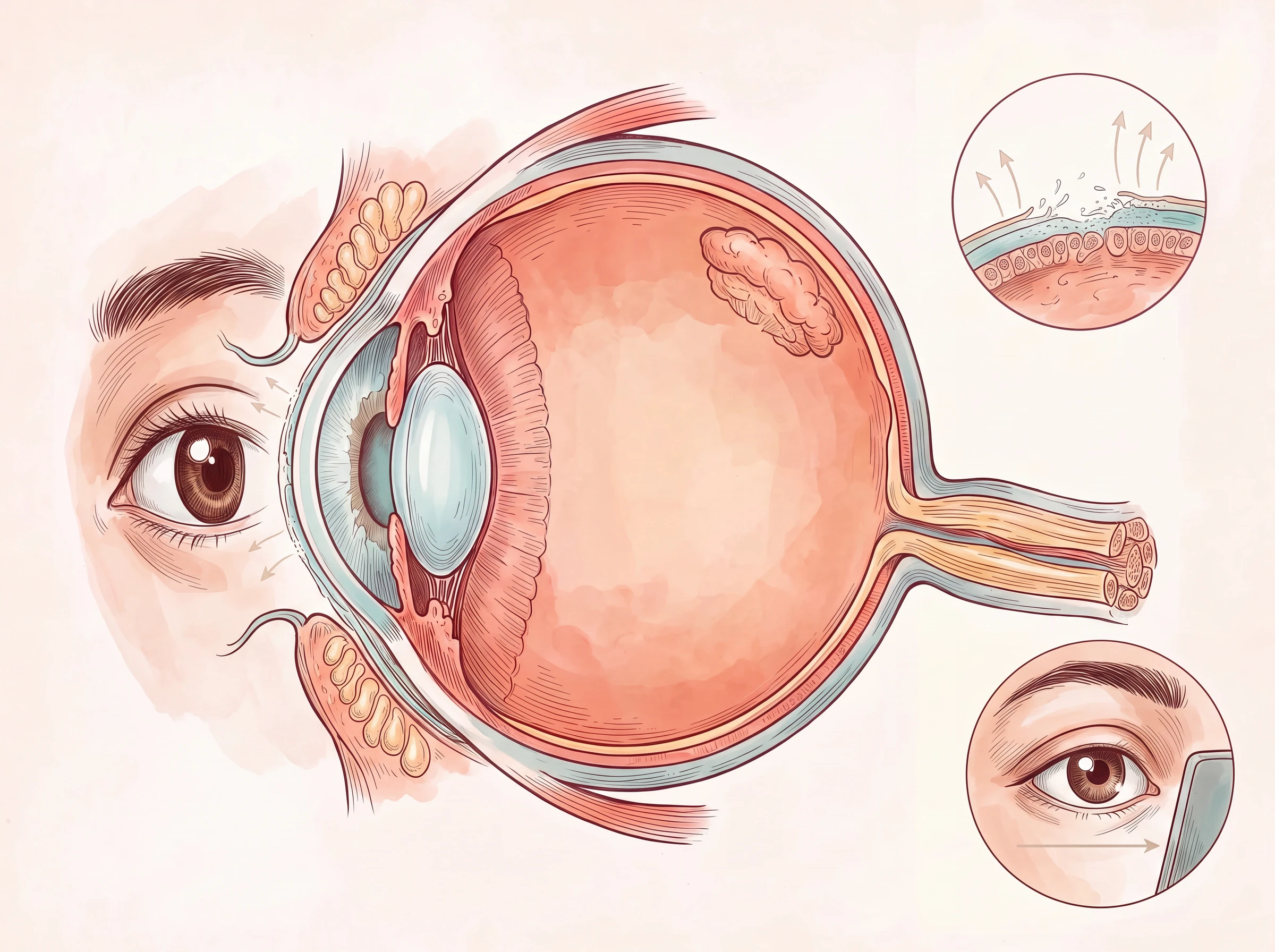
Screen use reduces blinking frequency and completeness, allowing tears to evaporate faster. Eye strain also involves focusing, glare, viewing distance, and posture; blue light is not the sole explanation.
An unstable tear film.
There may be too few tears or insufficient oil from the eyelid glands to limit evaporation.
Reduced blinking
Prolonged screen use reduces complete blinking, preventing tears from spreading evenly across the eye.
Irritated eye surface and blurred vision
An unstable tear film causes irritation and temporary blurred vision.
Values or criteria that you should know
There is no single measurement that diagnoses tired or burning eyes. Review contributing habits and signs that are atypical for dry eye.
Screen use reduces blinking, but dry eyes can also involve medicines, eyelids, oil glands, hormones, and immune conditions.
20-20-20 rule
Every 20 minutes, look at least 20 feet away for 20 seconds.
- Reference range
- Use it as an eye-break reminder, not a treatment criterion.
- You should make an appointment for an evaluation.
- Have an eye examination if stinging, blurred vision, or pain persists despite screen adjustments, fuller blinking, and breaks.
- Should be evaluated urgently
- Severe eye pain, light sensitivity, redness in one eye, pus-like discharge, or reduced vision need prompt assessment.
Spacing and font size
Arrange the screen so that you can read it without straining your eyes and slightly below eye level.
- Reference range
- No single screen distance suits every screen size and person's vision.
- You should make an appointment for an evaluation.
- Increase text size before leaning closer. Have your glasses checked if focusing remains difficult.
- Should be evaluated urgently
- Do not attribute new blurred vision, a drooping eyelid, or a headache with neurological symptoms to screen use without assessment.
Causes · Symptoms · Examination · Care
See important information in one place.
Causes and related factors
- Age, hormones, various medications, and immune diseases
- Poorly functioning eyelid oil glands, contact lenses, and dry air.
- Long screen use, very close distances, or glare
Common symptoms
- Stinging, irritation, grittiness, or watery eyes.
- Fluctuating blurred vision that improves after blinking.
- Headache, eye strain, or slow refocusing after prolonged screen use.
How do doctors check?
- Examine the eye surface, eyelids, and oil glands.
- Assess tear volume and tear film break-up time.
- Check vision and focusing when screen-related symptoms persist.
Start taking care of it systematically.
- Take a break to look far away, blink fully, and adjust the screen to the right distance.
- Avoid air blowing onto your face, use artificial tears as advised, and apply warm compresses when appropriate.
- Seek prompt assessment for eye pain, severe blurring, light sensitivity, or symptoms after injury.
Important things you should know
Keep these points in mind.
There are many causes of dry eyes.
Age, certain medicines, immune conditions, smoke, wind, and poorly functioning eyelid oil glands may contribute.
Screen breaks reduce eye strain.
Look into the distance, blink fully, and position the screen comfortably to reduce eye strain.
Not all drops are the same.
Ask an ophthalmologist or pharmacist about suitable eye drops if you need frequent use or wear contact lenses.
Daily food and care
Start with manageable everyday steps.
- Take screen breaks, adjust text size and lighting, avoid air blowing directly into your eyes, and get enough sleep.
- Do not substitute supplements for an eye examination if symptoms are one-sided or include severe pain, light sensitivity, or reduced vision.
Read on to understand.
Read on for complete information on health and products.
Main references
