Easy-to-understand health information
chronic obstructive pulmonary disease
Chronic airway damage causes cough, sputum, and breathlessness. Smoking, biomass smoke, and pollution are important modifiable exposures.
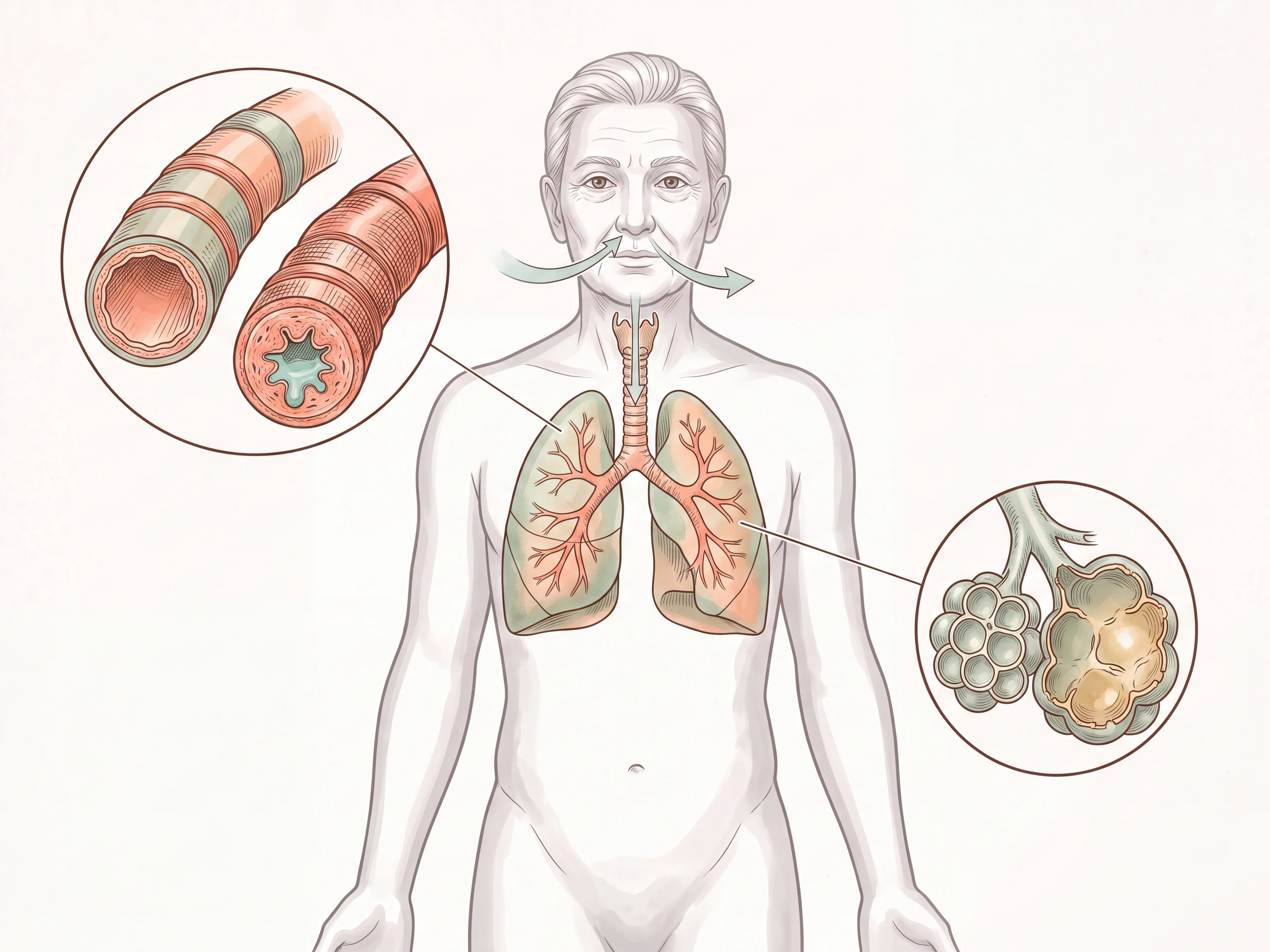
Summary before reading further
What is this topic, and why does it matter?
COPD is not simply age-related lung decline. Ongoing smoke exposure can damage small airways and air sacs. Spirometry is central to diagnosis.
Stopping smoking, prescribed inhalers, vaccination, pulmonary rehabilitation, and appropriate exercise can reduce symptoms and hospital admissions.
Health glossary
- COPD
- COPD causes persistent difficulty moving air out of the lungs. It is often linked with long-term smoke or pollution exposure and is confirmed using spirometry.
- Spirometry
- A breathing test measuring airflow and volumes, used to help assess asthma or COPD.
- Alpha-1 antitrypsin
- A protein that protects the lungs. Inherited low levels can increase the risk of lung or liver disease.
What happens in the body?
Explain the mechanism step by step.
Smoking is the main cause, but biomass smoke, workplace dust, pollution, and alpha-1 antitrypsin deficiency also contribute. Infection-related exacerbations can accelerate loss of lung function.
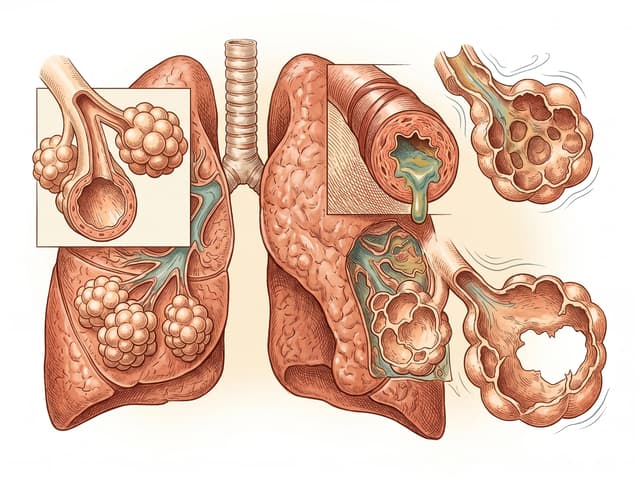
Small airways thicken and fill with mucus.
Increased expiratory resistance
The alveolar walls are destroyed.
The gas-exchange surface and elastic support holding small airways open are reduced.
Air trapping and lung hyperinflation.
The diaphragm works less efficiently, making breathing more demanding.
Values or criteria that you should know
COPD must be confirmed with spirometry after bronchodilator use.
Cough or breathlessness alone cannot establish the diagnosis. Normal oxygen levels do not exclude airway obstruction.
FEV1/FVC
The proportion of forced expiratory volume exhaled in the first second.
- Reference range
- A post-bronchodilator FEV1/FVC of 0.70 or higher does not meet the standard threshold for persistent airflow obstruction.
- You should make an appointment for an evaluation.
- A post-bronchodilator FEV1/FVC below 0.70 supports COPD when symptoms and exposure history are consistent.
- Should be evaluated urgently
- Interpret spirometry alongside the quality of the effort, age, and other conditions. A portable device alone cannot establish a diagnosis.
relapse
Number of exacerbations requiring steroids, antibiotics, or hospitalisation.
- Reference range
- Preventing flare-ups and maintaining daily function are key goals.
- You should make an appointment for an evaluation.
- Two or more exacerbations a year, or at least one requiring hospitalisation, indicate higher risk.
- Should be evaluated urgently
- Rapidly worsening breathlessness, inability to speak in sentences, confusion, or blue lips require emergency care.
Causes · Symptoms · Examination · Care
See important information in one place.
Causes and related factors
- Cigarettes and secondhand smoke
- Wood or biomass smoke, workplace dust, and chemicals.
- Inherited alpha-1 antitrypsin deficiency and impaired lung development.
Common symptoms
- Chronic cough with phlegm
- Breathlessness when walking or climbing stairs.
- Frequent exacerbations, worsening breathlessness, or increased or changed sputum.
How do doctors check?
- Spirometry after bronchodilators
- Assess symptoms, exacerbation frequency, and oxygen levels.
- Chest imaging and alpha-1 antitrypsin testing when indicated.
Start taking care of it systematically.
- Stopping smoking is the most important step to slow COPD progression.
- Inhalers, pulmonary rehabilitation, and vaccination when indicated.
- Practice breathing and exercise gradually.
Important things you should know
Keep these points in mind.
Avoiding smoke helps at every stage.
Stopping smoking slows lung function decline, even after many years of smoking.
Breathlessness does not always require complete inactivity; follow an appropriate activity plan.
Pulmonary rehabilitation improves exercise tolerance and confidence.
Relapse requires a plan.
Changed sputum, increased breathlessness, or fever need prompt assessment to limit worsening illness.
Daily food and care
Start with manageable everyday steps.
- Get adequate protein and energy. Try smaller, more frequent meals if you feel full quickly or become tired while eating.
- Reduce processed foods and sodium when swelling or other conditions warrant it. Supplements do not replace prescribed inhalers or oxygen.
Read on to understand.
Read on for complete information on health and products.
Main references