


Easy-to-understand health information
Cataract
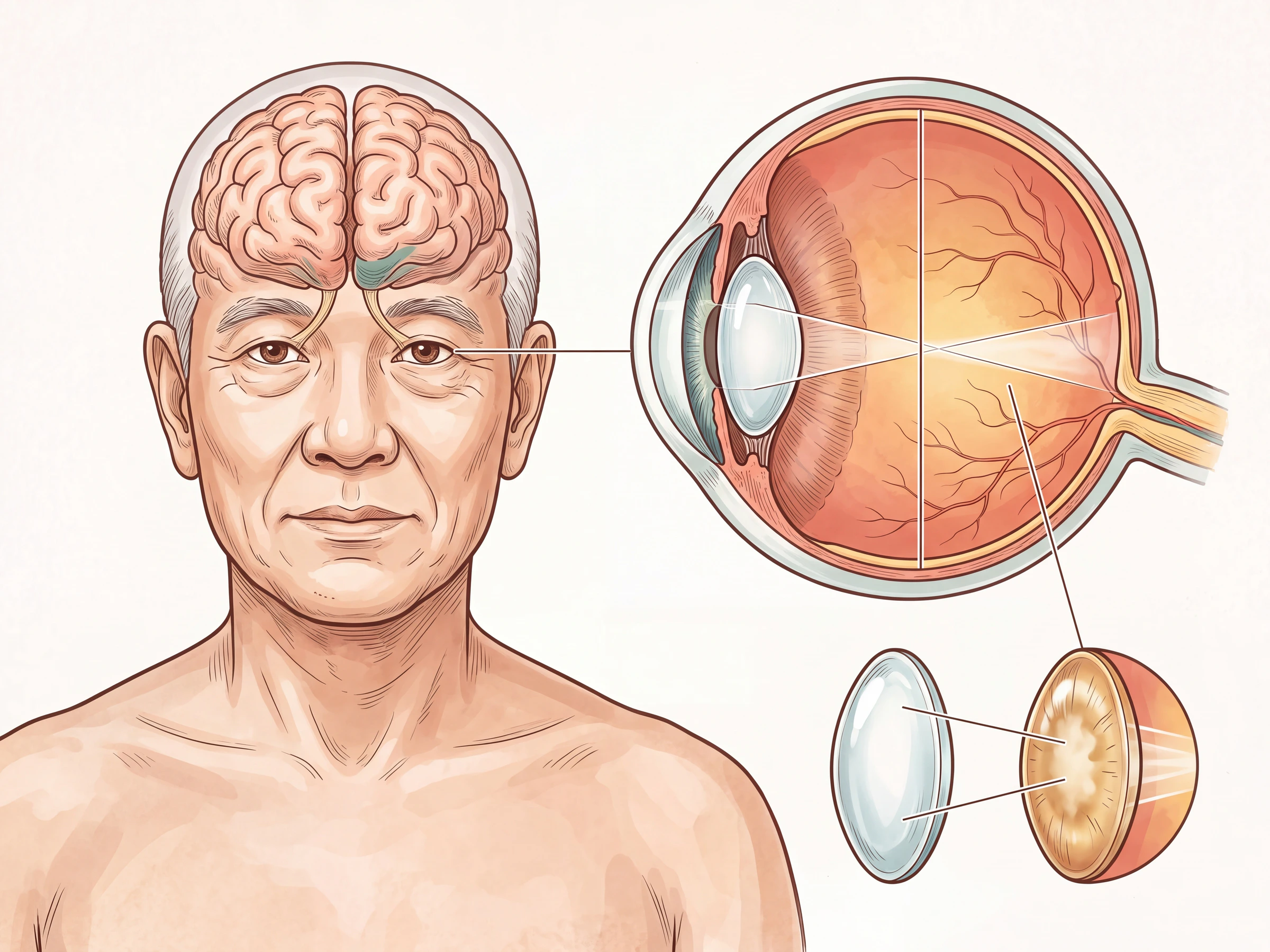
A clouded lens can cause blur, faded colors, glare, halos, and poor night vision. Surgery can be considered when daily activities are affected.
Summary before reading further
What is this topic, and why does it matter?
A cataract is clouding of the eye's lens. Early changes may go unnoticed; progression can interfere with reading, driving, and daily activities.
Updated glasses and suitable lighting may help early cataracts. Lens replacement surgery is considered when vision affects daily life.
What happens in the body?
Explain the mechanism step by step.
Symptoms often develop gradually, including blurred vision, glare, or faded colors. Surgery is considered when vision interferes with daily activities, not on age or lens cloudiness alone.
Lens proteins change with age.
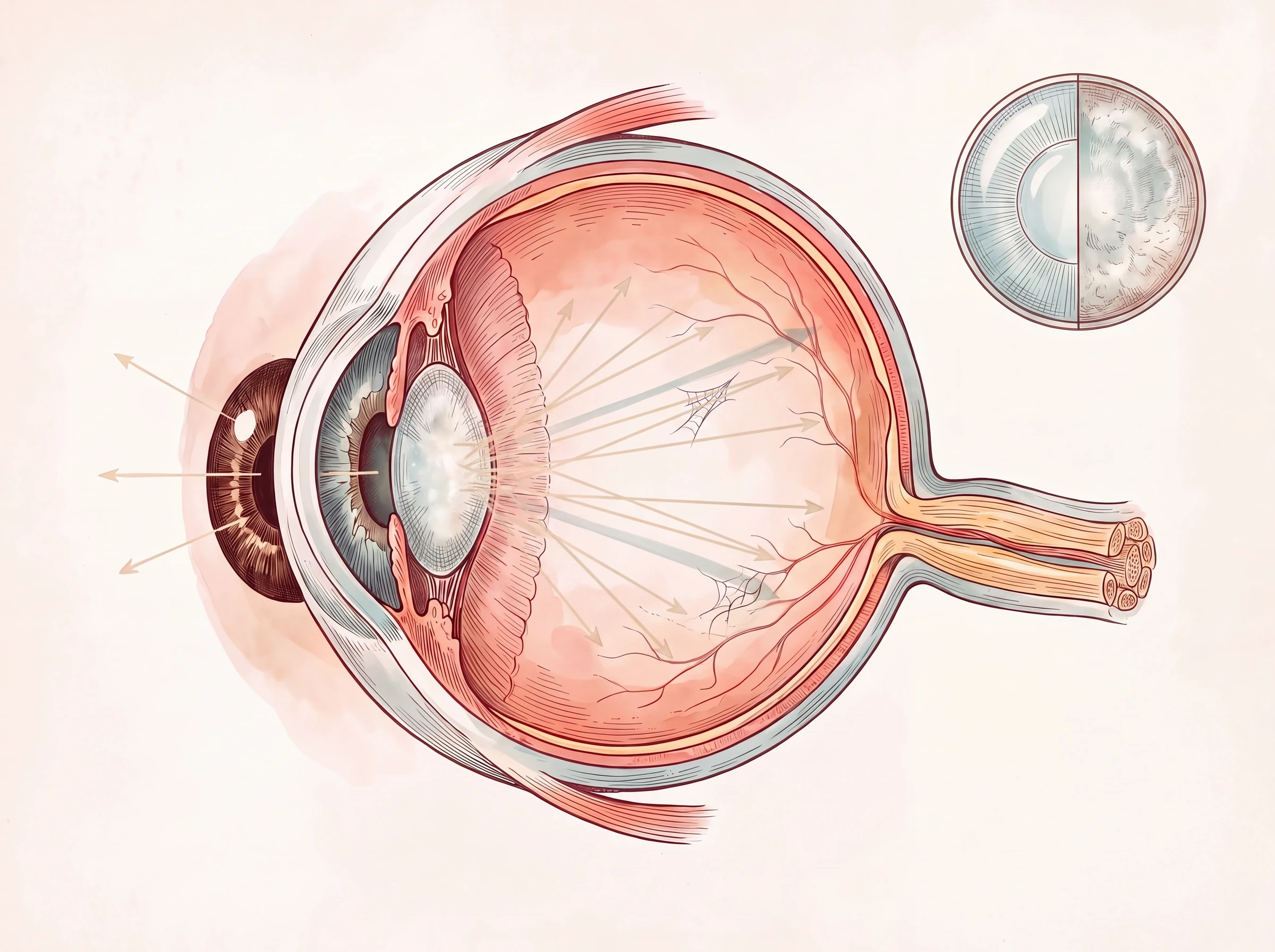
The lens loses clarity and flexibility as some proteins clump into cloudy areas.
scattered light
A cloudy lens scatters light, causing glare and sometimes double vision in one eye.
The image on the retina is not sharp.
The retina may be healthy while a cloudy lens blurs the incoming image.
Values or criteria that you should know
Base treatment decisions on daily functioning, not one visual acuity or lens cloudiness measurement.
Cataracts can cause gradual blur, glare, faded colors, and changing glasses prescriptions. Surgery is considered when meaningful activities are affected.
Vision in everyday life.
Reading, walking, driving, recognising faces, and functioning in low light.
- Reference range
- Monitoring may be appropriate if glasses still allow safe, satisfactory daily activities.
- You should make an appointment for an evaluation.
- Difficulty reading medicine labels, falls, severe glare, or stopping essential activities are reasons to discuss cataract surgery.
- Should be evaluated urgently
- Sudden vision loss, redness, pain, or a curtain-like shadow are not typical cataract symptoms. Seek immediate assessment.
Visual acuity measured on an eye chart.
visual acuity, such as 20/20 or 6/6
- Reference range
- No single visual acuity threshold determines the need for surgery. Glare and poor contrast sensitivity can affect daily life even when the measured acuity is good.
- You should make an appointment for an evaluation.
- Have your ophthalmologist interpret measurements alongside other eye findings.
- Should be evaluated urgently
- Do not wait for a cataract to become “mature” if vision makes daily life unsafe.
Causes · Symptoms · Examination · Care
See important information in one place.
Causes and related factors
- Age and genetics
- Diabetes, smoking, sunlight, and steroid use.
- Eye injury, previous surgery, or certain eye conditions.
Common symptoms
- Blurred vision, like seeing through fog
- Light sensitivity, halos, or difficulty driving at night.
- Faded colours, frequent prescription changes, or double vision in one eye.
How do doctors check?
- Visual acuity testing and examination with a slit lamp.
- Pupil dilating drops to view the retina
- Evaluate effects on reading, walking, and driving.
Start taking care of it systematically.
- Use appropriate lighting and glasses in the early stages.
- Control diabetes, don't smoke, and protect against UV rays.
- Discuss surgery when cataracts affect daily life. Do not rely on drops claiming to dissolve them.
Important things you should know
Keep these points in mind.
Age is an important factor.
Most cataracts are related to changes in the eye's lens as we age.
Examined by dilating the pupils.
Blurred vision can be caused by other eye diseases. Therefore, you should check to know the cause.
Not everyone needs immediate surgery.
The timing of surgery depends on daily functioning, safety, and an ophthalmologist's assessment.
Daily food and care
Start with manageable everyday steps.
- Protect your eyes from the sun and injury, stop smoking, and control your diabetes to reduce modifiable risk factors.
- Use adequate lighting and suitable glasses, and attend eye assessments when vision changes.
Read on to understand.
Read on for complete information on health and products.
Main references
