Easy-to-understand health information
Asthma
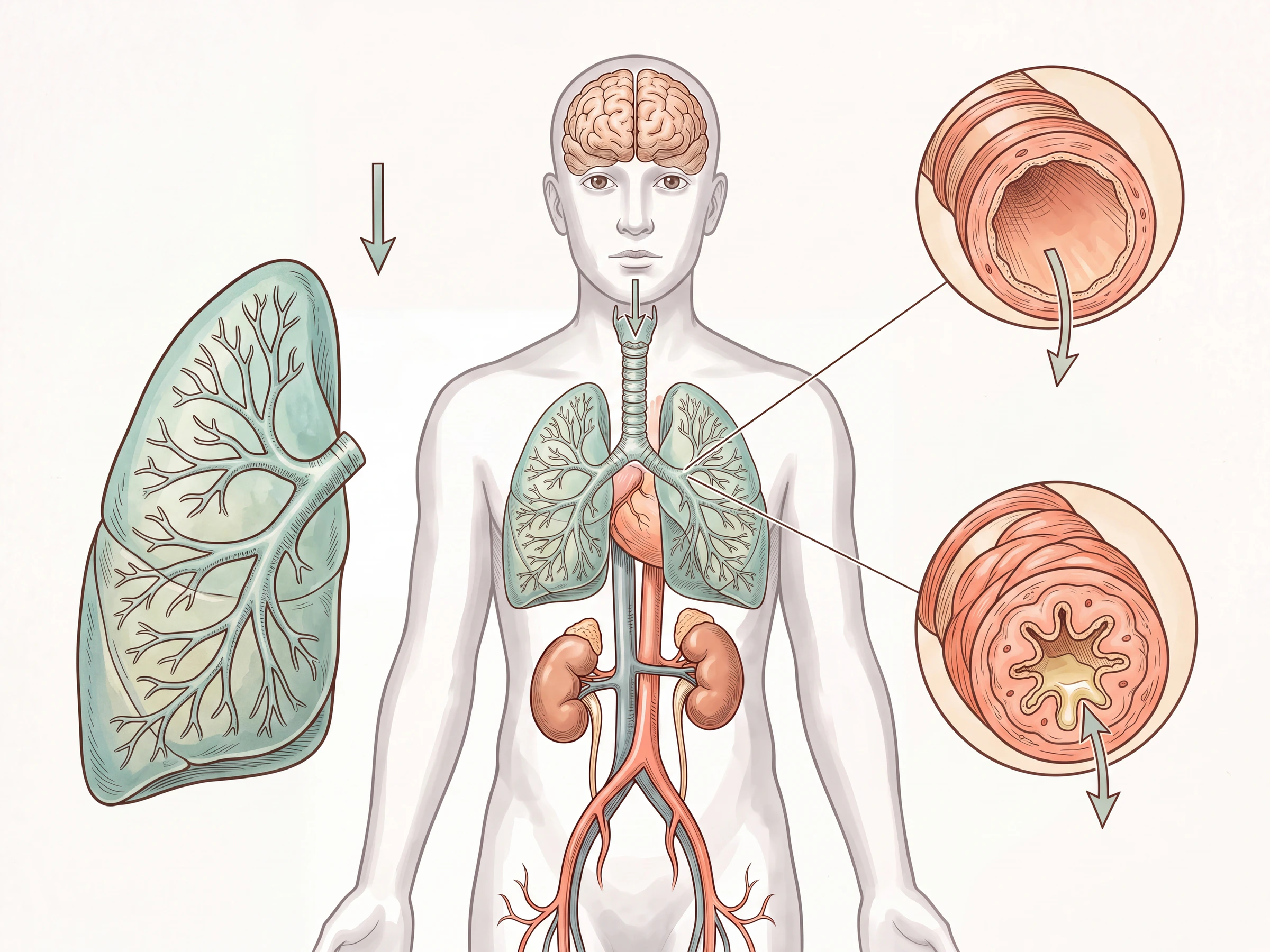
Inflamed airways can cause variable cough, chest tightness, and wheeze. Controlling inflammation helps reduce flare-ups.
Summary before reading further
What is this topic, and why does it matter?
Asthma may flare at night, during exercise, with infections, or after exposure to dust, smoke, weather changes, or allergens. Assess the pattern alongside lung function testing.
Reliever and controller inhalers have different roles. An asthma action plan explains when to adjust treatment and when to seek hospital care.
Health glossary
- Spirometry
- A breathing test measuring airflow and volumes, used to help assess asthma or COPD.
What happens in the body?
Explain the mechanism step by step.
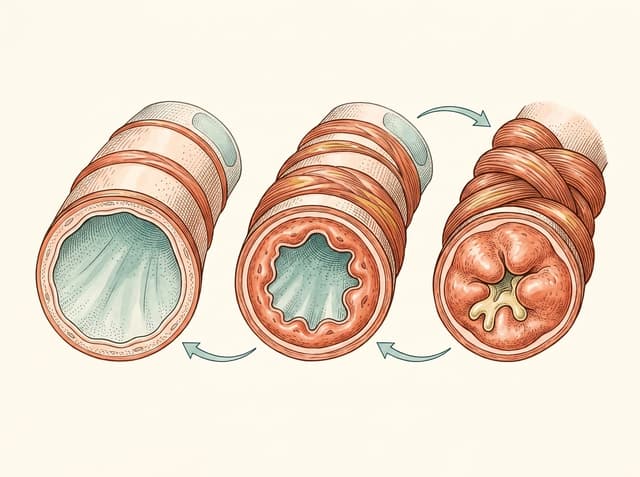
Triggers can include viruses, dust mites, pollen, exercise, cold air, smoke, or pollution. Repeated uncontrolled inflammation can remodel the airways and make narrowing more persistent.
Sensitive and inflamed mucosa
The immune system causes the bronchial walls to swell and overreact.
muscle contraction
Airways can narrow rapidly, especially after exposure to a trigger.
More mucus and difficulty exhaling.
Wheezing, coughing, and feeling unable to breathe.
Values or criteria that you should know
Compare asthma symptoms with your own peak flow readings.
Compare peak flow with your personal best, not other people's readings. Do not rely on the device alone when symptoms are severe.
Peak flow
Percentage of your personal best.
- Reference range
- Peak flow at 80–100% of personal best is usually the green zone in an individual asthma plan.
- You should make an appointment for an evaluation.
- Peak flow at 50–79% of personal best is a warning zone. Follow your asthma action plan and assess the cause.
- Should be evaluated urgently
- Peak flow below 50% of personal best, inability to speak in full sentences, chest retractions, or blue lips indicate danger. Seek emergency help.
Asthma control over the past four weeks.
Daytime symptoms, night waking, reliever use, and activity limitation.
- Reference range
- Symptoms no more than twice a week, no night waking, and no activity limitation suggest better asthma control.
- You should make an appointment for an evaluation.
- Frequent symptoms, night waking, or increased reliever use warrant a review of inhaler technique and the asthma control plan.
- Should be evaluated urgently
- Do not rely solely on a reliever inhaler or stop controller medication yourself.
Causes · Symptoms · Examination · Care
See important information in one place.
Causes and related factors
- Inherited allergic tendency and childhood smoke exposure.
- Viruses, allergens, pollution, and occupational risks
- Obesity, reflux, and nasal inflammation can make asthma harder to control.
Common symptoms
- Cough, wheeze, chest tightness, or breathlessness that varies over time.
- Worse at night, early morning, during exercise, or with a cold.
- Inability to speak in sentences, blue lips, or a reliever inhaler not helping are emergency signs.
How do doctors check?
- Spirometry before and after bronchodilators
- Monitor peak flow or response to medication
- Review inhaler technique, reliever use, and other conditions.
Start taking care of it systematically.
- Use an inhaled corticosteroid-containing controller as prescribed.
- Learn correct inhaler technique and keep an asthma action plan.
- Avoid smoke and personal triggers. Include appropriate exercise once the condition is controlled.
Important things you should know
Keep these points in mind.
No symptoms does not mean airway inflammation has resolved.
Use controller medication as prescribed, even on good days, to reduce severe asthma attacks.
The inhalation technique is as important as the medicine itself.
Have a clinician check inhaler technique and use a spacer when appropriate.
Smoke and pollution are important triggers.
Quitting smoking and avoiding smoke in the home helps reduce relapses.
Daily food and care
Start with manageable everyday steps.
- Maintain an appropriate weight and varied diet with fewer sugary, fatty, and highly processed foods. Food does not replace disease-controlling medication.
- Immediate breathlessness or hives after food need assessment for food allergy. Do not try the food again on your own.
Read on to understand.
Read on for complete information on health and products.
Main references