Easy-to-understand health information
Appendicitis
Abdominal pain requiring prompt assessment because an inflamed appendix can rupture and cause infection in the abdominal cavity.
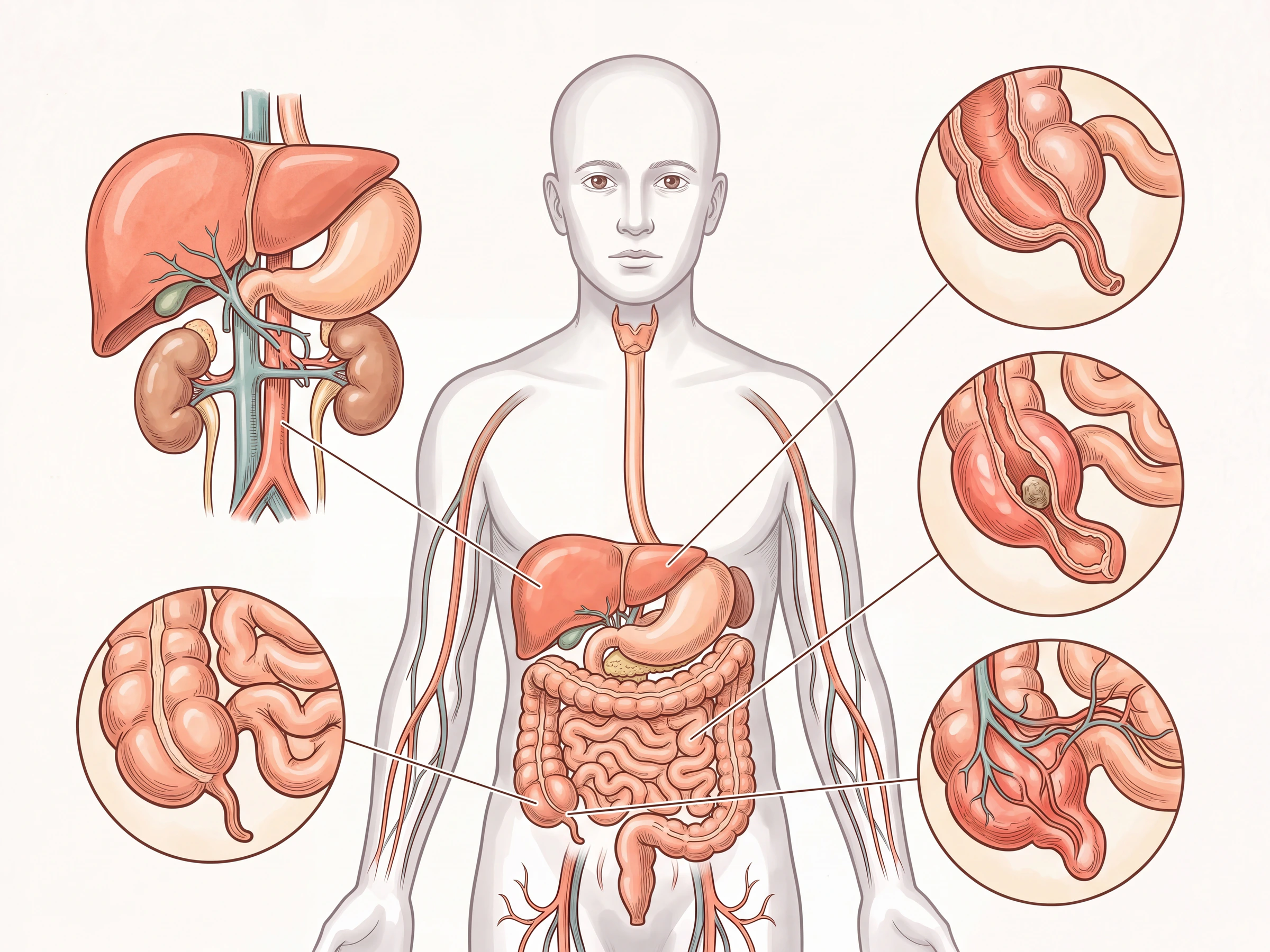
Summary before reading further
What is this topic, and why does it matter?
Appendicitis develops when the inside of the appendix becomes blocked and inflamed. Typical pain starts around the navel and moves to the lower right abdomen, often worsening with walking, coughing, or jolting. Loss of appetite, nausea, vomiting, or fever may occur, but not everyone has every symptom.
Diagnosis combines symptoms, abdominal examination, blood and urine tests, and imaging when appropriate. Treatment usually involves surgery; selected cases may be treated with antibiotics under the care team's assessment.
Health glossary
- CT and MRI
- CT uses X-rays, while MRI uses magnetic fields and radio waves. The choice depends on the organ and clinical question.
What happens in the body?
Explain the mechanism step by step.
Pain often starts around the navel and moves to the lower right abdomen. Older adults, pregnant people, and children may have less typical symptoms. Early assessment reduces the risk of rupture and abdominal infection.
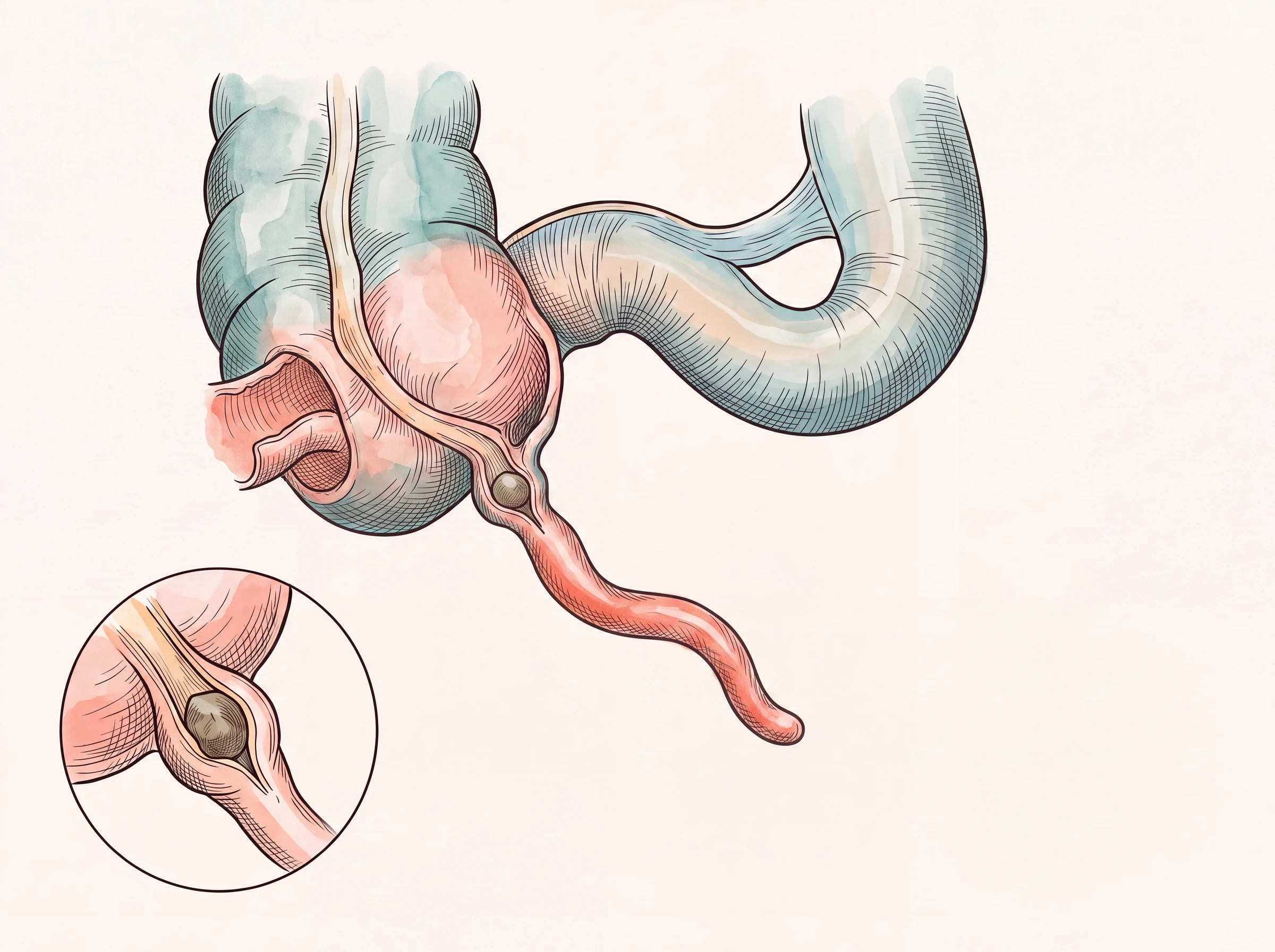
The opening is clogged.
Hardened stool, swollen lymphoid tissue, or other causes can block the appendix opening.
Increased blood pressure and inflammation
Trapped fluid and multiplying bacteria cause the appendix to swell and pain to increase.
The appendix wall can lose its blood supply and rupture.
Delay can allow infection to spread or an abscess to form around the appendix.
Values or criteria that you should know
No fever or pain score makes it safe to monitor suspected appendicitis at home without assessment.
Symptoms change over time, and fever or pain may be less obvious in older adults. Examination and imaging matter beyond pain location alone.
pain pattern
It starts around the navel and moves to the right lower abdomen within several hours.
- Reference range
- Not everyone has the typical symptom pattern.
- You should make an appointment for an evaluation.
- Persistent lower-right abdominal pain that worsens with walking or coughing, especially with poor appetite, nausea, or fever, needs same-day assessment.
- Should be evaluated urgently
- Pain spreading across the abdomen, a rigid abdomen, reduced alertness, faintness, or pain that suddenly eases after being severe may signal a complication. Seek emergency care.
Score and blood results
such as Alvarado score and white blood cells
- Reference range
- Used to estimate clinical probability in healthcare settings. It cannot confirm or exclude disease at home.
- You should make an appointment for an evaluation.
- Early normal values do not rule out appendicitis if symptoms continue to change.
- Should be evaluated urgently
- Avoid laxatives or abdominal massage when appendicitis is suspected.
Causes · Symptoms · Examination · Care
See important information in one place.
Causes and related factors
- Blockage by hardened stool or swollen lymphoid tissue.
- Gastrointestinal infections sometimes come first.
- Tumors are a rare cause but should be considered at certain ages.
Common symptoms
- Worsening abdominal pain, often localising to the lower right side.
- Poor appetite, nausea, fever, or pain with walking or coughing.
- Older adults may have subtle symptoms despite serious illness.
How do doctors check?
- Review symptoms and examine the abdomen.
- Blood, urine, and pregnancy tests are performed when relevant.
- Ultrasound or CT according to age and diagnostic uncertainty.
Start taking care of it systematically.
- Go to hospital for worsening abdominal pain or marked tenderness.
- Do not delay assessment of suspected appendicitis by using laxatives or hot compresses.
- Treatment may be surgery or antibiotics in patients selected by the medical team.
Important things you should know
Keep these points in mind.
The location of the pain may be different.
Children, older adults, and pregnant women may have less typical symptoms or pain outside the lower right abdomen. Do not wait for every symptom to appear.
There is no single test that fits everyone.
A clinician selects physical examination, blood and urine tests, ultrasound, or CT based on age, pregnancy, and the likelihood of the condition.
Do not delay assessment with prolonged self-treatment.
Laxatives, enemas, or waiting for pain to worsen can delay assessment of suspected appendicitis.
Daily food and care
The most important thing is to get checked quickly.
- Diet does not treat acute appendicitis. Follow the healthcare facility's advice about eating and drinking when assessment or surgery may be needed.
- After treatment, follow the care team's eating advice. Start with easily tolerated foods, drink appropriate fluids, and increase fiber as bowel function recovers.
Read on to understand.
Read on for complete information on health and products.
Main references