Easy-to-understand health information
Allergic rhinitis
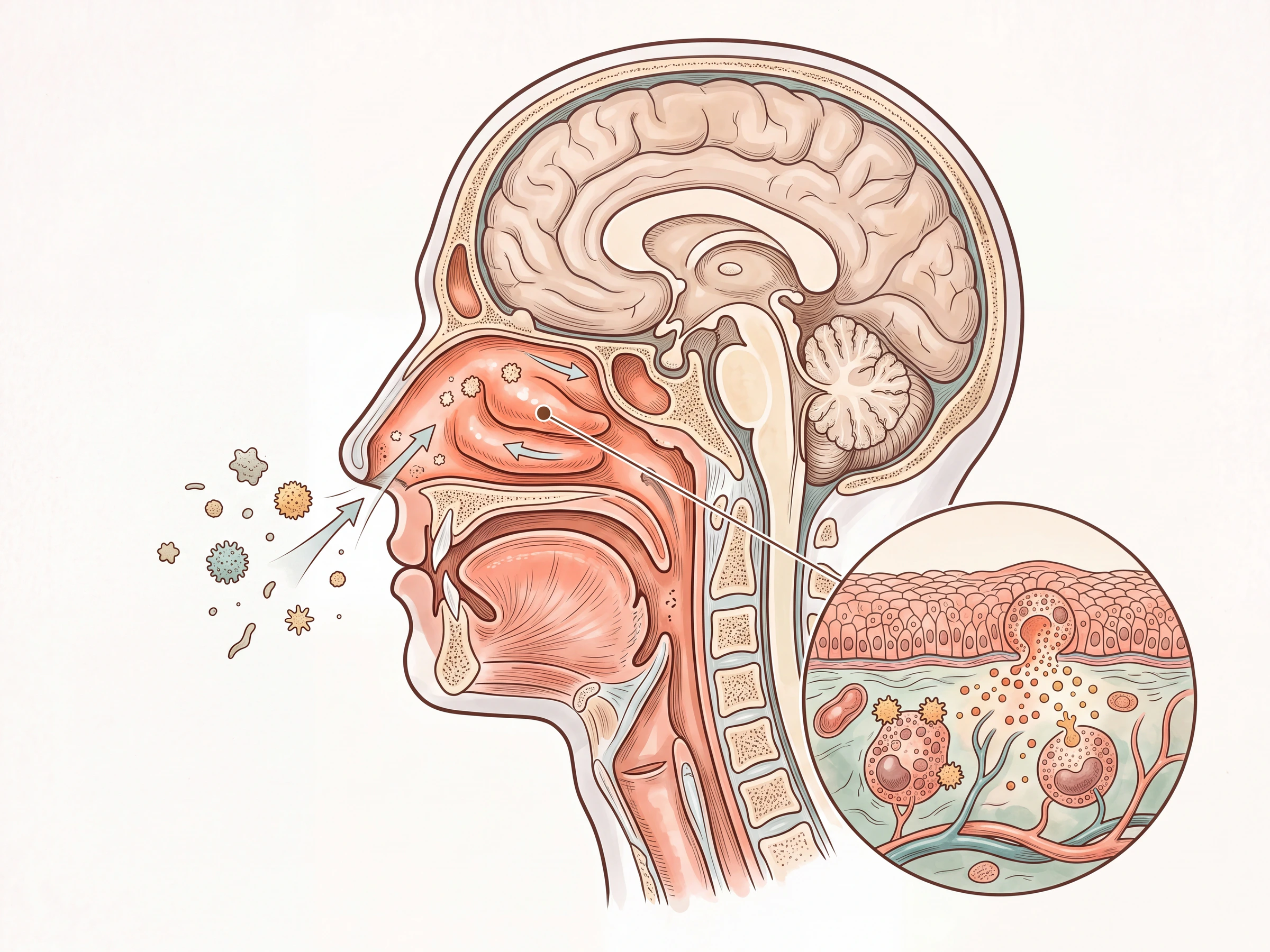
Sneezing, itching, congestion, and clear nasal discharge can result from allergic responses. Identifying triggers and using suitable treatment is better than simply enduring symptoms.
Summary before reading further
What is this topic, and why does it matter?
Common triggers include dust mites, pollen, pet hair or dander, mold, and workplace substances. Symptoms often affect sleep, concentration, and quality of life.
Allergic rhinitis is not a prolonged cold. Nasal steroids, antihistamines, saline, and trigger reduction have distinct roles.
What happens in the body?
Explain the mechanism step by step.
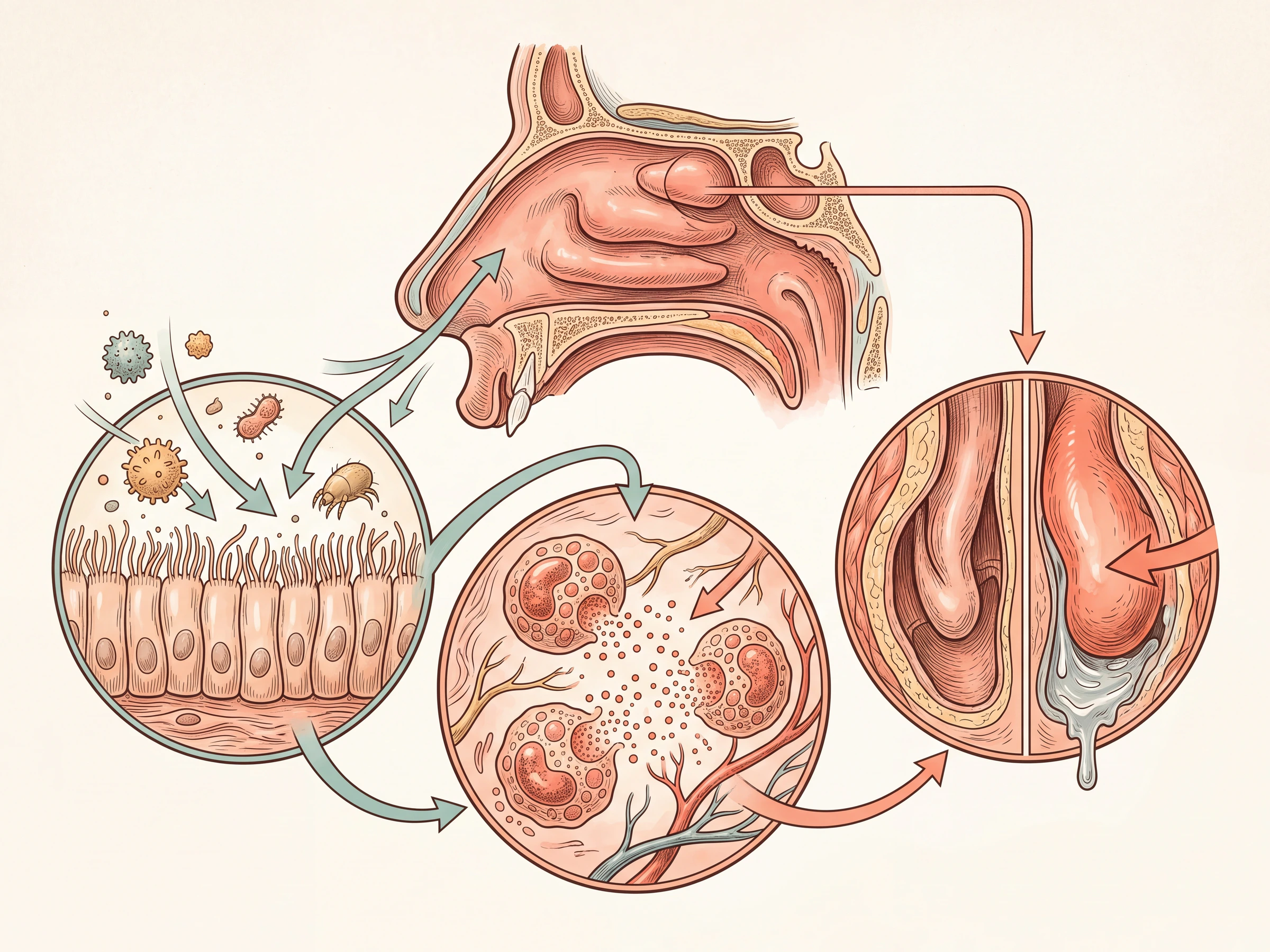
In the later allergic response, inflammatory cells can prolong congestion and affect sleep and concentration. Allergic rhinitis often coexists with asthma, conjunctivitis, or sinusitis; a viral cold has a different mechanism.
The body is sensitive to allergens.
IgE binds to mast cells in the nasal mucosa.
Allergen exposure triggers histamine release.
Sneezing, itching, and clear nasal discharge develop quickly.
late stage inflammation
Swelling and increased sensitivity of the nasal lining cause persistent congestion.
Values or criteria that you should know
Severity depends on symptom frequency and effects on daily life.
ARIA classification considers intermittent or persistent symptoms and their impact on sleep, study, work, and activities.
Frequency
Days of symptoms per week and number of consecutive weeks.
- Reference range
- Symptoms on fewer than four days a week or lasting less than four weeks are classified as intermittent.
- You should make an appointment for an evaluation.
- Symptoms on at least four days a week for at least four weeks are classified as persistent.
- Should be evaluated urgently
- Breathlessness, chest tightness, or wheezing need assessment for asthma rather than simply adding antihistamines.
Impact on life
Sleep, work, study, and activities
- Reference range
- Symptoms are generally mild when sleep and daily activities are unaffected.
- You should make an appointment for an evaluation.
- Symptoms affecting sleep, concentration, work, or activity may be classified as more severe even if they occur on few days.
- Should be evaluated urgently
- Swelling around one eye, severe facial pain, high fever, or visual changes need assessment for another cause.
Causes · Symptoms · Examination · Care
See important information in one place.
Causes and related factors
- Genetics of allergies and asthma
- Dust mites, pollen, mold, cockroaches, or pets
- Smoke, pollution, and odors can trigger symptoms even if they are not allergens.
Common symptoms
- Repeated sneezing, an itchy nose, and clear discharge.
- Congested nose, mouth breathing, snoring
- Itchy, watery eyes or symptoms linked to a season or location.
How do doctors check?
- Review the symptom pattern and environment.
- Skin prick or specific IgE testing is useful when the result will change management.
- Distinguish allergies from colds, sinusitis, nasal polyps, and medication effects.
Start taking care of it systematically.
- Reduce confirmed personal triggers rather than eliminating everything at random.
- Rinse your nose and use steroid nasal spray correctly.
- Consider immunotherapy in appropriate cases.
Important things you should know
Keep these points in mind.
Manage relevant triggers directly.
If dust mites are suspected, focus on bedding and humidity control. You do not need to remove everything from your home.
Inhaler technique matters
Aim the spray away from the nasal septum and use it regularly as directed to reduce irritation and improve effectiveness.
Ask about breathlessness too.
Cough, wheezing, or chest tightness may indicate lower-airway involvement.
Daily food and care
Start with manageable everyday steps.
- You do not need to avoid foods without a clear link to your symptoms. Removing several food groups can lead to nutritional deficiencies.
- Adequate sleep, not smoking, and reducing household smoke and pollution support respiratory health.
Read on to understand.
Read on for complete information on health and products.
Main references