Easy-to-understand health information
acid reflux
Review meals, timing, weight, medicines, and personal triggers, while identifying symptoms that need further assessment.
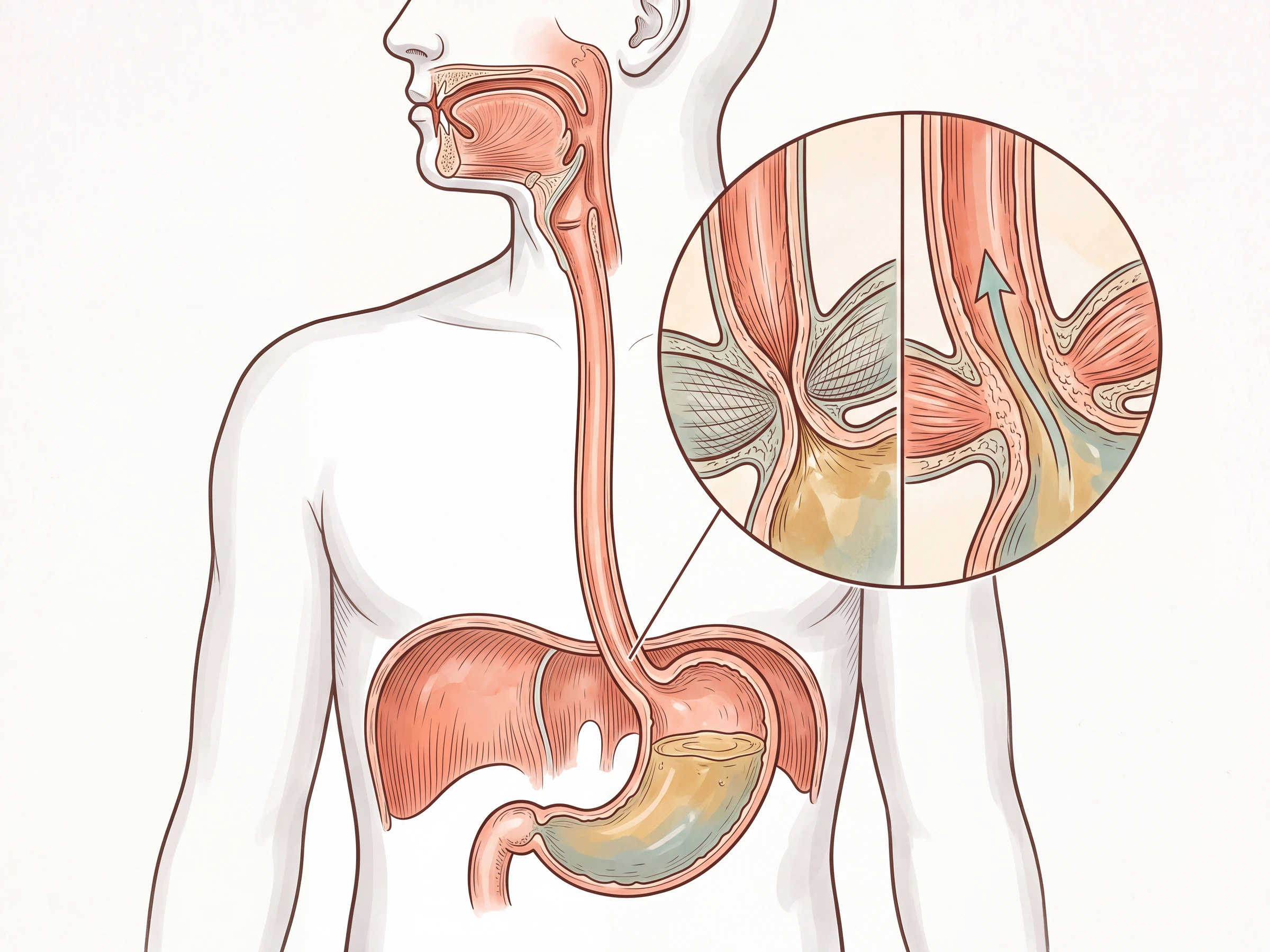
Summary before reading further
What is this topic, and why does it matter?
Reflux occurs when stomach contents flow back into the esophagus more readily than usual. Meal size, bedtime, weight, medicines, and individual food triggers can contribute.
Acid-related medicines have specific uses and should not be assumed to cause everyone's symptoms. Review the mechanism, habits, and ongoing need for medication with a doctor.
What happens in the body?
Explain the mechanism step by step.
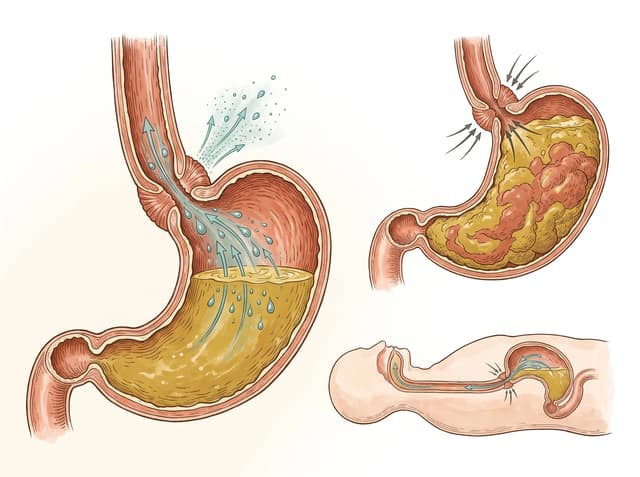
Key factors include transient sphincter relaxation, a weak sphincter, hiatal hernia, a very full stomach, and increased abdominal pressure. Food triggers differ between people; there is no universal list that everyone must avoid.
The barrier opens at the wrong time.
Relaxation or weak closure of the lower oesophageal sphincter allows stomach contents to flow backwards.
The mucosa is exposed to acid and bile.
The oesophagus lacks the stomach's protective barrier, making it vulnerable to acid irritation and inflammation.
increased sensitivity
Some people have severe symptoms despite limited acid exposure because the oesophagus is sensitive to stretching and chemical stimuli.
Values or criteria that you should know
Separate occasional symptoms from symptoms that should be evaluated.
No single blood or acid measurement confirms every case of reflux disease. Diagnosis considers symptoms, impact on daily life, and testing when indicated.
Frequency of symptoms
Heartburn or stomach contents rising into the throat.
- Reference range
- Infrequent symptoms that improve with dietary changes may initially be managed with self-care.
- You should make an appointment for an evaluation.
- Reflux symptoms about twice a week, disrupted sleep, or frequent medication use warrant assessment.
- Should be evaluated urgently
- Chest pressure, breathlessness, sweating, or pain spreading to the arm or jaw require assessment to rule out a heart cause first.
time before bedtime
Time between the last meal and lying down.
- Reference range
- Allowing at least three hours between the last meal and lying down may reduce night-time reflux.
- You should make an appointment for an evaluation.
- Frequent waking with choking, cough, or hoarseness warrants a treatment review.
- Should be evaluated urgently
- Difficulty or pain with swallowing, vomiting blood, black stools, weight loss, or paleness need assessment rather than watchful waiting.
Causes · Symptoms · Examination · Care
See important information in one place.
Causes and related factors
- Large meals, fatty foods, alcohol, smoking, and lying down after meals.
- Overweight, pregnancy, or hiatal hernia
- Certain medicines and slow gastric motility
Common symptoms
- Heartburn, acid regurgitation, or a bitter taste in the throat.
- Coughing, hoarseness, or sore throat, especially at night
- Swallowing difficulty, weight loss, or bleeding are warning signs.
How do doctors check?
- Diagnosed based on symptom pattern and response to care.
- Endoscopy for warning signs or persistent symptoms.
- Reflux monitoring and oesophageal pressure testing in complex cases.
Start taking care of it systematically.
- Choose smaller meals and leave at least three hours before lying down.
- Limit sugary, greasy, and processed foods and record your personal triggers.
- Manage weight, elevate the head of the bed, and use medicine when indicated.
Important things you should know
Keep these points in mind.
Triggers vary.
Use a food and symptom diary to identify actual links rather than broadly eliminating foods.
Large meals and late-night eating can affect symptoms.
Leaving time before bed and reducing meal sizes may help some people.
Other diseases must be excluded.
Do not assume chest pain, swallowing difficulty, or persistent vomiting is simply reflux.
Daily food and care
Start with manageable everyday steps.
- Reduce sweets, sugary drinks, greasy or fried foods, and highly processed foods, while tracking your own symptoms.
- Start with vegetables and simply prepared foods you tolerate, and change one thing at a time.
- Do not stop prescribed acid-suppressing or other medicines yourself. Review the reason for long-term use with your doctor.
Read on to understand.
Read on for complete information on health and products.
Select product from label information
Choose a formula from the information that can be verified.
A varied diet remains the foundation. Explore the products below to compare formulas, formats, and label information.
Review what you regularly eat before deciding what to supplement.
Compare ingredients, quantity, product form and warnings on the label
Consult a healthcare professional if you have an existing condition, take medication, or have surgery planned.
Supplements complement diet and routines. Follow the label and any treatment plan for existing conditions.
Main references