Easy-to-understand health information
Migraine
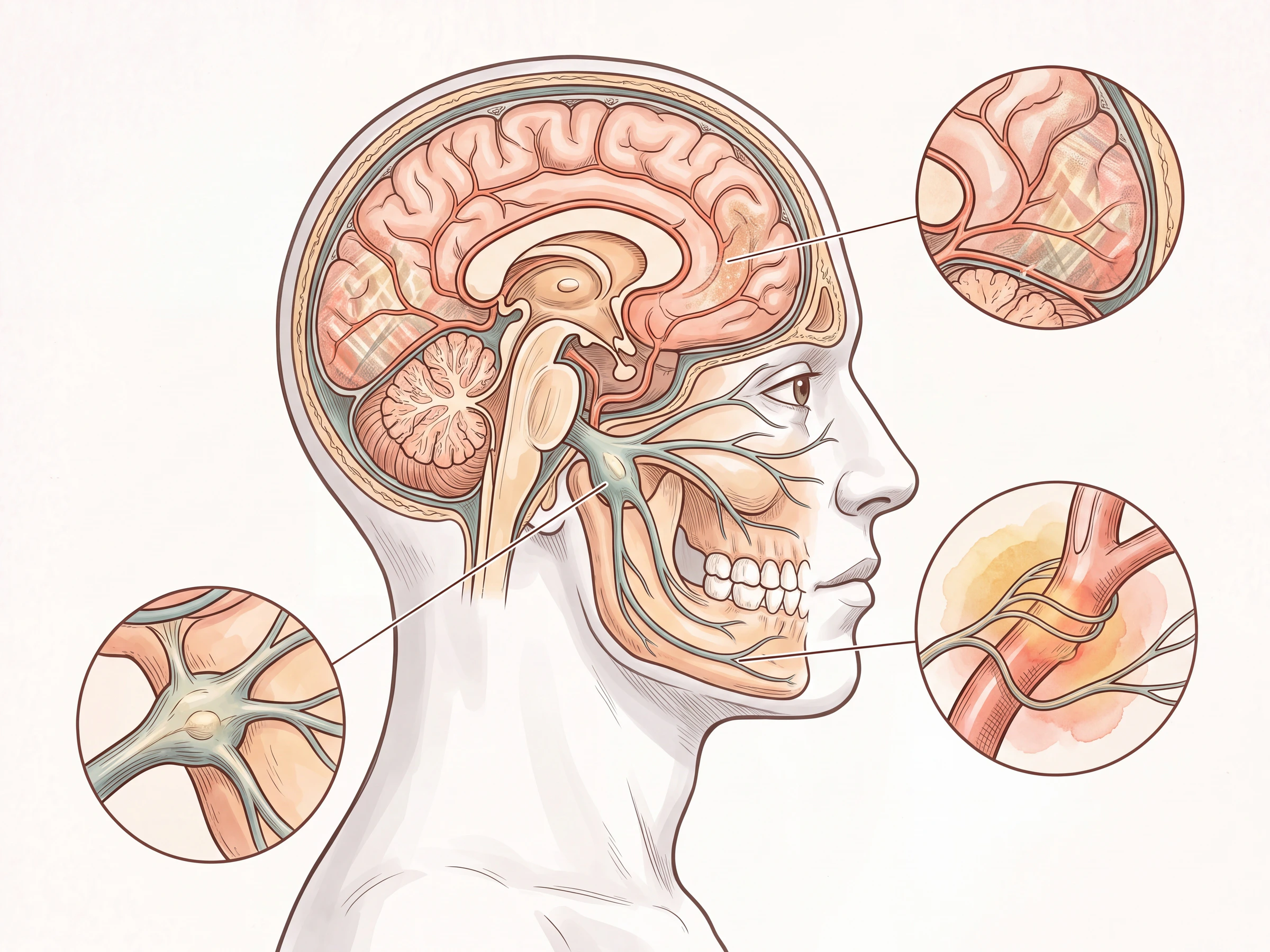
Migraine is a neurological condition, not just a headache. Nausea, light and sound sensitivity, or aura may occur; dangerous headache causes must be distinguished.
Summary before reading further
What is this topic, and why does it matter?
Irregular sleep, missed meals, dehydration, stress, hormones, and individual triggers can contribute to attacks, but a clear trigger is not always present.
Acute and preventive treatments have different roles. Record headache days, severity, medicines, and impact to guide choices.
Health glossary
- CGRP
- A signalling molecule involved in migraine. Some medicines target this pathway to prevent or treat attacks in suitable patients.
What happens in the body?
Explain the mechanism step by step.
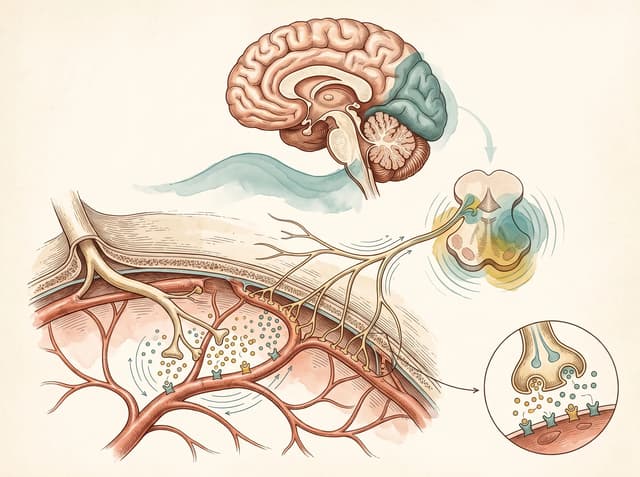
In some people, aura relates to a wave of nerve-cell activity across the brain's surface. Triggers are not necessarily the underlying cause; they can lower the threshold for an attack. Examples include irregular sleep, missed meals, menstruation, or abrupt changes in stress.
The brain enters a state of hypersensitivity.
Hypothalamus and brainstem circuits change before pain.
trigeminal signaling
Nerve endings around the meninges release CGRP and amplify pain signals.
Aura and cortical spreading depression.
Cortical spreading depression can cause temporary visual, sensory, or language symptoms.
Values or criteria that you should know
Track headache duration and days per month to distinguish episodic from chronic migraine.
Pain intensity alone is not enough for assessment. Consider the usual pattern, neurological symptoms, and medicines being taken.
Duration of each episode
Attack duration without treatment or when treatment is unsuccessful.
- Reference range
- A typical migraine usually lasts 4–72 hours.
- You should make an appointment for an evaluation.
- Contact your doctor if a migraine lasts more than 72 hours or prevents drinking or taking medicine.
- Should be evaluated urgently
- A sudden worst-ever headache, fever with a stiff neck, loss of consciousness, or one-sided weakness requires emergency care.
Number of headache days
Count all headache days each month.
- Reference range
- Fewer than 15 headache days per month does not meet the chronic migraine frequency threshold. Preventive treatment may still be appropriate if attacks substantially affect life.
- You should make an appointment for an evaluation.
- Headaches on at least 15 days a month for more than three months, with migraine features on at least eight days, fit the pattern of chronic migraine.
- Should be evaluated urgently
- Frequent painkiller use can cause medication-overuse headache. Ask your doctor to review treatment rather than increasing it yourself.
Causes · Symptoms · Examination · Care
See important information in one place.
Causes and related factors
- genetics and hormones
- Irregular sleep, missed meals, dehydration, or stress.
- Frequent headache reliever use can cause medication-overuse headache.
Common symptoms
- Throbbing pain on one or both sides, worsened by movement.
- Nausea, sensitivity to light, sounds, or smells
- Visual, sensory, or language aura symptoms typically develop gradually.
How do doctors check?
- Diagnosis based on pattern and neurological examination
- Brain imaging for warning signs or an atypical symptom pattern.
- Record pain days, menstrual cycles, medications, and triggers.
Start taking care of it systematically.
- Treat migraine early in an attack and limit painkiller-use days as advised.
- Maintain consistent times for sleep, meals, water, and exercise.
- Consider preventive treatment, including CGRP-targeting medicines, when attacks are severe or affect daily life.
Important things you should know
Keep these points in mind.
Frequent headache reliever use can increase headache frequency.
Frequent use of headache relievers can cause medication-overuse headache. Review the preventive treatment plan.
Aura can occur without headache.
Temporary zigzag lights, numbness, or language changes can occur with aura. A first episode needs assessment to distinguish it from stroke.
The frequency determines the plan.
Discuss preventive treatment if headaches occur on many days or substantially affect work and daily life.
Daily food and care
Start with manageable everyday steps.
- Eat regularly, drink adequate water, avoid large fluctuations in caffeine and alcohol intake, and use a diary to identify triggers.
- Avoid eliminating several food groups based on online lists. Triggers vary, and excessive restriction can compromise nutrition.
Read on to understand.
Read on for complete information on health and products.
Main references