Easy-to-understand health information
Hypothyroidism
Low thyroid hormone can resemble stress, menopause, or poor rest. Blood testing is needed before drawing conclusions.
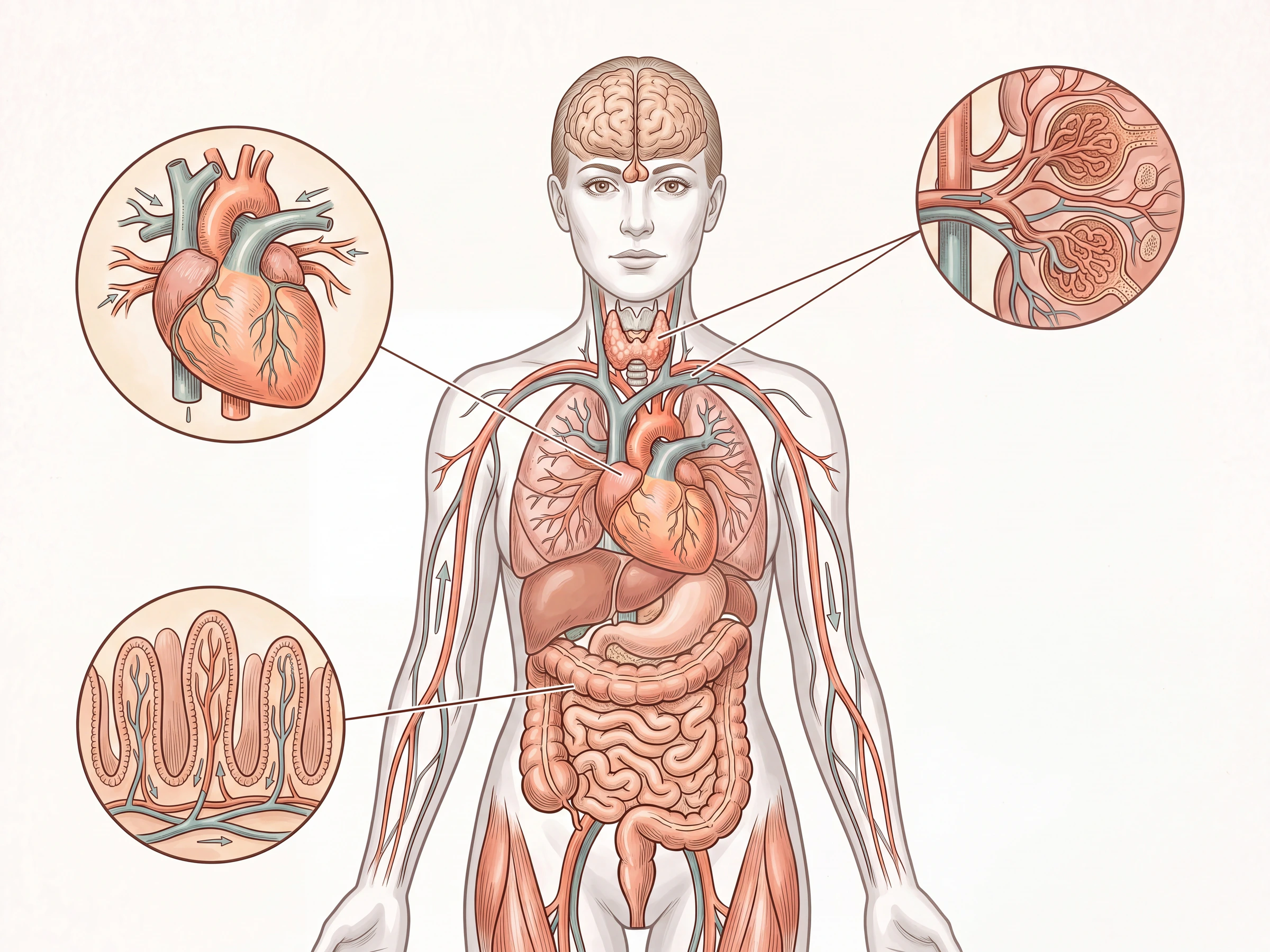
Summary before reading further
What is this topic, and why does it matter?
Fatigue, cold intolerance, constipation, dry skin, weight gain, poor concentration, or menstrual changes can occur with hypothyroidism but also have other causes.
Hashimoto's is a common autoimmune cause. Other causes include thyroid surgery or radiation, certain medicines, and pituitary disorders.
Health glossary
- TPO Antibody
- Blood tests that help identify immune-related thyroid disease. Interpret them alongside thyroid hormone levels and symptoms.
- TSH, free T4 and T3
- Blood tests that assess whether the thyroid is overactive or underactive and help identify the cause before treatment.
What happens in the body?
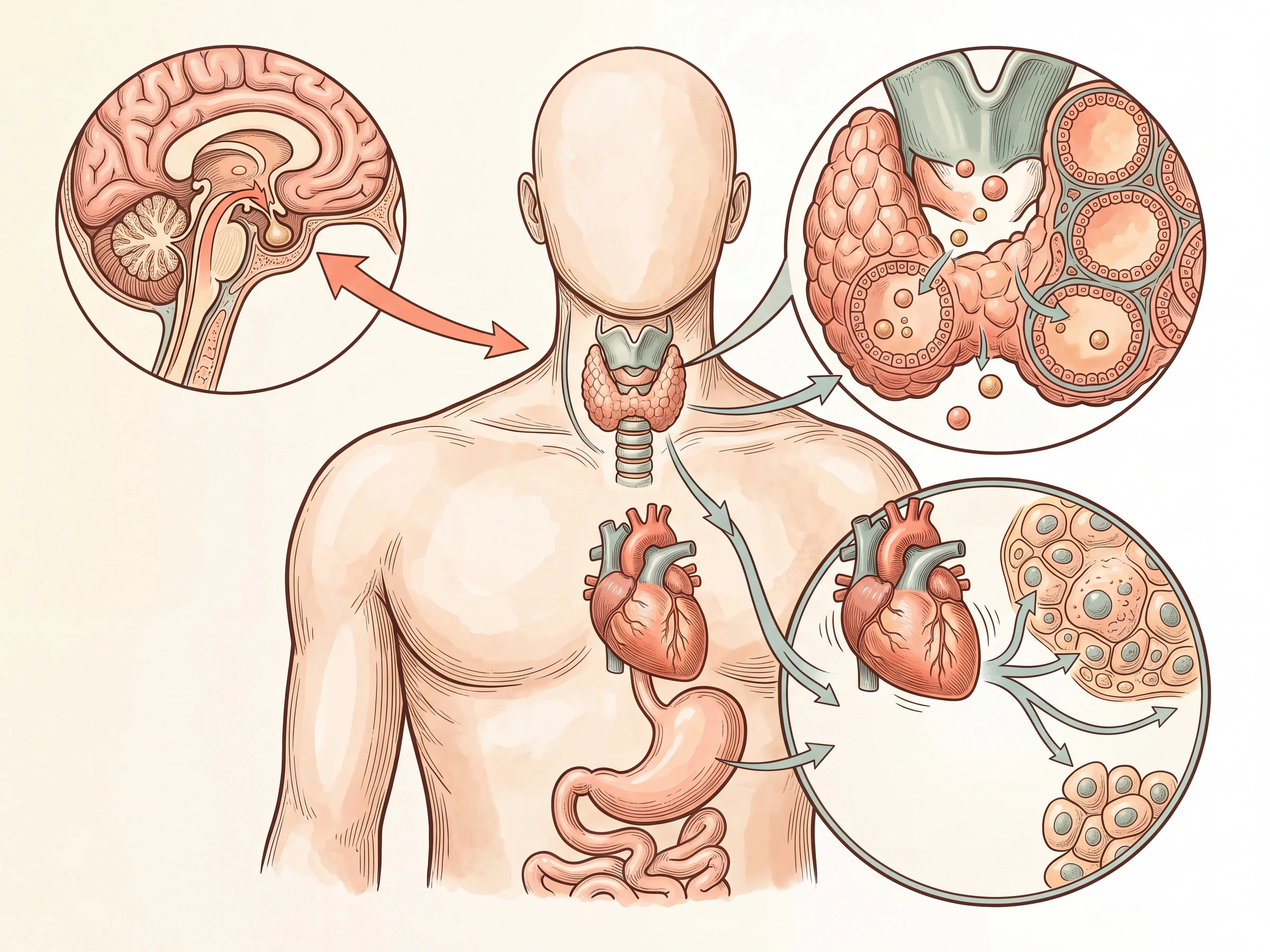
Explain the mechanism step by step.
Hashimoto's disease is a common autoimmune cause. Other causes include surgery, radioactive iodine, certain medicines, pituitary disorders, or too little or too much iodine in some circumstances.
The thyroid produces less T4 and T3.
Cells receive fewer metabolic signals.
The brain tries to compensate.
In primary hypothyroidism, TSH rises in an attempt to stimulate the thyroid.
Body systems slow down
This can cause fatigue, cold intolerance, constipation, dry skin, slower thinking, and high cholesterol.
Values or criteria that you should know
High TSH values require looking at Free T4 and its context before drawing conclusions.
Laboratory reference ranges matter. Treatment targets may also vary with age, pregnancy, and heart disease.
TSH
Thyroid hormones
- Reference range
- The common reference range is approximately 0.4–4.0 mIU/L.
- You should make an appointment for an evaluation.
- Repeatedly high TSH combined with low free T4 supports hypothyroidism.
- Should be evaluated urgently
- Do not change your dose based on a single TSH result. Medicines, food, blood test timing, and inconsistent dosing can affect it.
Follow-up after adjusting medication
Time needed for hormone levels to stabilise.
- Reference range
- The test is usually repeated approximately 6–8 weeks after starting or adjusting the dose.
- You should make an appointment for an evaluation.
- Persistent symptoms with normal TSH warrant assessment for other causes, rather than simply increasing thyroid medication.
- Should be evaluated urgently
- Marked drowsiness, low body temperature, slow breathing, low blood pressure, or confusion may indicate a serious emergency.
Causes · Symptoms · Examination · Care
See important information in one place.
Causes and related factors
- Hashimoto's disease and autoimmune history.
- After thyroid surgery or radioactive iodine, or from medicines such as lithium and amiodarone.
- Pituitary disease, iodine imbalance, and postpartum changes.
Common symptoms
- Fatigue, cold intolerance, weight gain, and constipation.
- Dry skin, hair loss, hoarse voice, slow thinking, or depression.
- Heavy periods, infertility, or slow pulse
How do doctors check?
- TSH and free T4
- TPO Antibody Helps Identify Hashimoto's
- Review of medications, pregnancy, and pituitary disease
Start taking care of it systematically.
- Take levothyroxine consistently and separate it from calcium and iron as advised.
- Check TSH after adjusting medication at regular intervals.
- Do not add iodine or thyroid hormones yourself. Excess can harm the heart and bones.
Important things you should know
Keep these points in mind.
TSH and free T4 are the starting points.
Tests help distinguish hypothyroidism from other causes of fatigue.
Hormone replacement drugs must be taken regularly.
Food, coffee, calcium, and iron can interfere with thyroid medicine absorption. Follow the recommended timing intervals.
Pregnancy must be followed closely.
Thyroid hormone requirements can change in pregnancy. Arrange early testing and dose review with your doctor.
Daily food and care
Appropriate iodine intake matters more than a high intake.
- Use iodised salt in appropriate amounts. Do not add kelp or high-dose iodine without advice, especially if you have Hashimoto's disease.
- Eat varied foods and correct confirmed deficiencies. Selenium or herbs do not replace thyroid hormone when it is needed.
Read on to understand.
Read on for complete information on health and products.
Main references